At the end of the 19th century, Saxony-Anhalt developed into one of the most important industrial regions in Germany. During this period, the Zuckerfabrik Köthen, also known as the Anhaltische Zuckerfabrik, was established on the outskirts of Köthen. Its location was strategic: situated in an agricultural area with intensive sugar beet cultivation and well connected by rail and regional infrastructure.
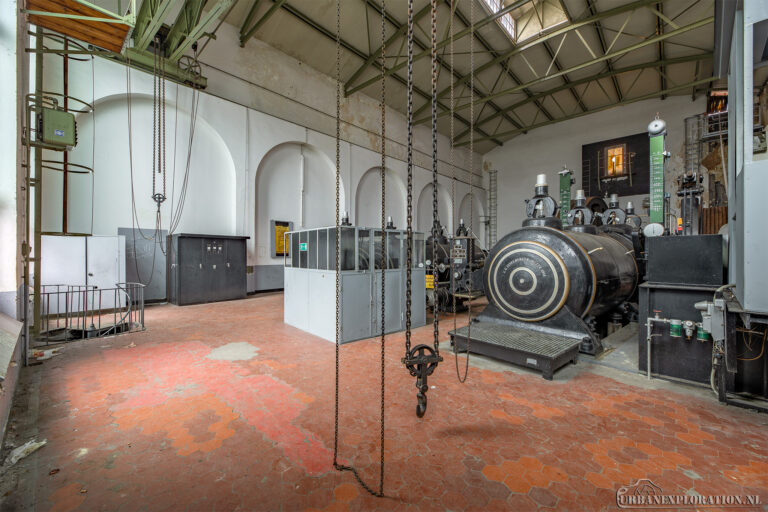
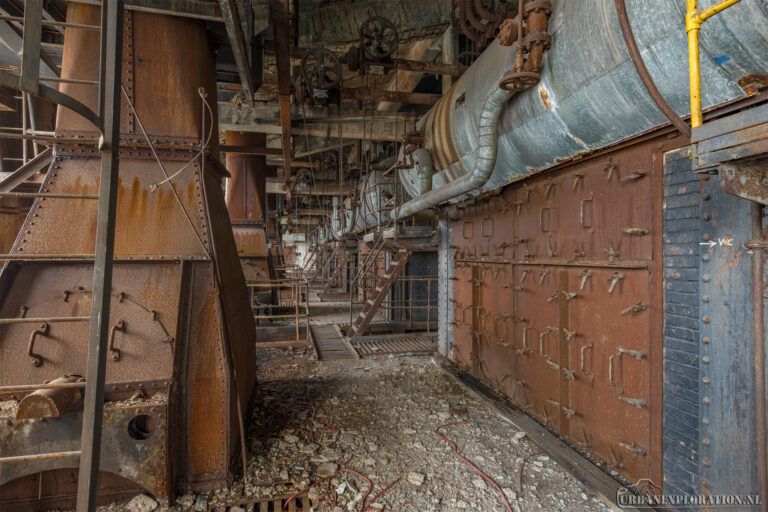
The factory was built as a typical steam-powered industrial complex. Massive brick façades, multiple production wings, and tall chimneys defined its silhouette. During the sugar beet campaign, the factory operated day and night. Large boilers supplied steam for slicing, boiling, and crystallizing sugar, while auxiliary buildings were used for storage, power generation, and administration.
Over the course of the 20th century, the industrial landscape changed. Sugar production became increasingly centralized, and smaller factories lost their economic viability. Parts of the Köthen complex were therefore repurposed for other industries, for which the existing buildings proved highly suitable.
A significant new chapter followed with the introduction of tobacco processing. The site was converted into a tobacco factory and later integrated into the state-run industry during the GDR period. Production was associated with names linked to socialist industrial organizations, including VEB structures for tobacco processing in the Köthen region.
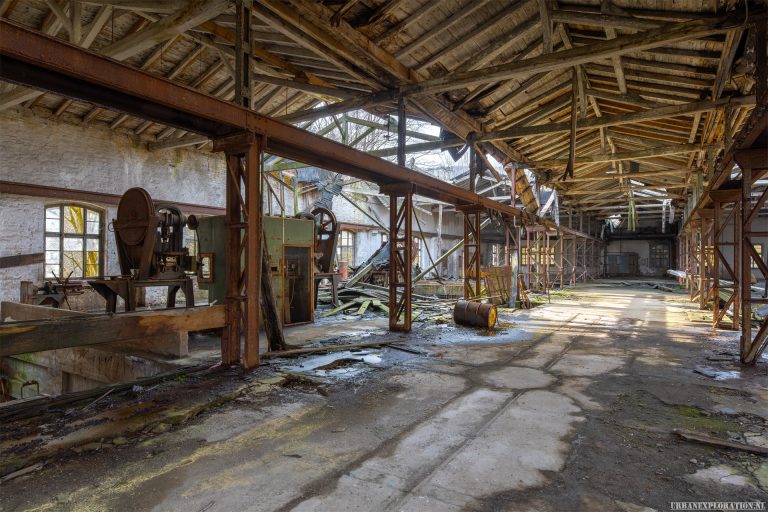
The long façades with large, regularly spaced windows are a direct legacy of this period. For tobacco processing, light, ventilation, and dry spaces were essential. In the former sugar halls, tobacco was dried, sorted, fermented, and further processed. The heavy steam installations lost their central role, but the existing infrastructure remained valuable for heating and climate control.
After German reunification in 1990, this industrial phase also came to an end. Both the sugar and tobacco industries were unable to withstand competition and structural reorganization. Production ceased, and the site lost its function. Since then, the complex has remained largely abandoned, with only occasional use for storage or temporary activities.