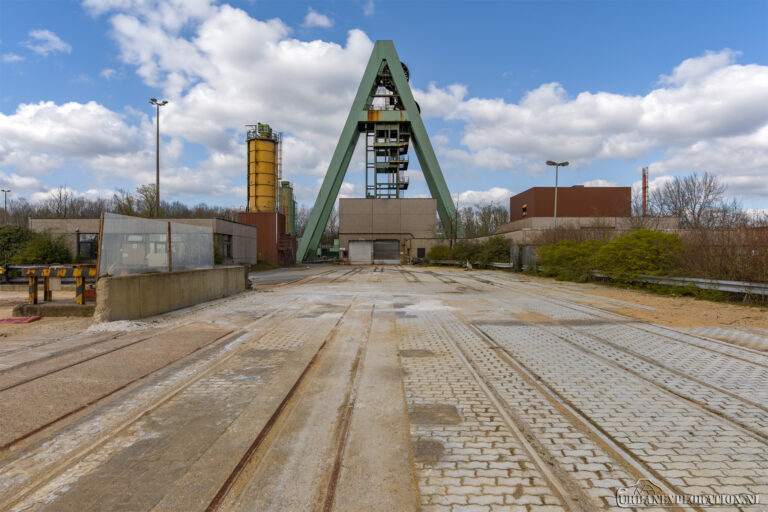
In Loos-en-Gohelle, in the heart of the former Nord–Pas-de-Calais coalfield, stood the mine officially known as Fosse n° 11–19, operated by the Compagnie des mines de Lens. Construction began at the end of the 19th century, during a period of rapid industrial expansion when coal was essential to fuel factories, railways, and steel production.
The site consisted of two shafts, Puits n° 11 and Puits n° 19, supported by extensive surface installations such as sorting facilities, workshops, and technical buildings. For decades, the mine formed a central part of the economic and social life of Loos-en-Gohelle, providing employment and shaping the surrounding mining community.
Following the nationalisation of the French coal industry after the Second World War, Fosse 11–19 came under the management of Charbonnages de France. Although production continued for many years, the mine gradually declined from the 1960s onward due to resource depletion, rising operating costs, and increasing competition from alternative energy sources.
Coal extraction at Fosse n° 11–19 officially ended in 1986. After closure, the shafts were secured and sealed in accordance with national mining safety procedures, marking the end of nearly a century of industrial activity on the site.
Today, the former mine is known as Base 11/19, an officially recognised heritage site forming part of the historic Nord–Pas-de-Calais mining landscape. It stands as a lasting reminder of the industrial scale and economic importance of coal mining in northern France, a legacy now protected and acknowledged as industrial heritage.