On Schweinheimer Straße in the eastern part of Cologne once stood an industrial complex known as the Cologne Cotton Bleachery (Kölner Baumwollbleicherei). The history of the site, however, goes back much further than the textile industry itself.
Originally, the location was home to the Schweinheimer Mill, a water mill that used the nearby stream as its power source for centuries. During the second half of the 19th century the character of the site began to change when the old mill was converted into a paper factory around 1870. At that time industrial development in and around Cologne was rapidly expanding, and many former agricultural buildings were transformed into industrial facilities.
At the beginning of the 20th century, the site was redeveloped again. New owners established a cotton bleachery on the property under the name Baumwollbleicherei Eich & Martin. In this factory raw cotton fibers were washed, chemically bleached, and processed into a variety of products. A significant part of the production consisted of cotton wool, medical dressings, and other cellulose-based materials, which were widely used in the medical sector.
Over time the factory grew into a typical industrial complex with multiple production halls, storage buildings, chimneys, and technical installations. Large amounts of water were required for the bleaching process, which made the location near a water source particularly useful for the factory’s operation.
In 1934 the company ran into financial difficulties and went bankrupt. Shortly afterwards the site was taken over by a Swiss company which continued production under the name Bastfaser GmbH. During World War II, the factory partially shifted its production to support the war economy. Among other things, materials used for machine-gun ammunition belts were manufactured there.
After the war the factory returned largely to its earlier production of medical cotton and cellulose products. In 1969, the company became part of the Cordier Group, a business specializing in raw materials for specialty paper and industrial fiber products. Despite some modernization, much of the complex continued to consist of older industrial buildings from different periods.
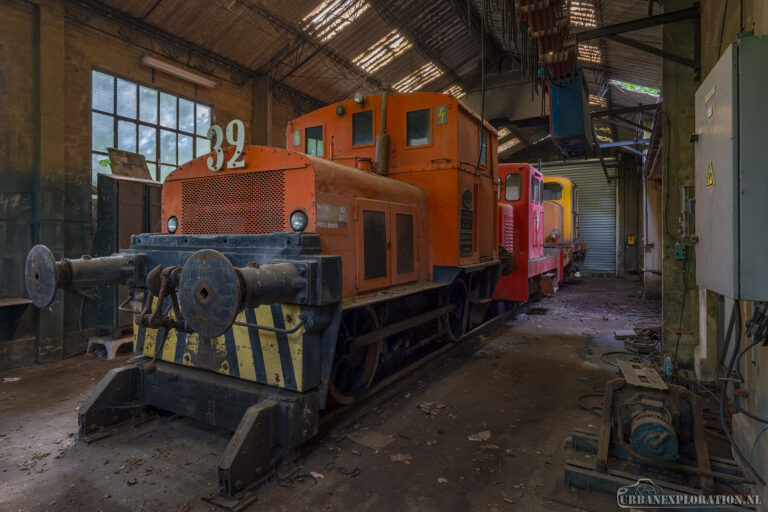
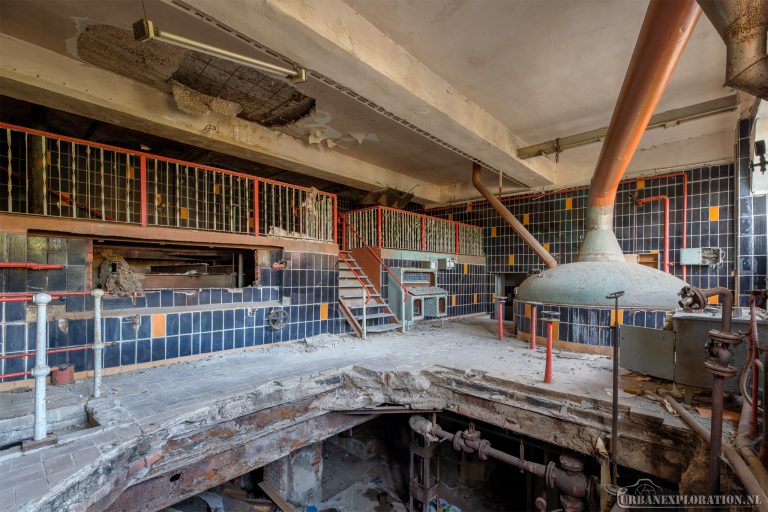
At the beginning of the 21st century the factory gradually lost its economic importance. Production declined and the plant was eventually closed around 2009–2010. The industrial site remained abandoned for years afterwards, with the old halls, equipment, and storage buildings slowly falling into decay.