On the site where Rheinpark now lies in Duisburg, there once stood a large wire rod rolling mill (Walzdrahtwerk) that formed part of the vast steel industry of Friedrich Krupp AG, later incorporated into ThyssenKrupp. The facility was located in the Hochfeld district along the Rhine, an area that for decades was dominated by heavy industry and steel production.
Inside this rolling mill, raw steel produced in the surrounding blast furnaces and steelworks of the Ruhr region was reheated and passed through a long sequence of rolling stands. During this process the steel was gradually reduced in diameter until it formed long strands of wire rod. The finished product was wound into large coils and served as the basic material for many industrial products such as steel cables, springs, bolts, nails and reinforcement wire for concrete.
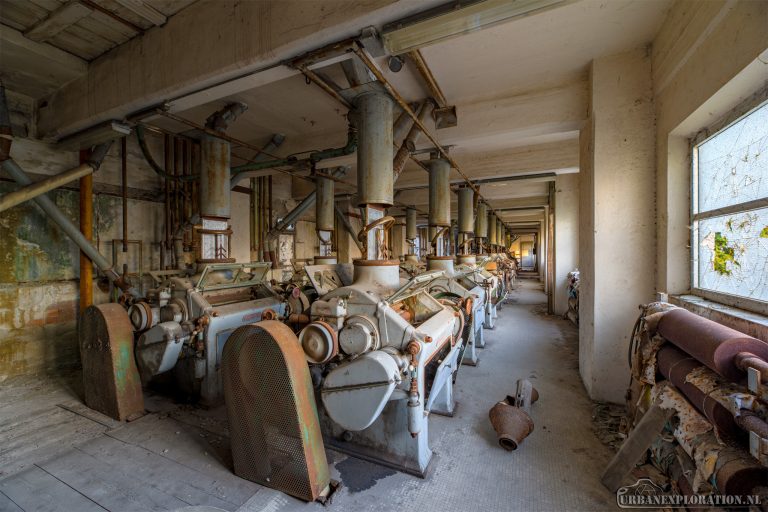
The rolling mill itself consisted of massive industrial halls filled with furnaces, rolling machines and transport systems. Railway tracks ran directly through the complex, while nearby loading facilities along the Rhine allowed the steel coils to be transported efficiently by ship or train to factories across Europe.
Throughout much of the twentieth century the wire rod mill played an important role in the steel industry of Duisburg. Like many heavy industrial sites in the Ruhr area, however, the plant eventually became a victim of structural changes in the global steel market. Production declined and the facility was closed during the late twentieth century, after which most of the industrial buildings were demolished.
Today the area has been transformed into Rheinpark, but beneath the landscaped grounds remain the foundations of the former rolling mill that once formed part of one of Europe’s largest steel-producing regions.
Visited - April 2019
Defunct - 2005
Status - Demolished
Country - Germany
Here are some other albums that might be of interest.