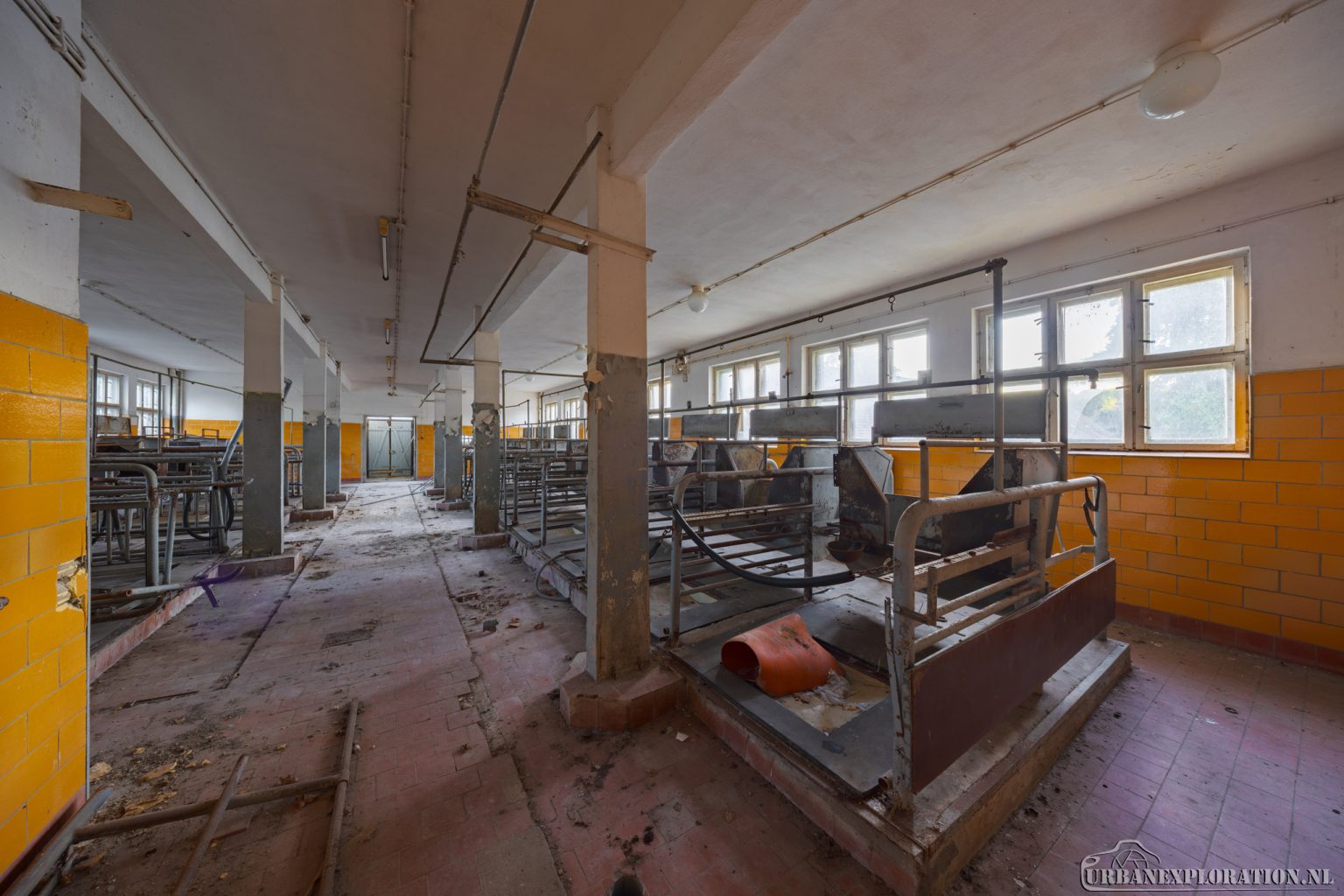
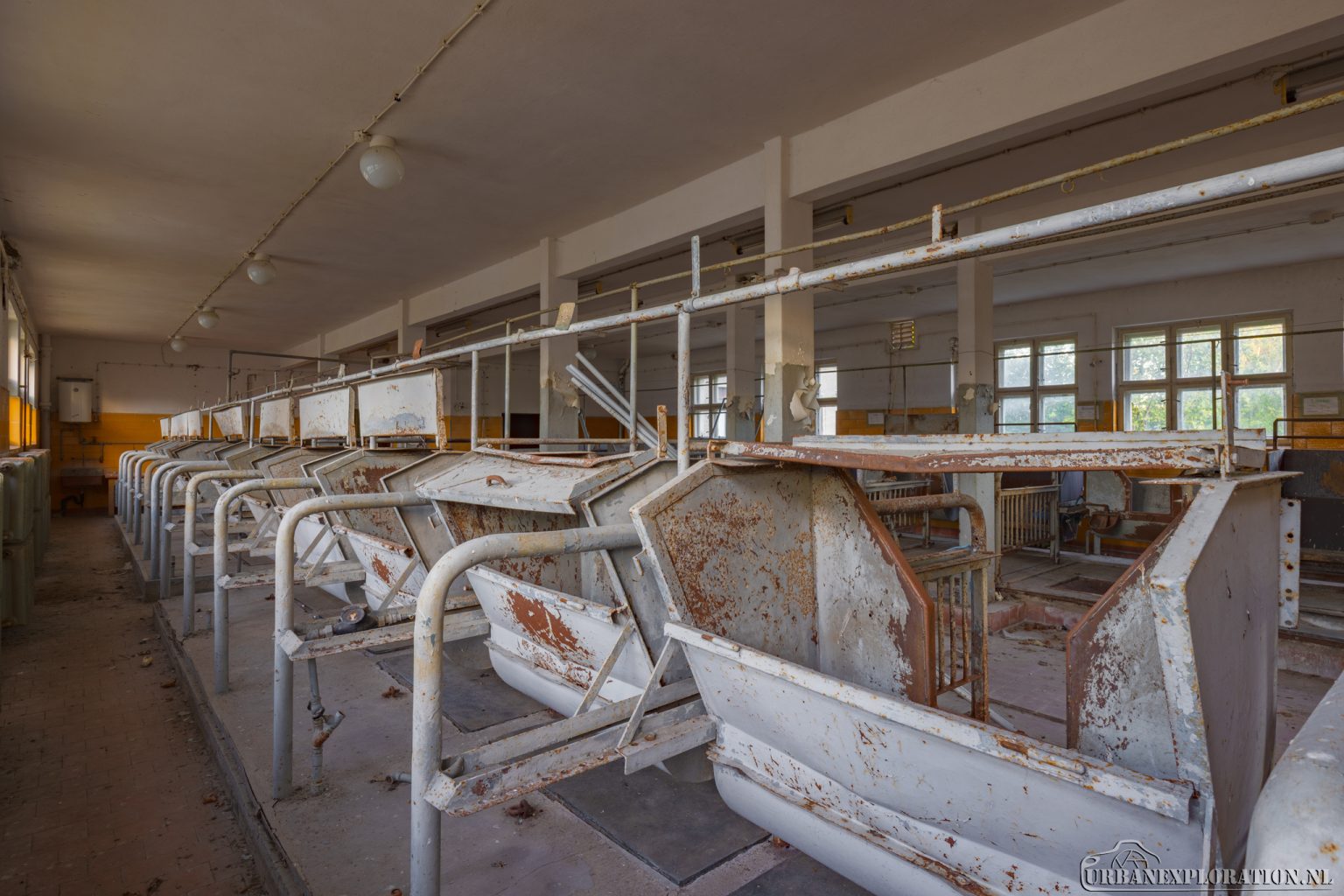
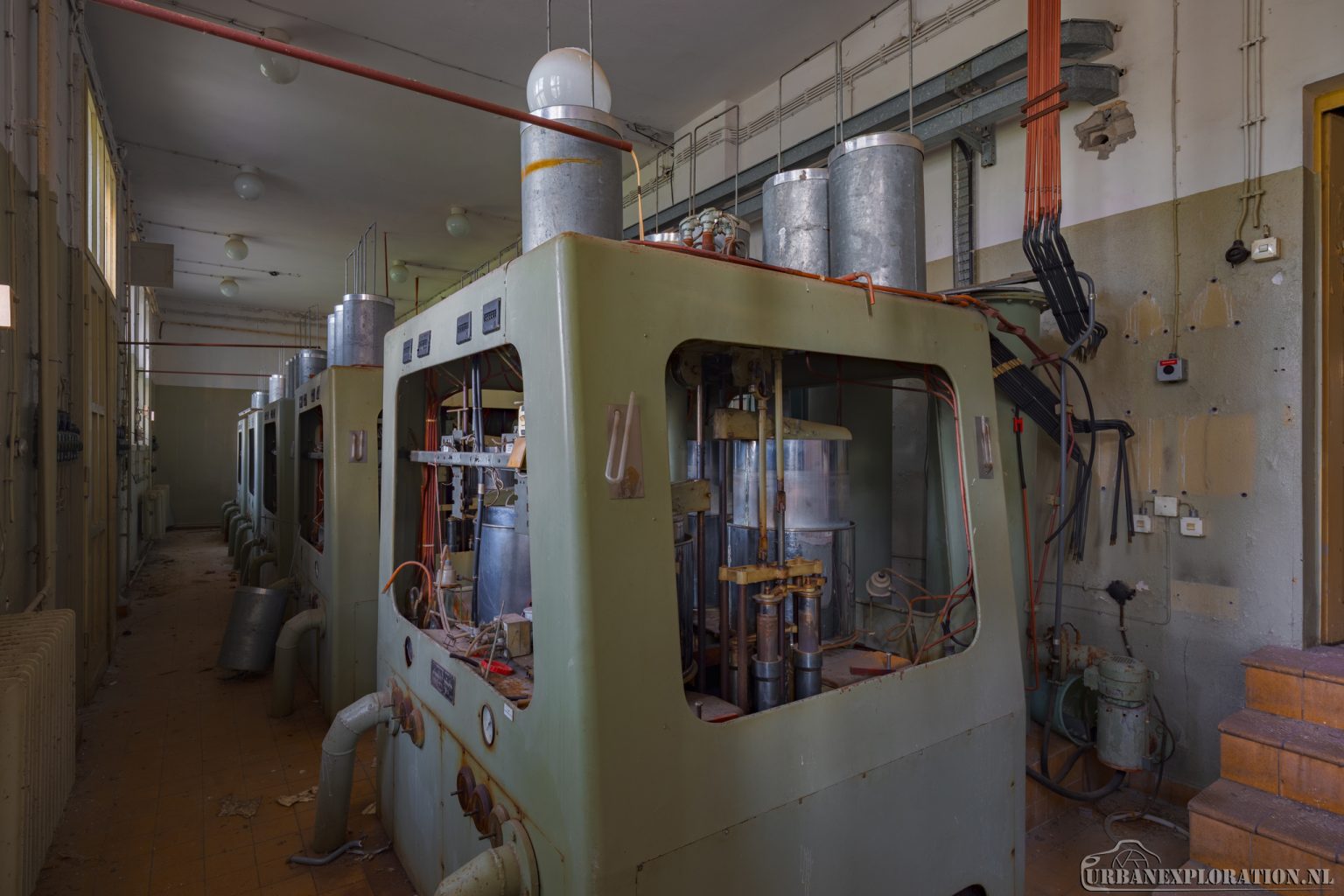
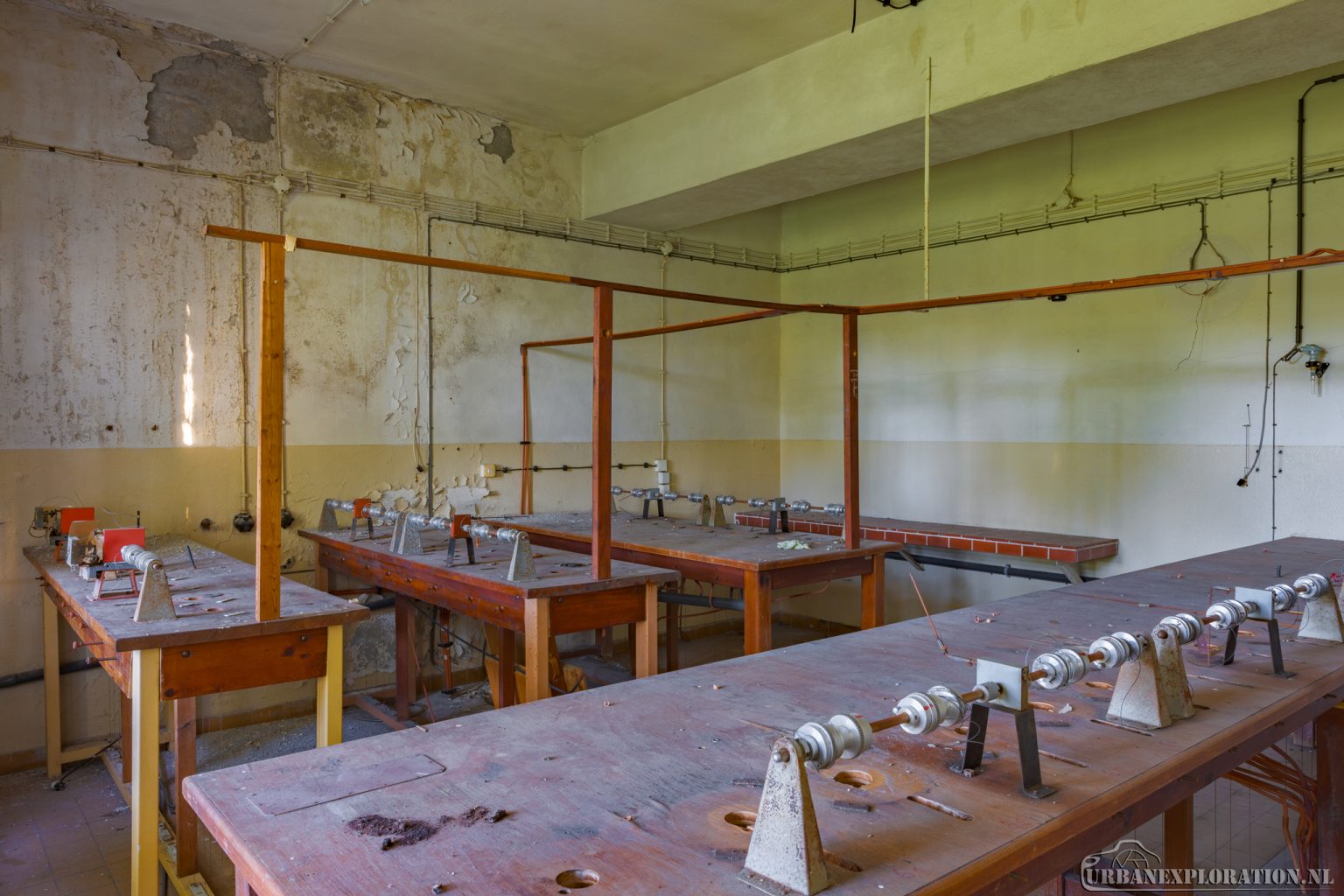
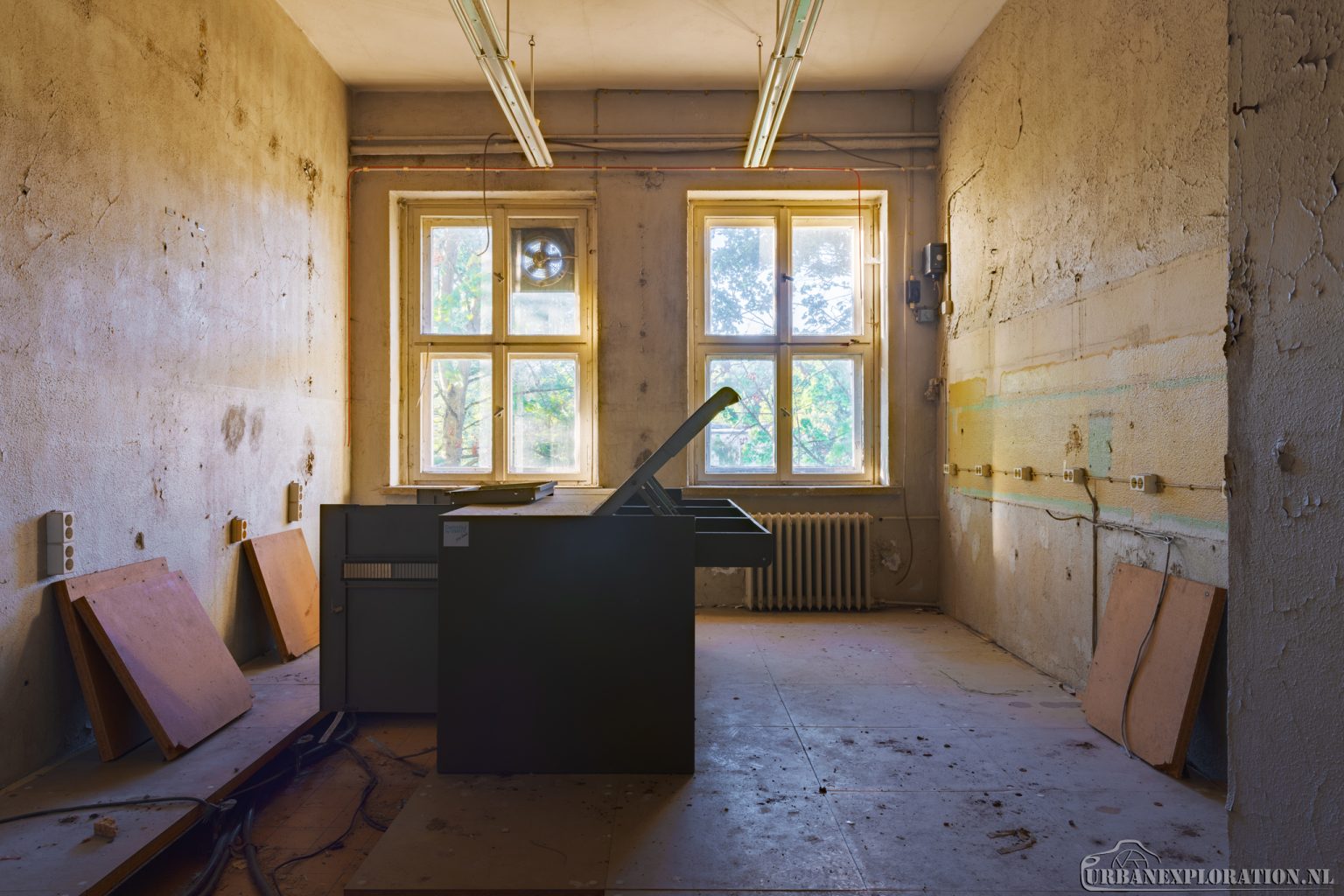
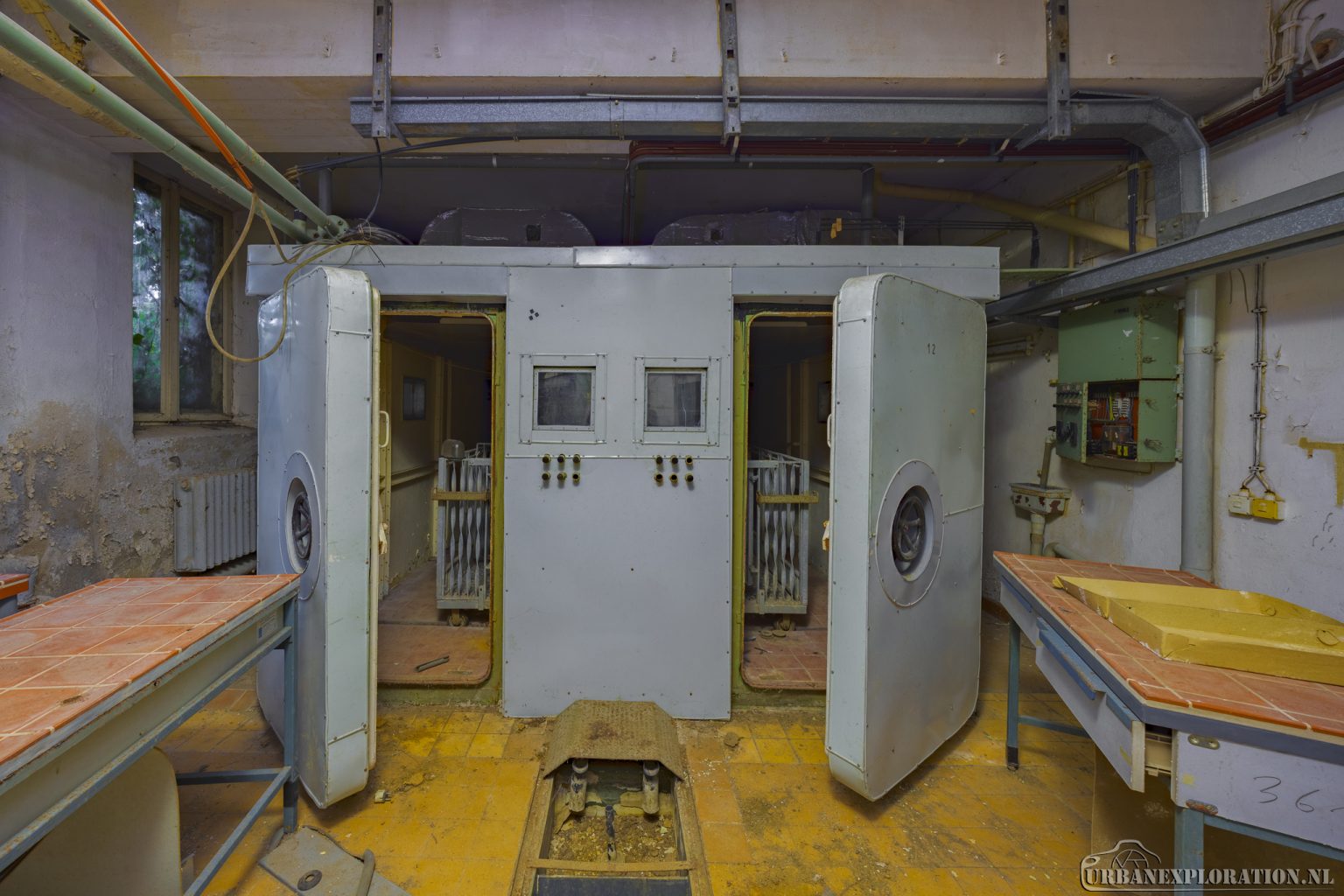
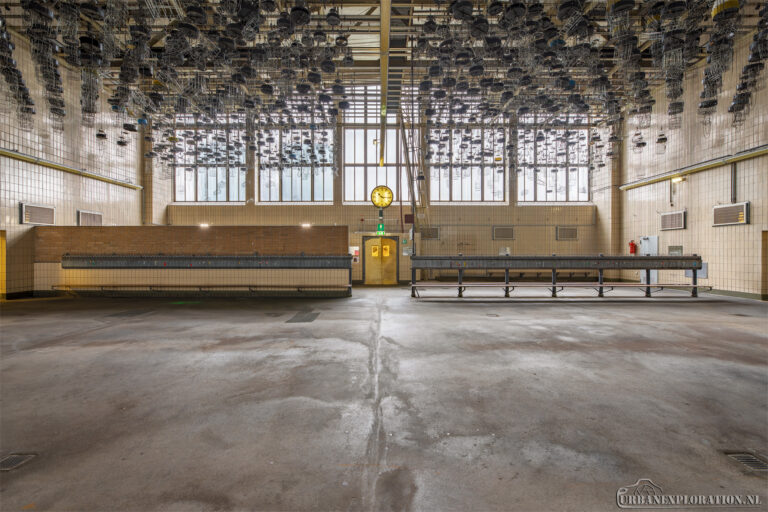
Behind a simple exterior lies a fully preserved research facility where daily work once revolved around improving livestock production. Long rows of metal pens are still in place, each designed to isolate animals for precise observation. Everything here was about control: measuring how much was eaten, how fast animals grew, and which feed compositions delivered the best results.
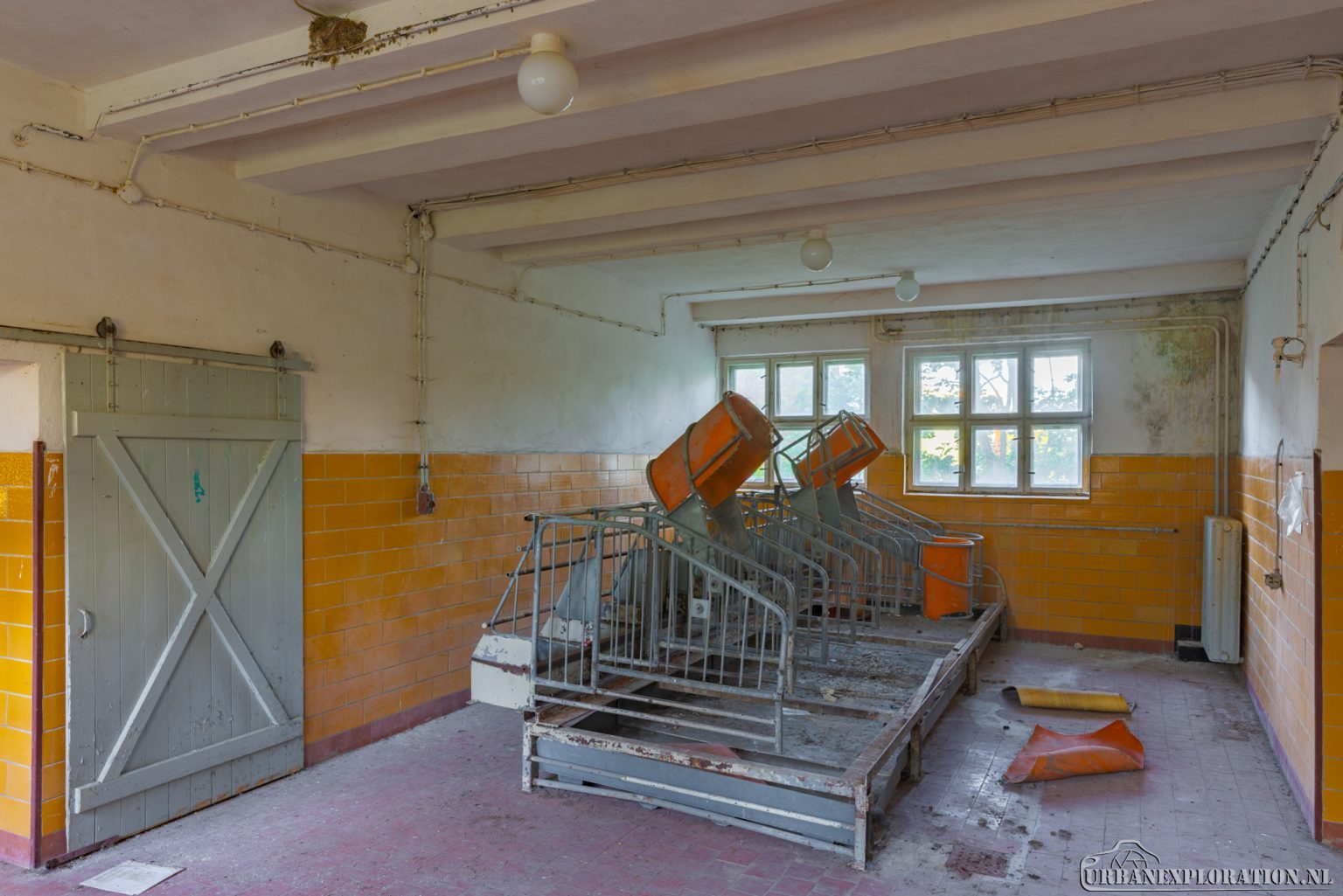
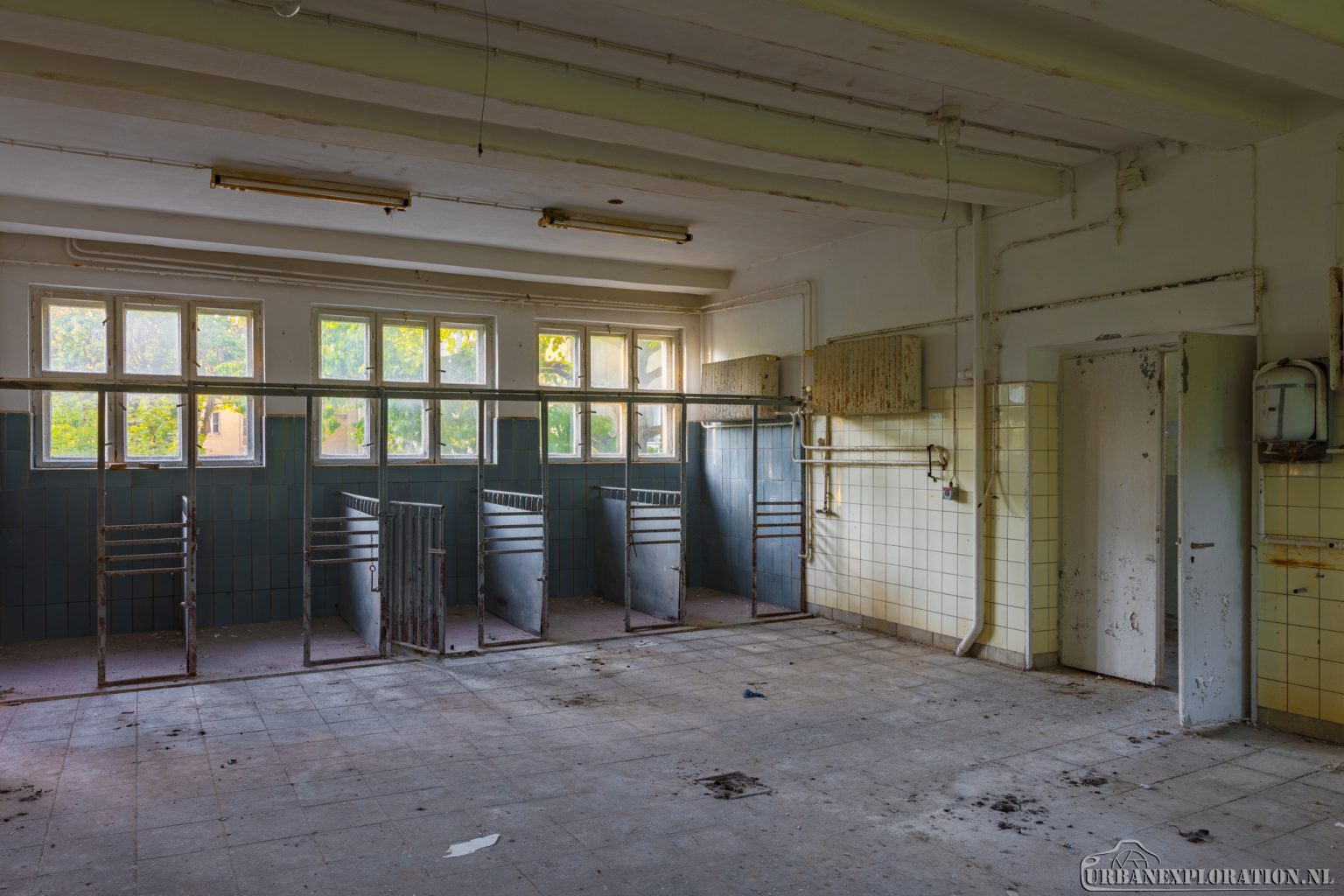
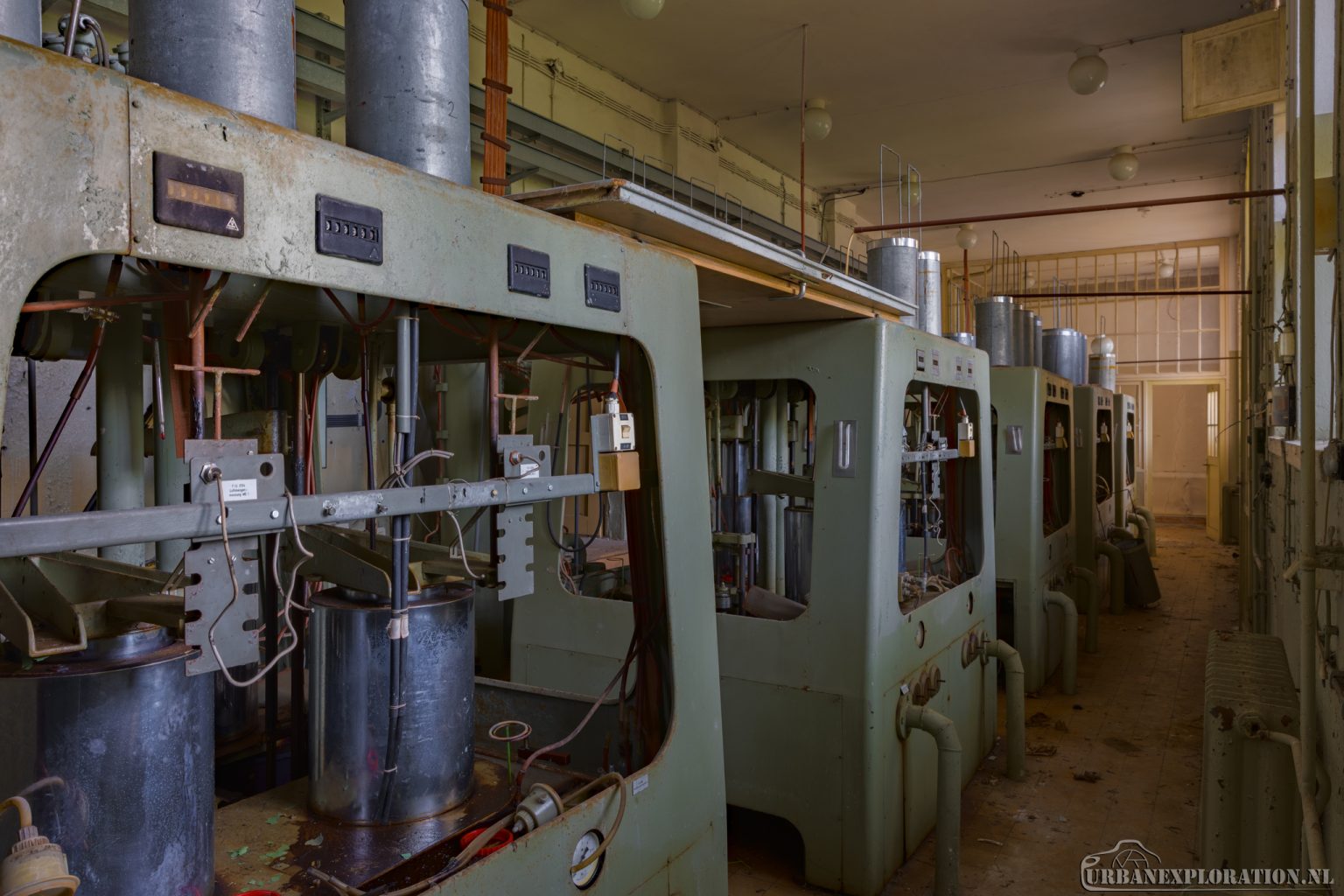
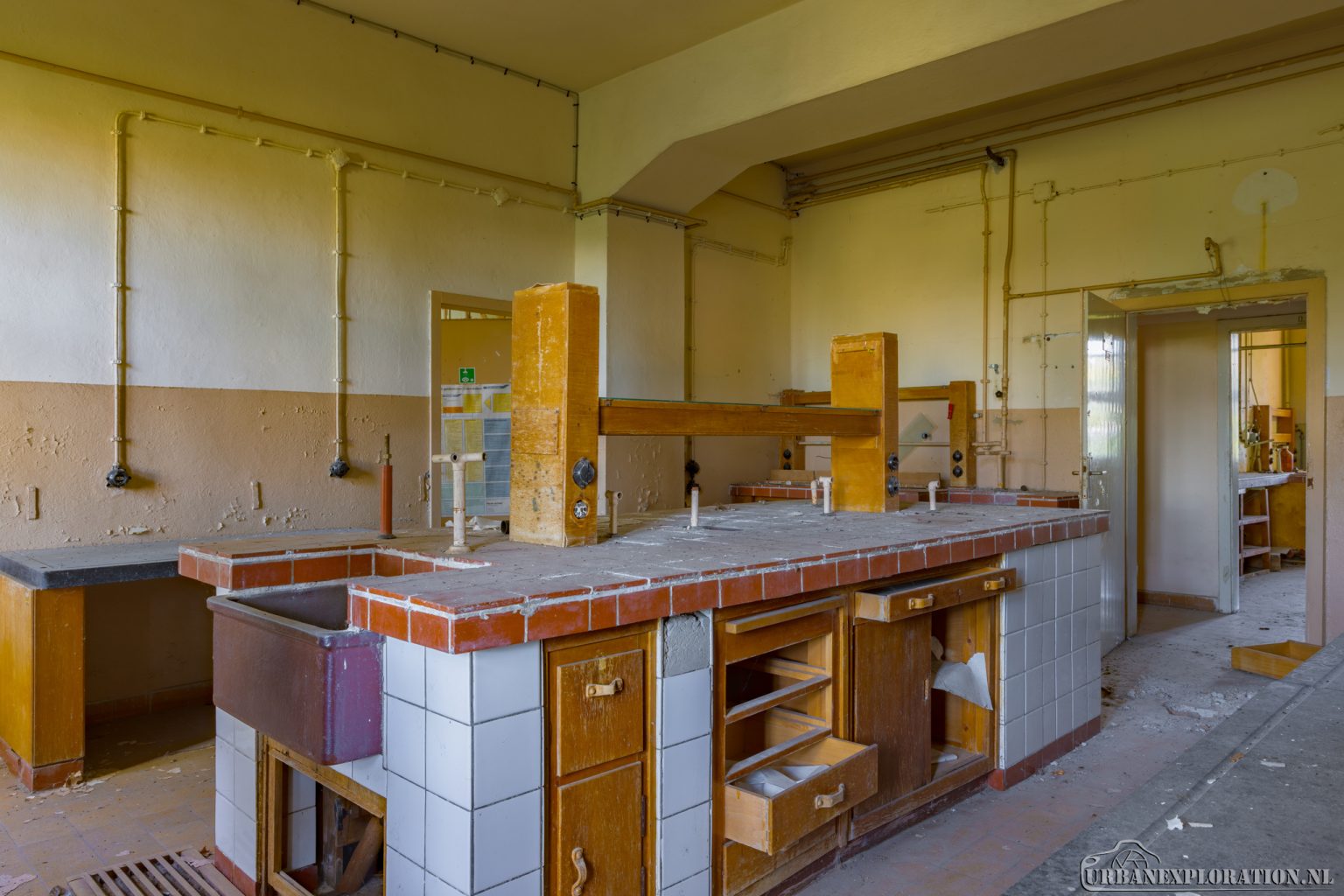
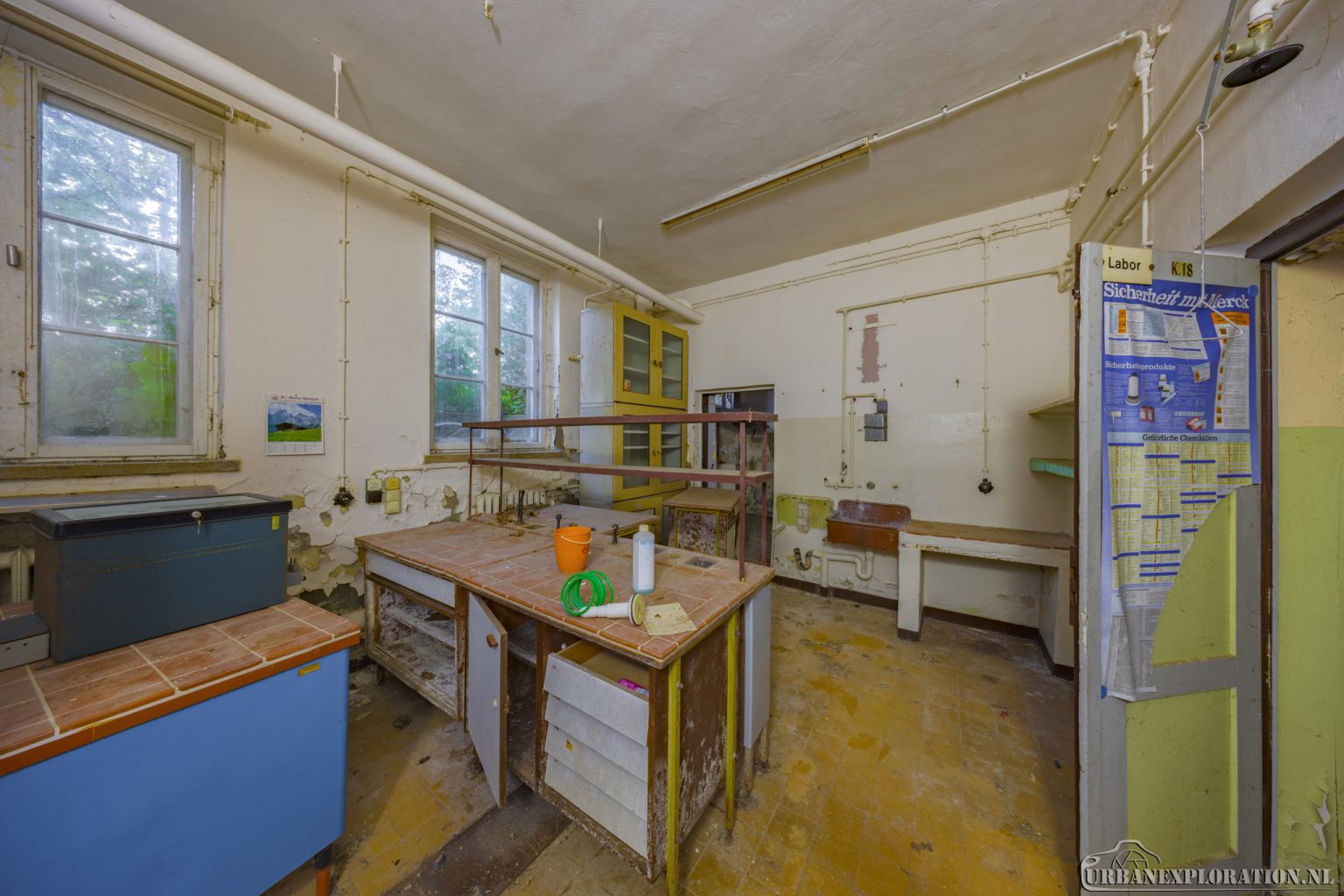
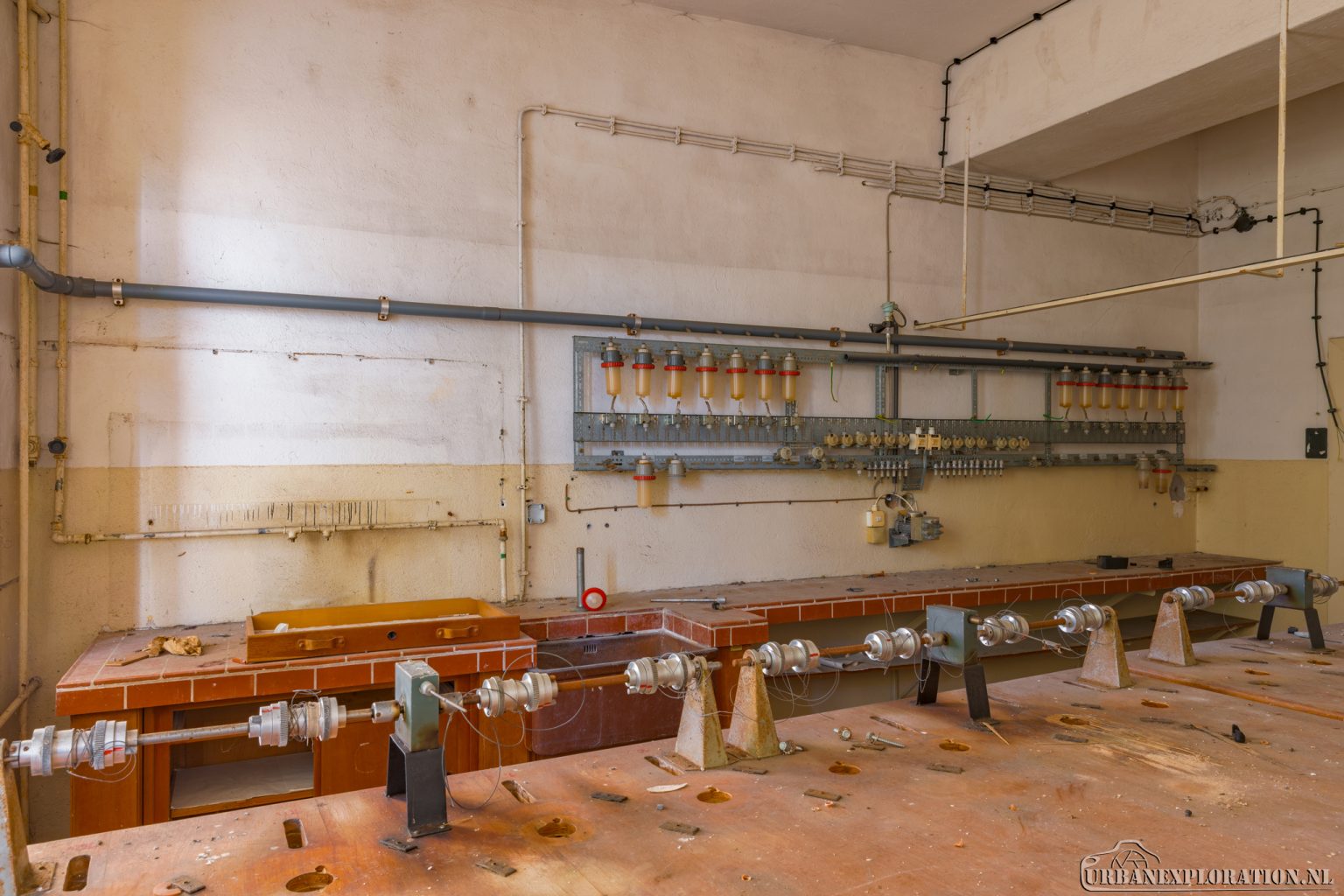
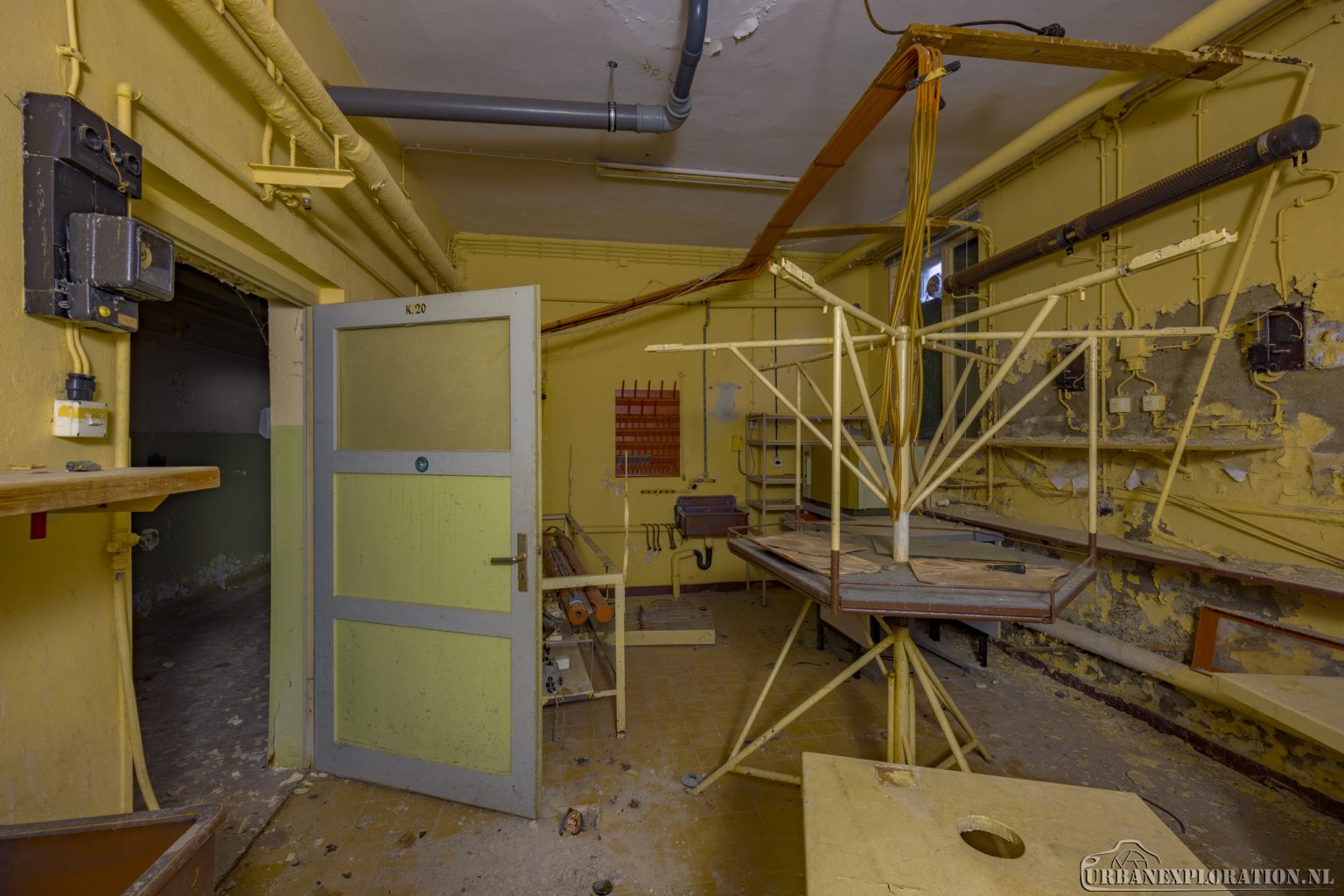
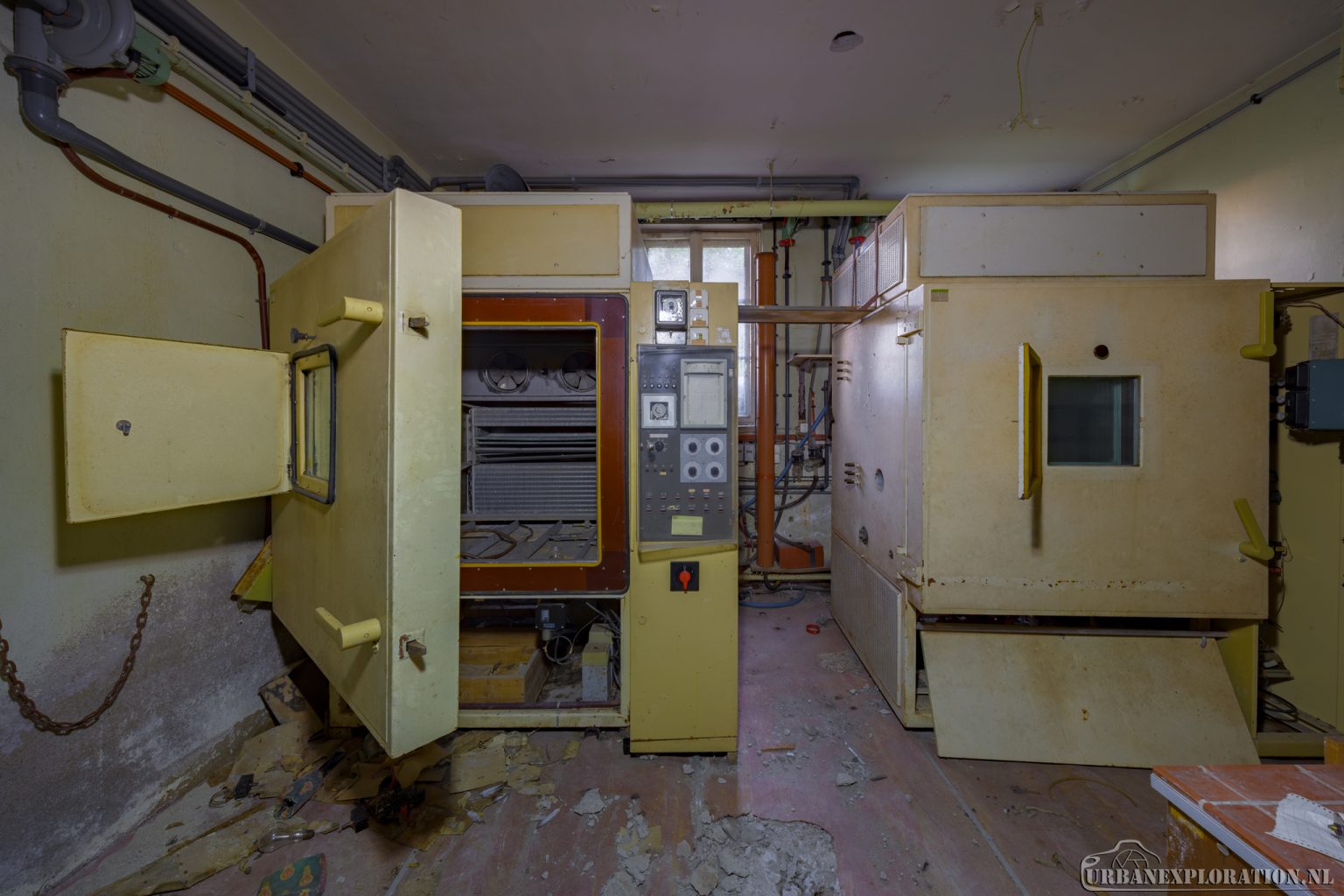
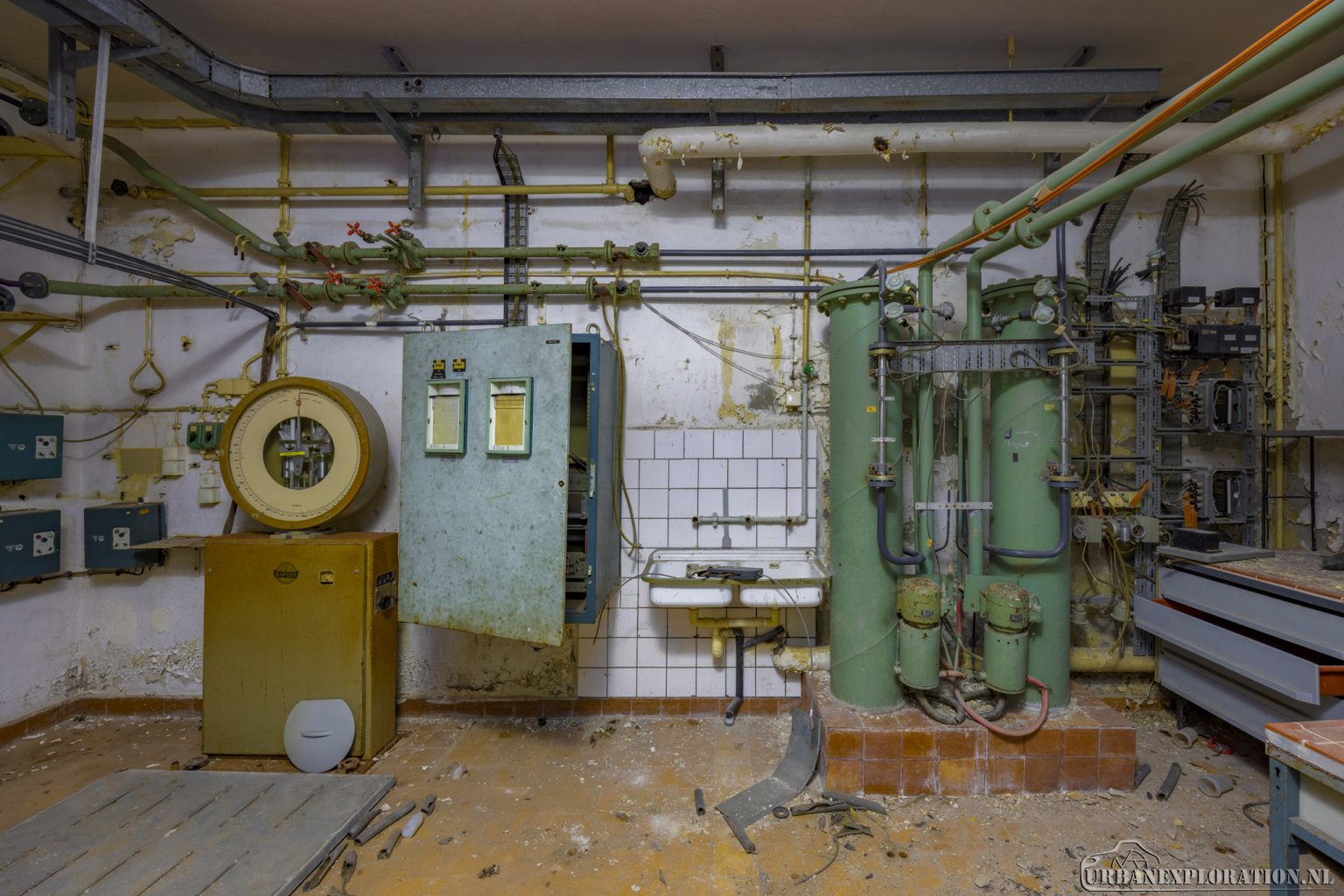
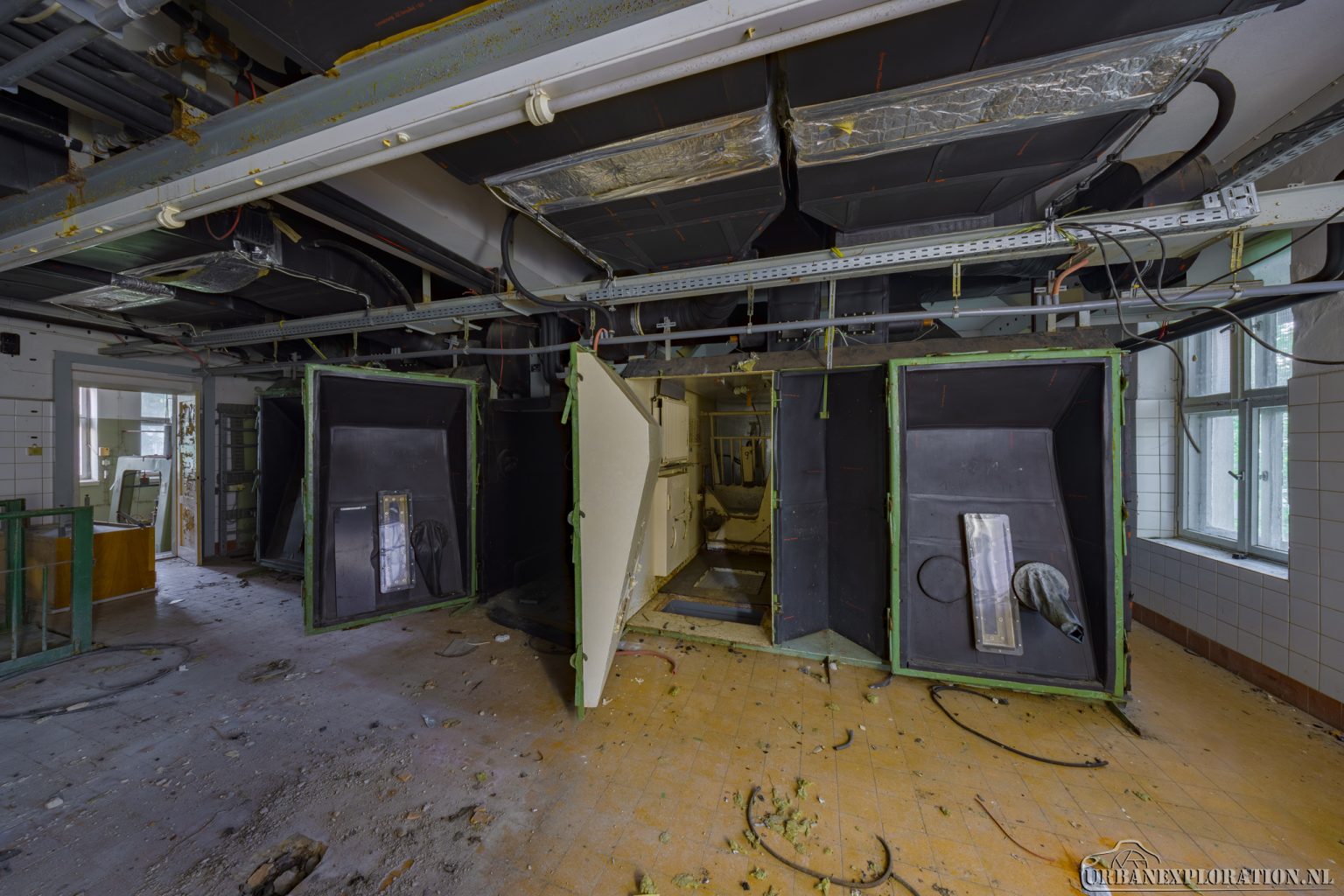
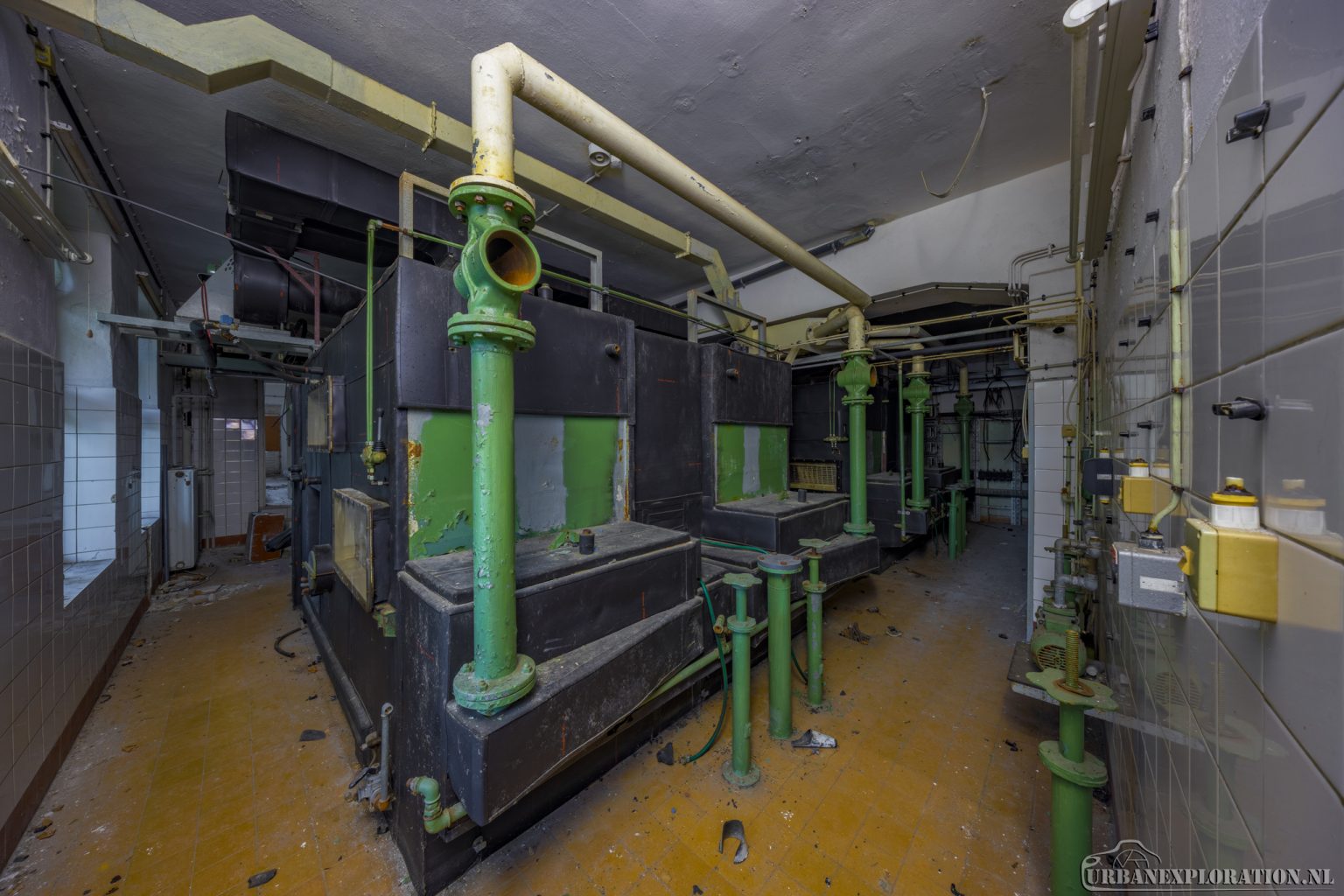
The surrounding infrastructure makes it clear this was not an ordinary farm building. Feeding systems, tilting containers, and waste handling installations point to an environment built for experimentation. Every detail served a purpose within a structured research process. Nearby rooms still contain machinery used for mixing and analyzing feed, while other spaces appear to have been used for technical testing or training.
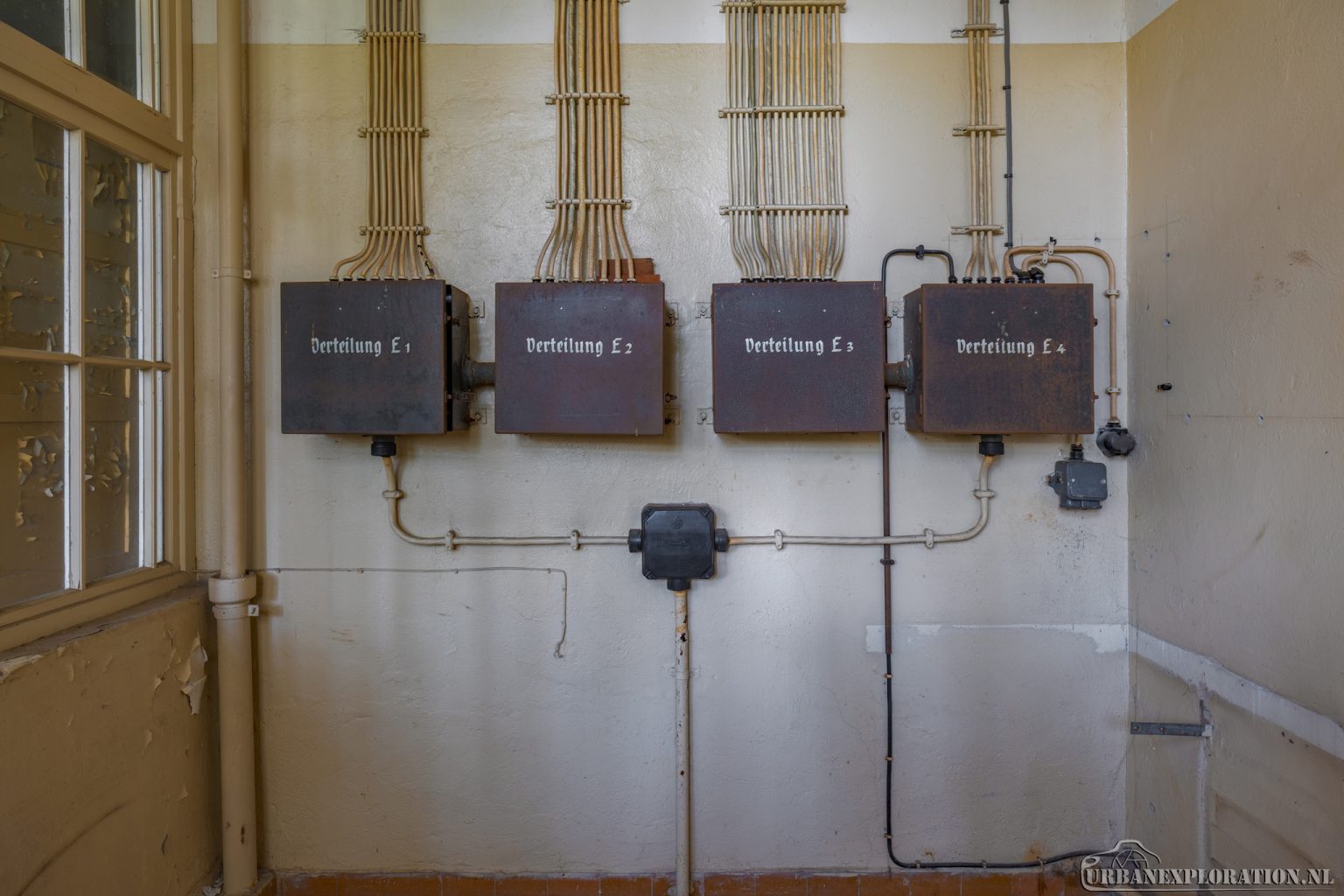
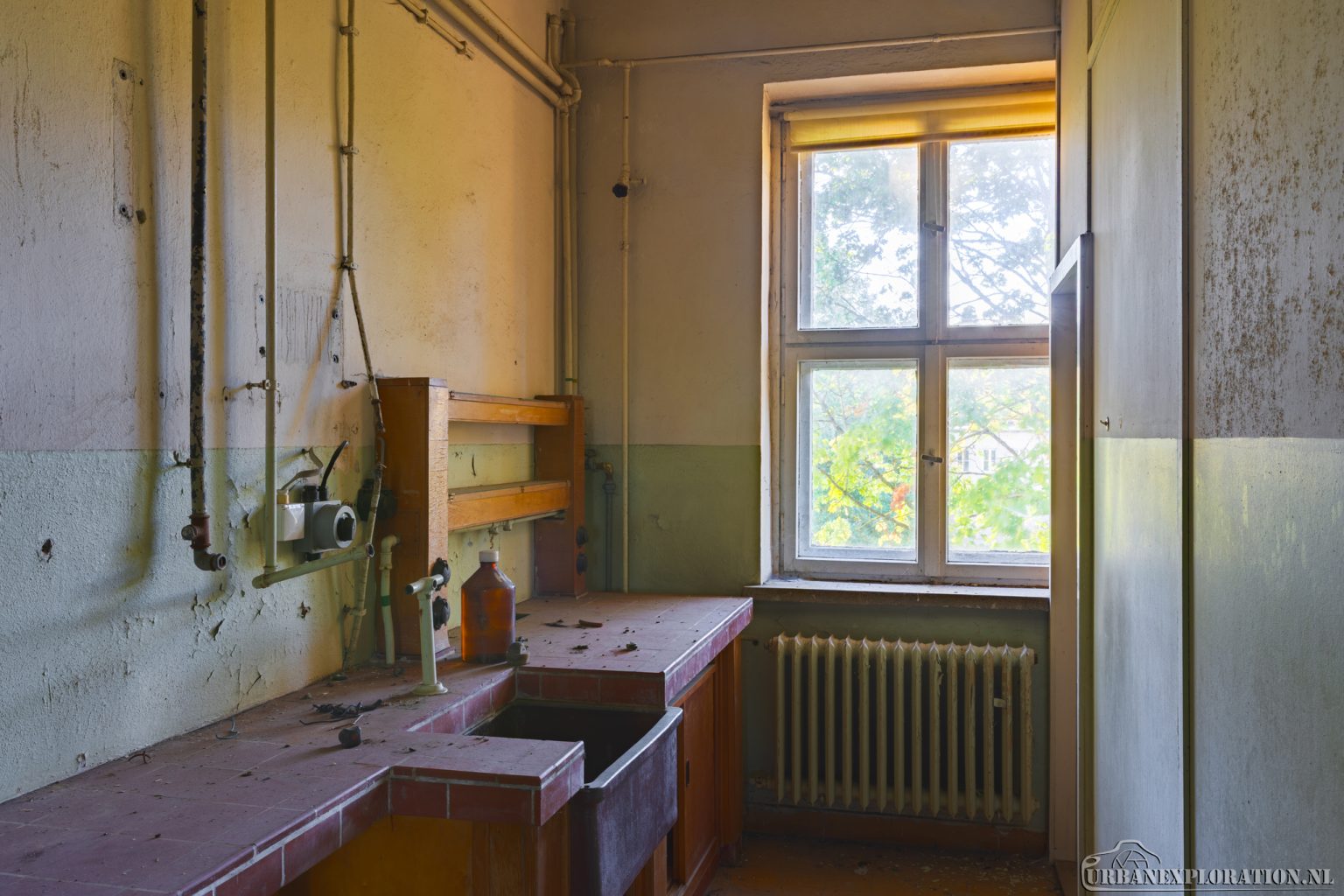
The design is purely functional. Tiled walls, basic lighting, and exposed piping reflect a practical approach focused on durability and efficiency. Nothing was decorative every element contributed to the workflow.
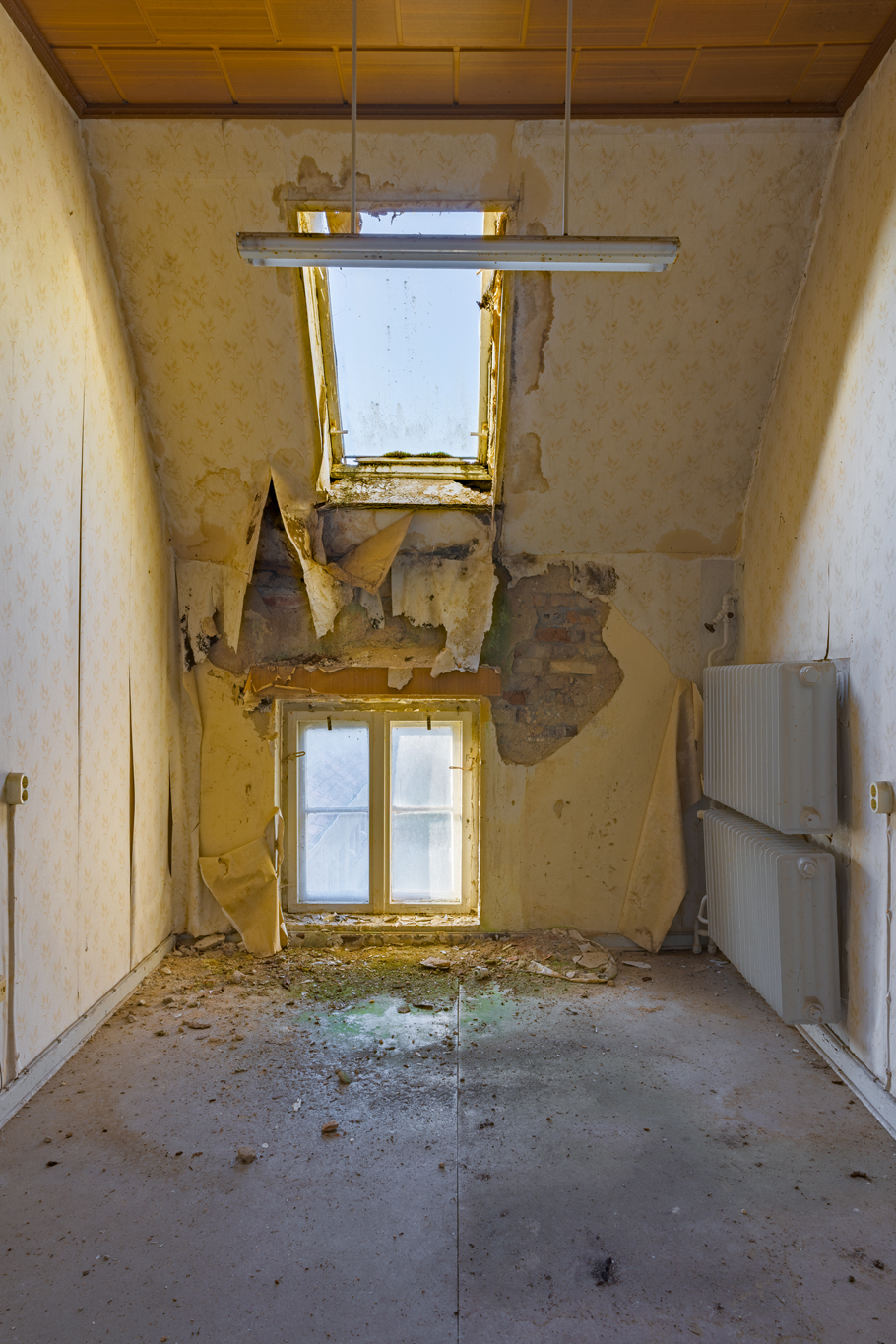
Following political and economic changes, the facility lost its purpose. Modern standards, centralization, and new technologies made smaller research sites like this obsolete. What remains today is a largely untouched environment, offering a clear impression of how work was once carried out within this type of institution.
Visited - September 2025
Defunct - Unknown
Status - In decline
Country - Germany
Here are some other albums that might be of interest.