The Forgotten Wooden Church of Tomnatic de Sus
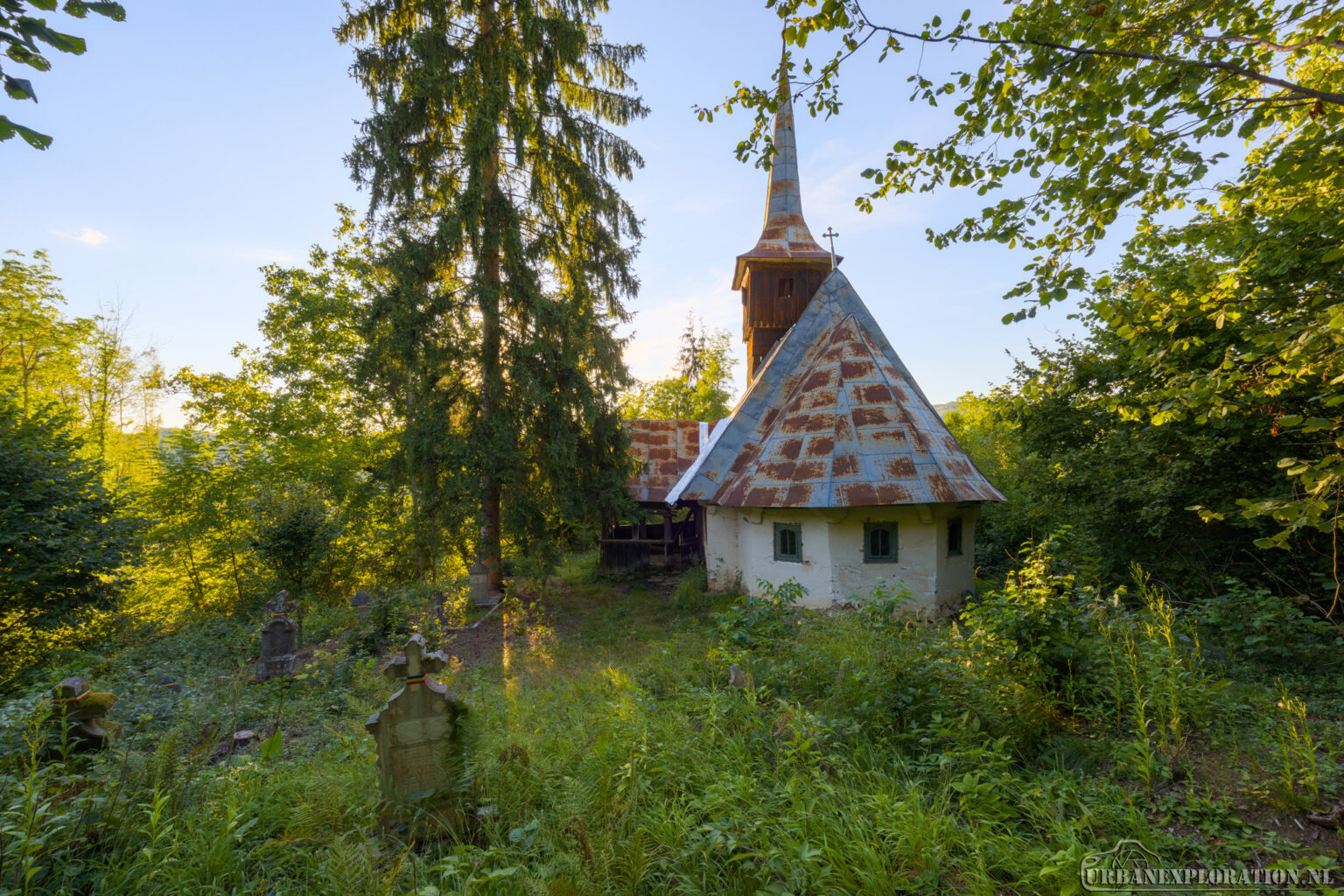
Hidden deep within the forests of Romania’s Apuseni Mountains stands a remarkable wooden church, surrounded by an overgrown cemetery and the remains of a nearly abandoned mountain community. The Church of the Annunciation, locally known as Biserica de lemn „Buna Vestire”, has survived for more than two centuries.
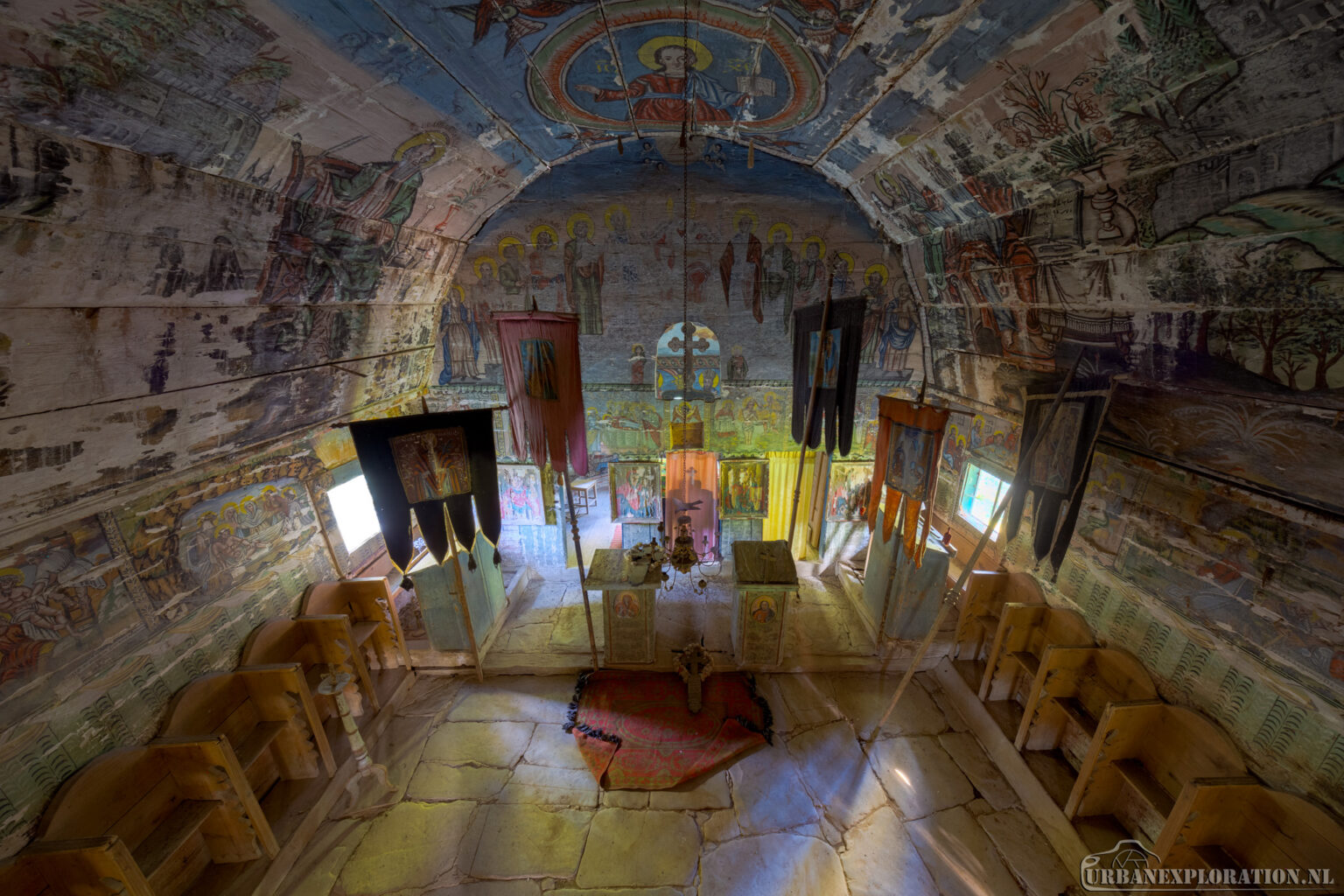
Located near Tomnatic de Sus in Hunedoara County, the church is an example of traditional wooden religious architecture. Its weathered metal roof, slender bell tower and white-plastered wooden walls conceal an interior decorated with nineteenth-century religious paintings.
Once an important place of worship for the surrounding community, the building gradually fell into disrepair as the local population declined.
The History of the Church
The exact construction date remains uncertain. Historical church records mention the construction of a church in Tomnatec in 1803, while an inscription on its smaller bell dates from 1805.
Another inscription records the names of two painters, Andrei Vig from Abrud and Mihai Sabo from Câmpeni, associated with the year 1807. These references suggest that the church was probably built between 1803 and 1807, although some historical sources propose a later construction date around 1846–1848.
The church was built using traditional timber construction techniques. Its wooden walls were covered with plaster, giving the exterior the appearance of a stone building. The structure includes a rectangular nave, a five-sided sanctuary and a tall wooden bell tower crowned by a pointed spire.
Two wooden entrance porches were added in 1863. Further renovations followed in 1926 and between 1967 and 1968. In 1972, the original wooden roof shingles were replaced with metal sheets, which have since become heavily weathered.
The Religious Paintings
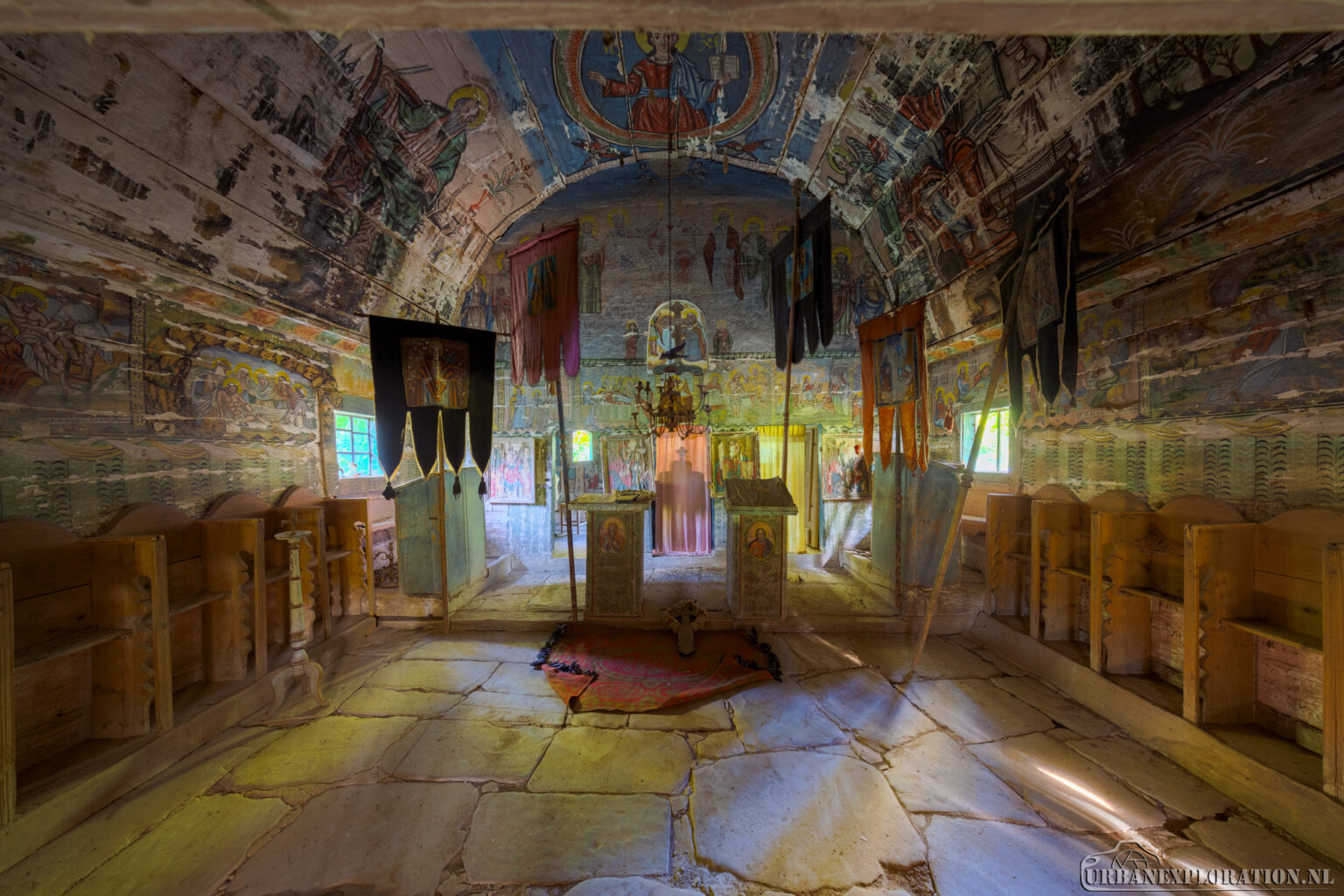
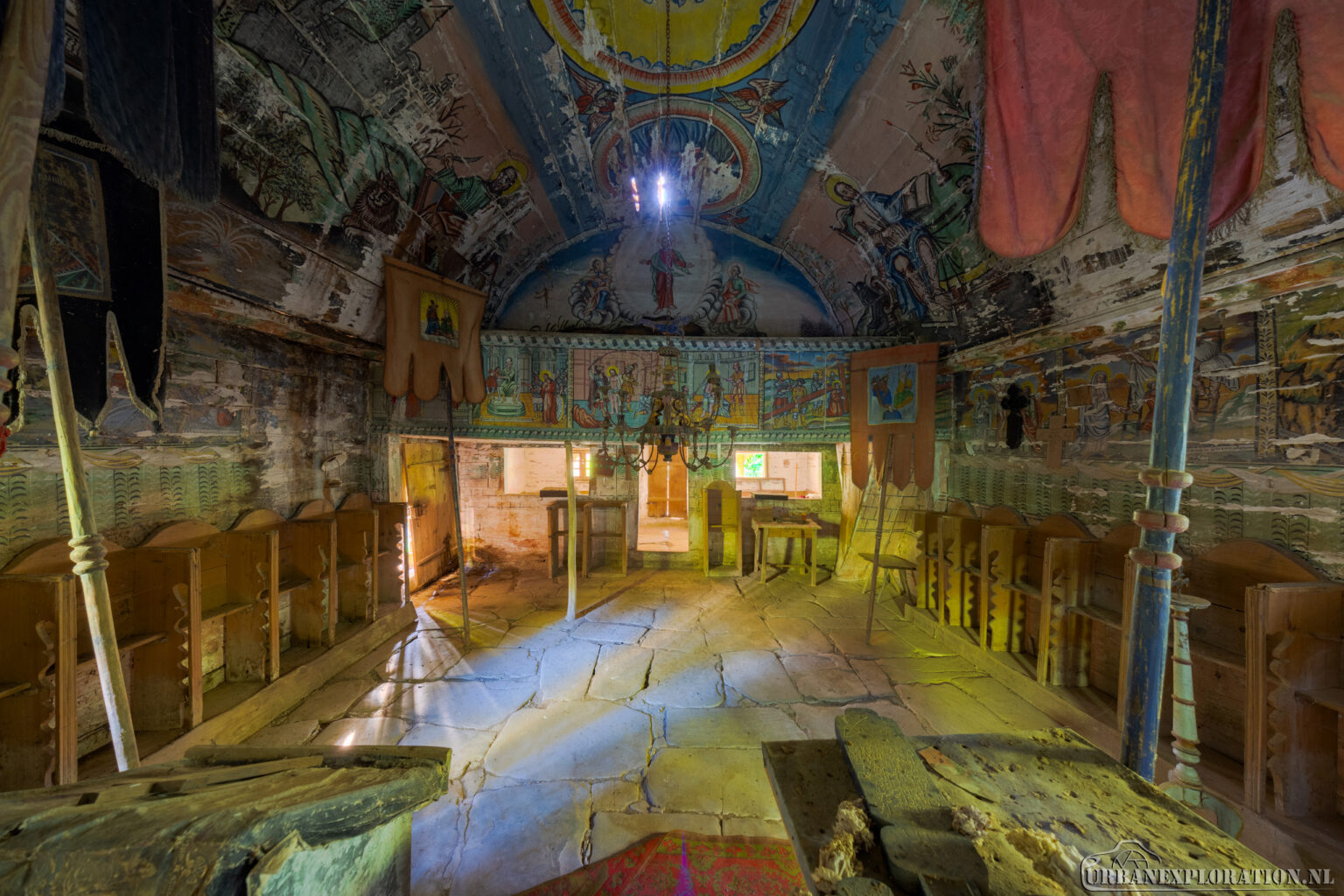
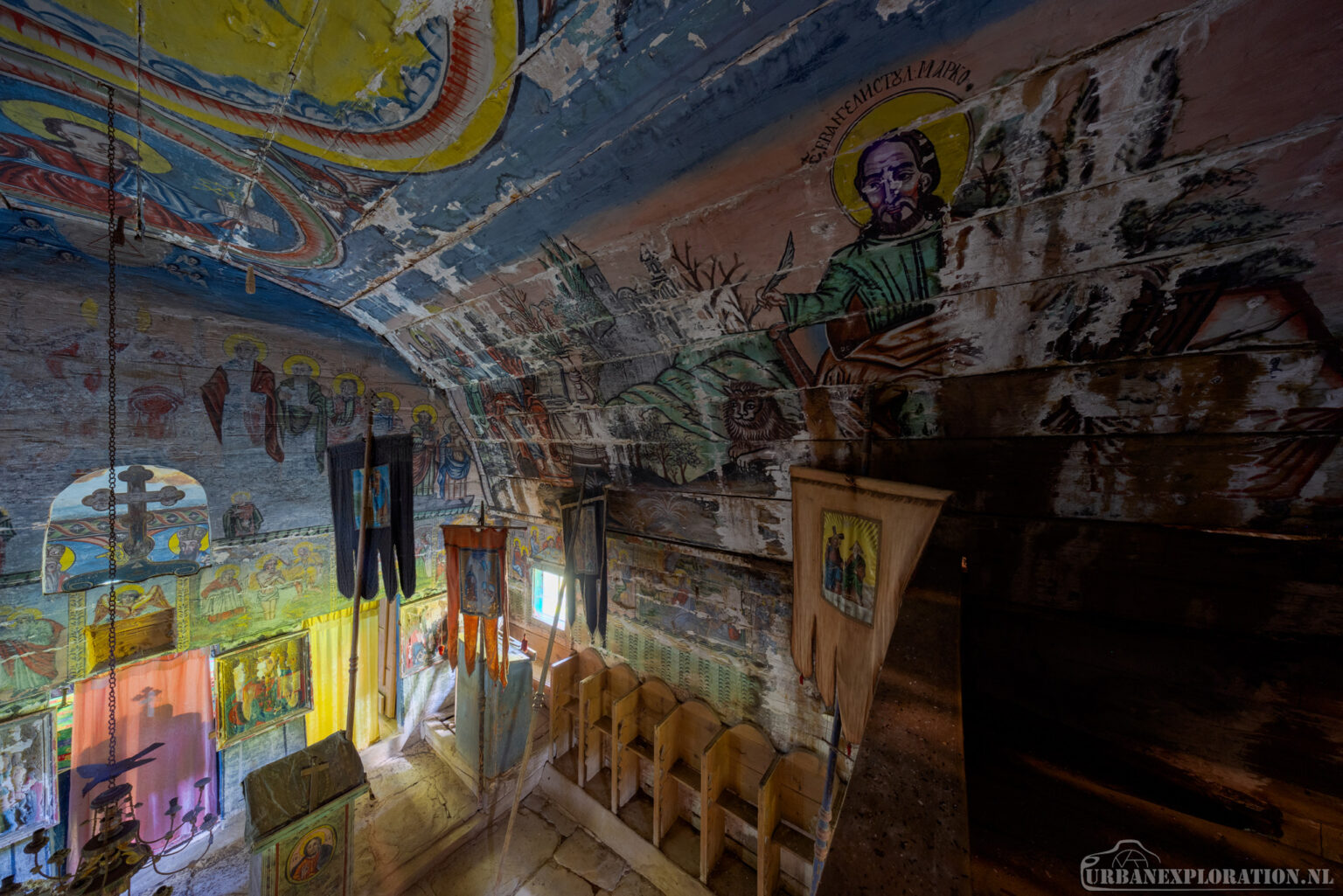
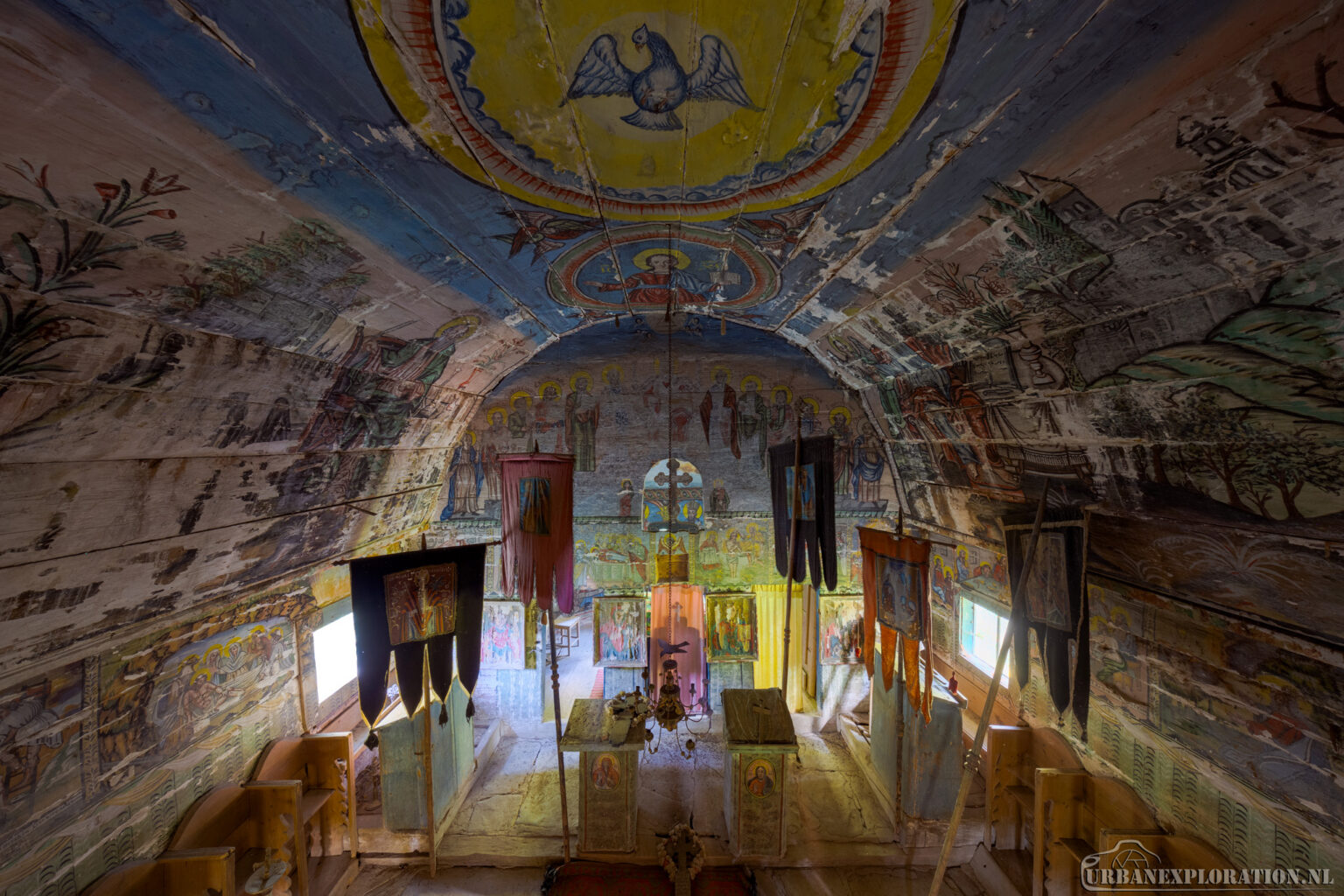
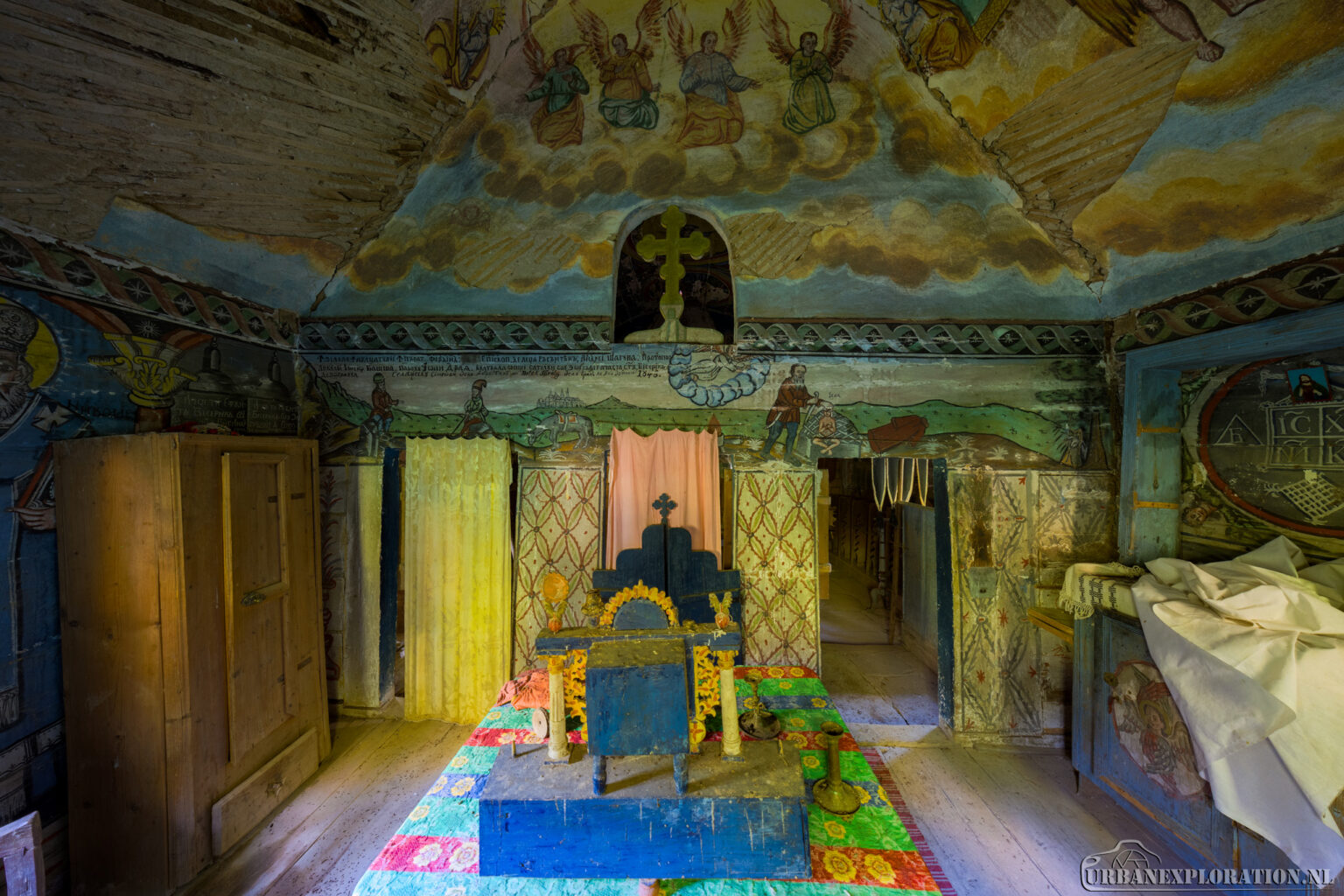
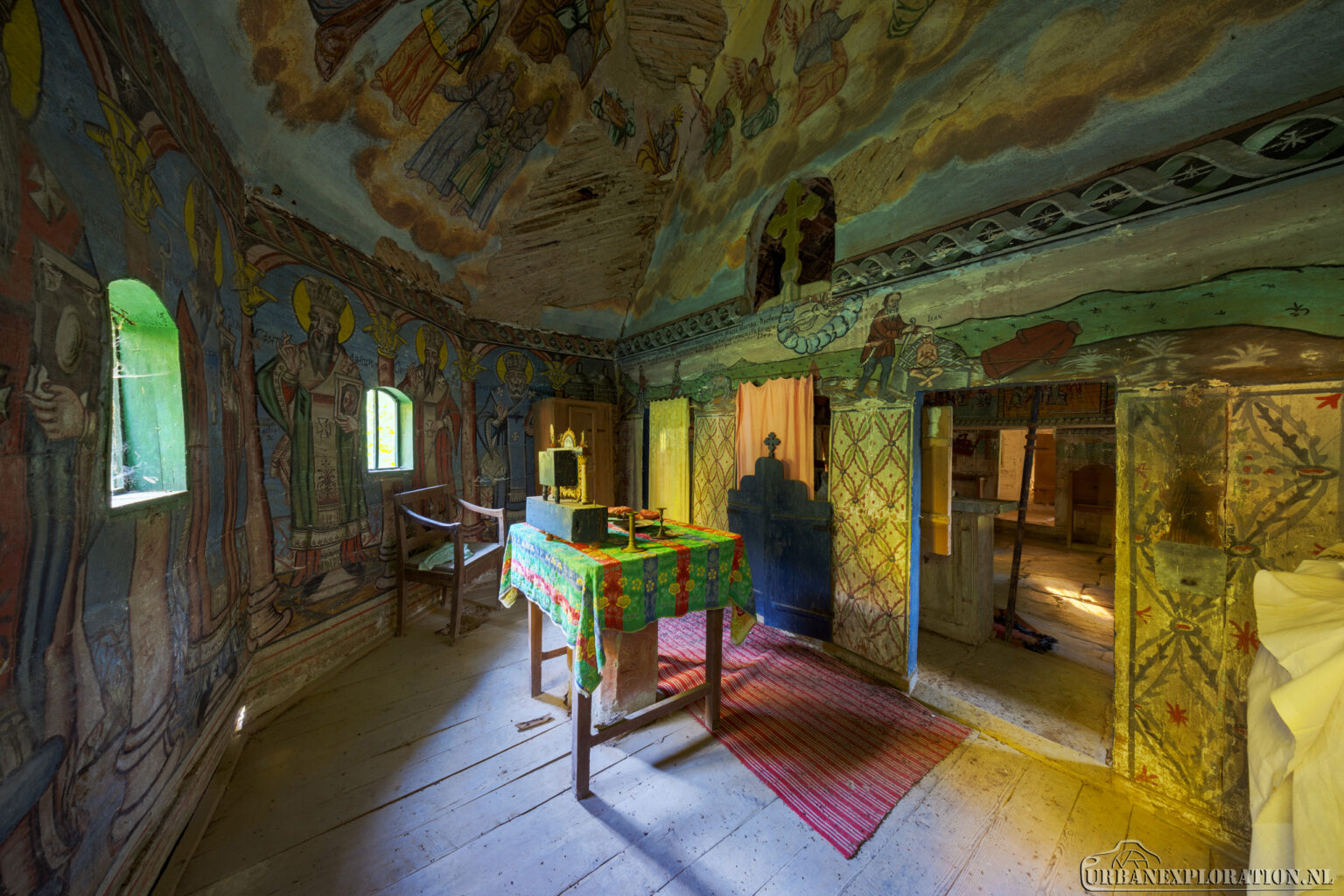
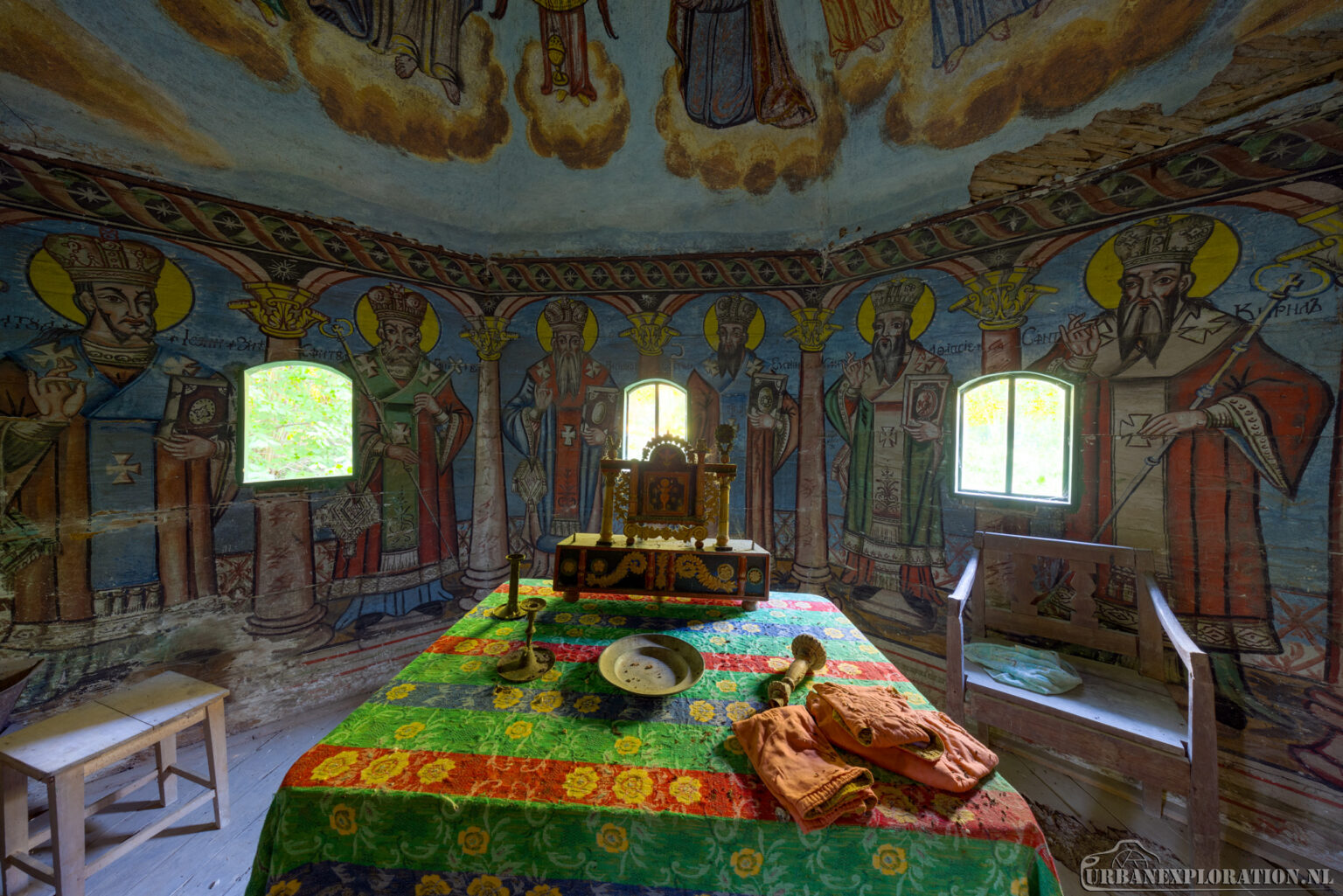
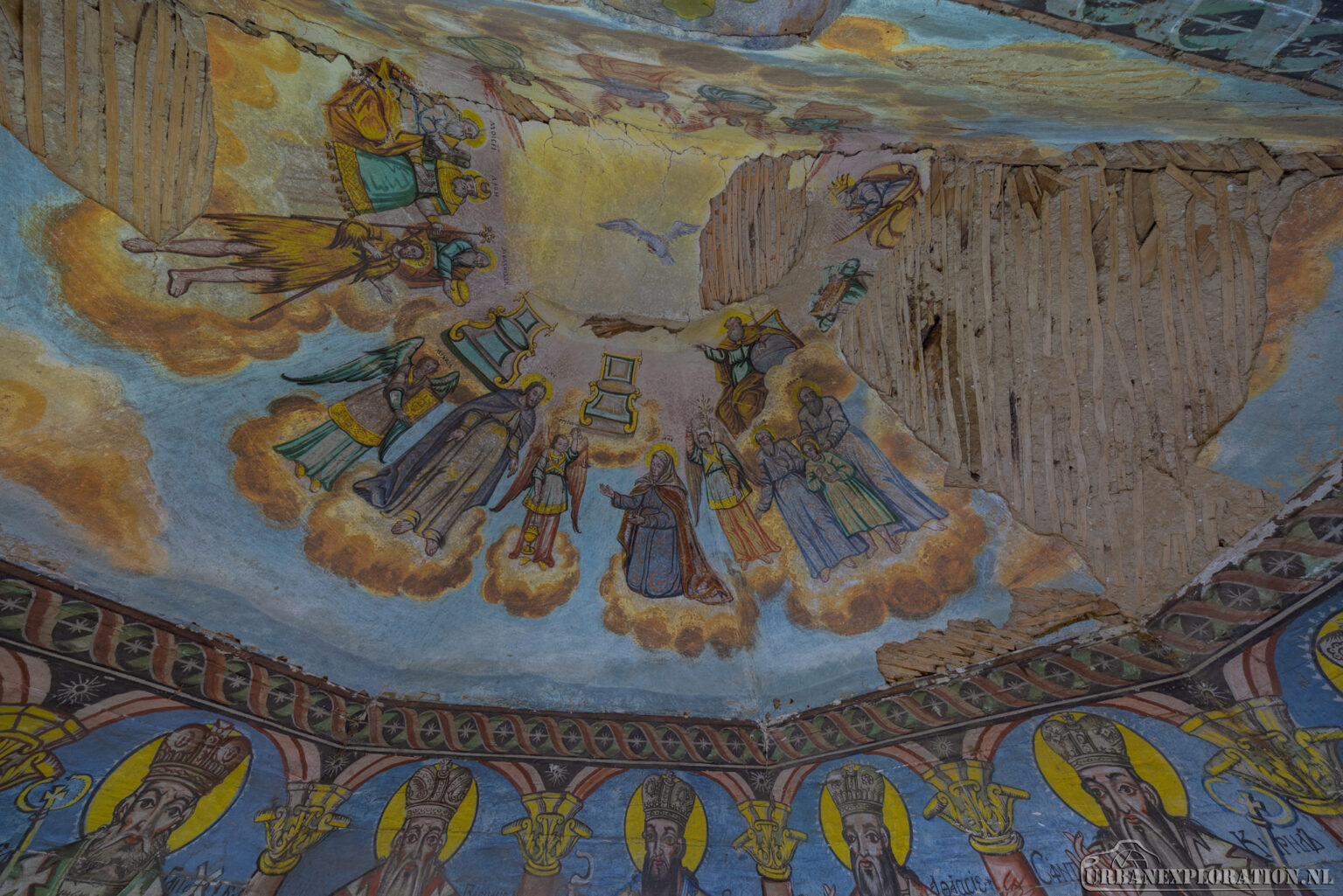
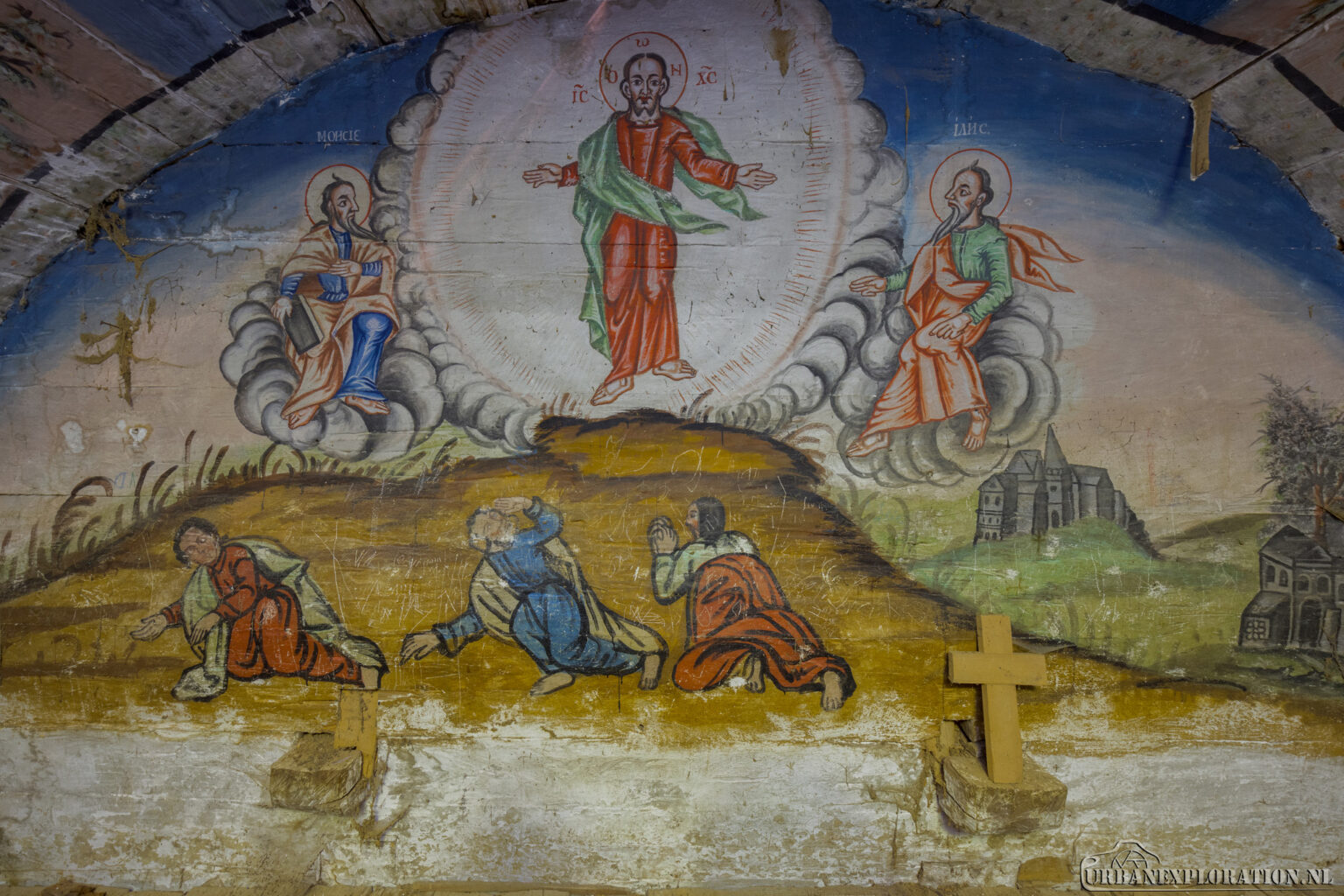
One of the church’s most remarkable features is its richly decorated interior. The walls and curved wooden ceiling contain religious paintings depicting Christ, the Virgin Mary, saints and biblical scenes.
The earliest documented paintings are associated with Andrei Vig and Mihai Sabo in 1807. Another important phase of decoration took place in 1848, when painters Simeon Selagescu and Carol Moțoc worked on the interior.
An inscription records that the 1848 paintings were financed by the local congregation, demonstrating the importance of the church to the surrounding community.
The building also contains traditional religious furnishings, including a wooden chandelier, painted candleholders and religious textiles.
Memorial crosses inside the church and its entrance porch commemorate local villagers who died during the Second World War and whose bodies were never returned home.
Today, many of the historic paintings are deteriorating. Moisture damage and peeling paint have exposed parts of the underlying wooden structure, threatening artwork that has survived for generations.
The Disappearance of Tomnatec
Tomnatec was once a thriving mountain settlement consisting of several scattered hamlets. At the beginning of the twentieth century, historical accounts describe approximately 300 families living in the wider area.
By the early 1940s, this number had fallen to around 171 families. The decline continued, leaving only 38 families by the early 1980s and approximately eight to ten around the year 2000.
The remote location, difficult terrain and limited economic opportunities contributed to the gradual depopulation.
As residents moved away, houses were abandoned, old paths became overgrown and the surrounding forest gradually reclaimed the landscape.
With fewer people available to maintain the church, the building deteriorated. Water entering through the damaged roof caused increasing problems for its wooden structure and historic paintings.
The nearby settlement of Tomnatecu de Jos once had another wooden church, dedicated to Saint Nicholas. Built in the nineteenth century, that church eventually collapsed, illustrating the vulnerability of these historic buildings.
Attempts to Save the Church
The Church of the Annunciation is officially recognised as a Romanian historic monument under registration number HD-II-m-B-03467.
In April 2024, volunteers associated with the Drumul Iancului heritage initiative travelled to the remote church to carry out emergency maintenance.
They cleaned the interior, removed vegetation around the building and installed temporary protection against rainwater entering through the damaged roof.
The work was coordinated by Daniel Stanc and supported by representatives of the Romanian Orthodox Church.
Although the intervention helped protect the building from further immediate damage, it was not a complete restoration. The church still required extensive conservation work to preserve its structure and historic paintings.
A Forgotten Piece of Romanian Heritage
For more than two centuries, the wooden church of Tomnatic de Sus has witnessed the changing fortunes of the surrounding mountain community.
Its historic paintings, traditional architecture and overgrown cemetery preserve the memory of generations who once lived and worshipped here.
Although the volunteers’ efforts in 2024 brought renewed attention to the building, its long-term future remains uncertain.
Hidden among the trees, the Church of the Annunciation stands as a surviving reminder of a mountain settlement that has almost disappeared.
- Visited - September 2026
- Defunct - Unknown
- Status - In decline
- Country - Romenia