The Palace of Sports was built during the Soviet era as a large public sports complex. The building combined several sporting facilities under one roof, including an indoor swimming pool and a large sports hall used for activities such as basketball and gymnastics. The size and elaborate interior show that this was considerably more than a simple local gymnasium.
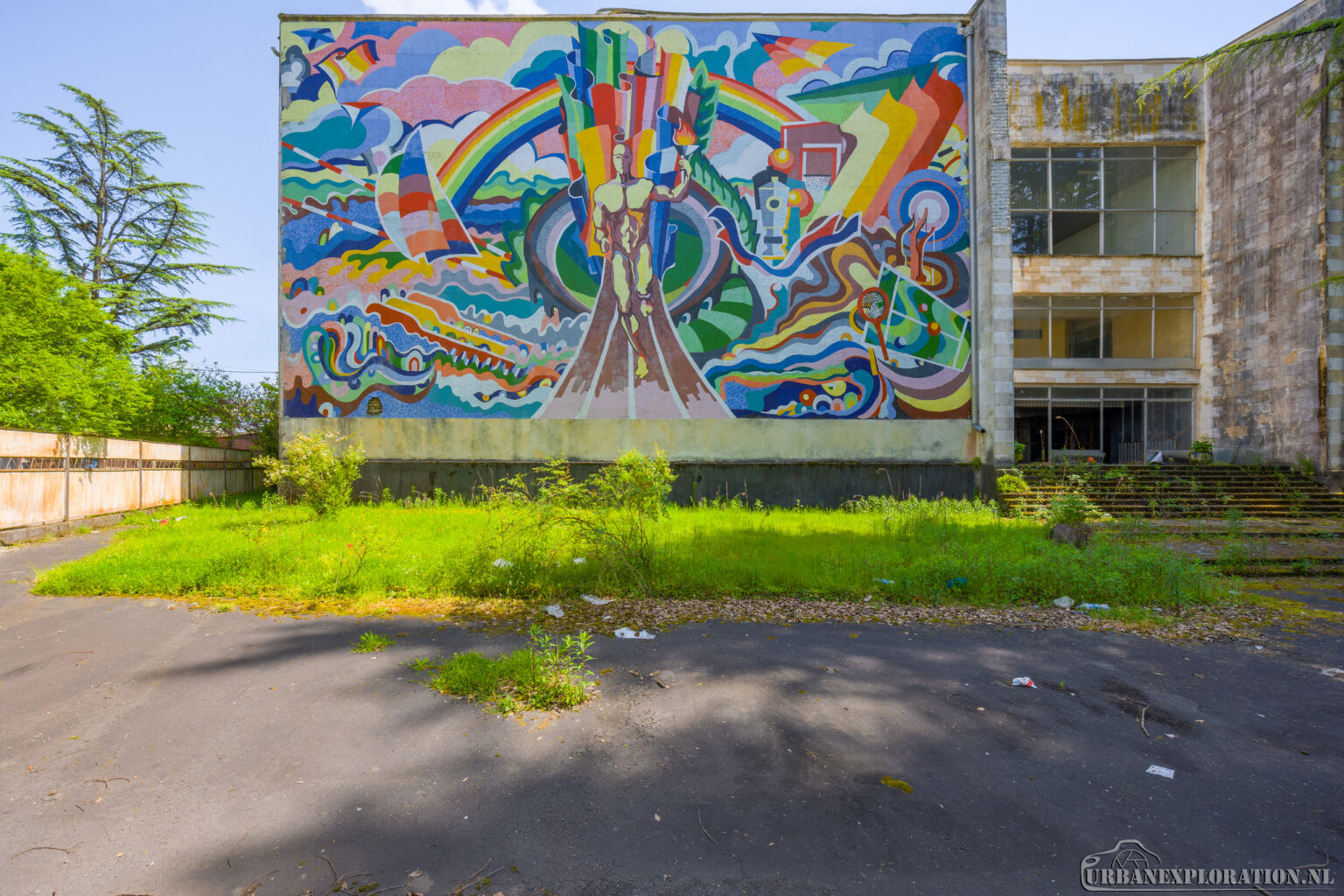
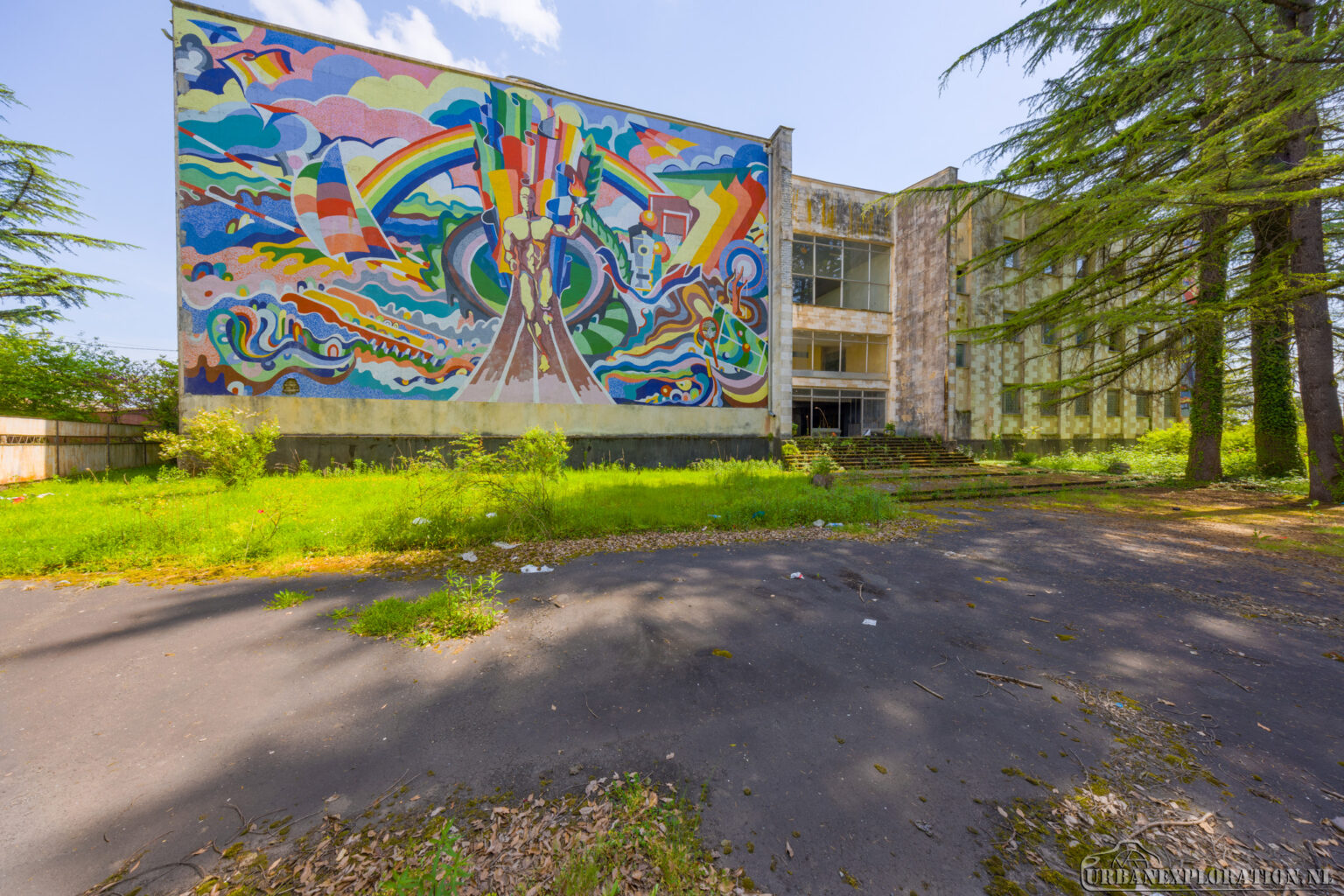
One of the most striking features of the complex is its monumental mosaic art. The large exterior mosaic was created by Georgian artist Apolon Kharebava and depicts an athlete carrying a burning torch, surrounded by references to different sports. Sailing, basketball and tennis can be recognised among the colourful abstract shapes. Monumental mosaics like this were a characteristic element of Soviet public architecture, combining art with themes such as sport, progress and physical achievement.
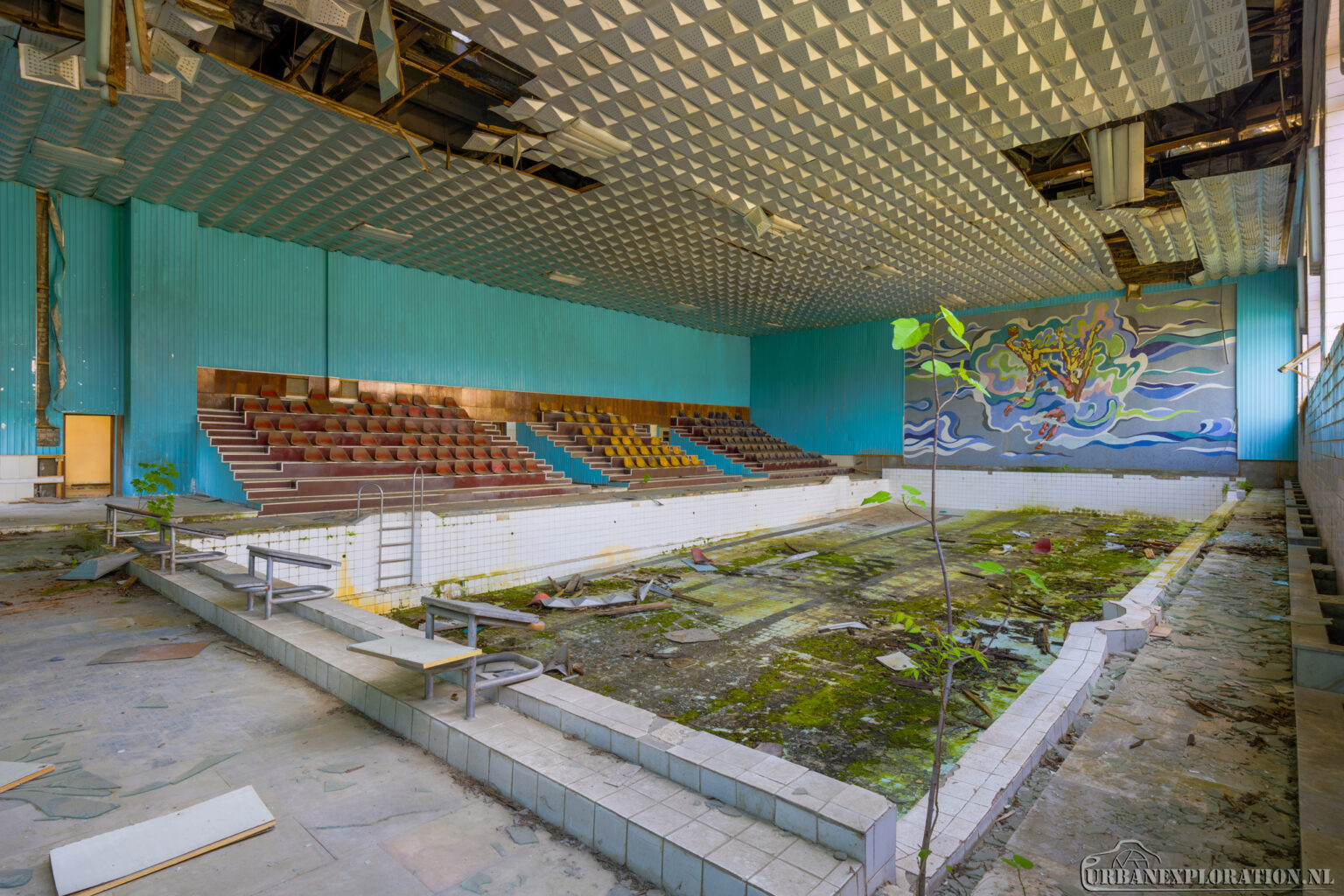
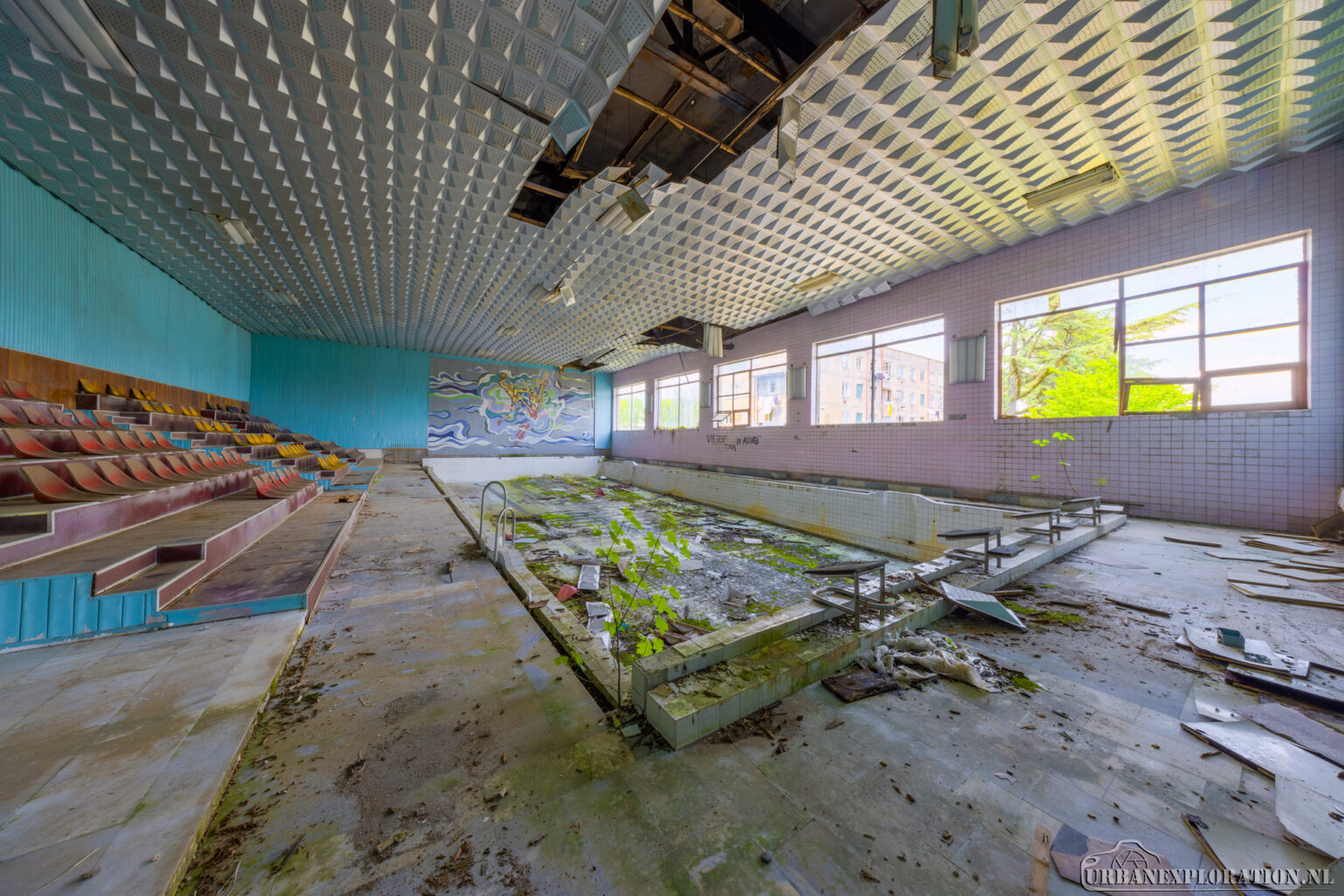
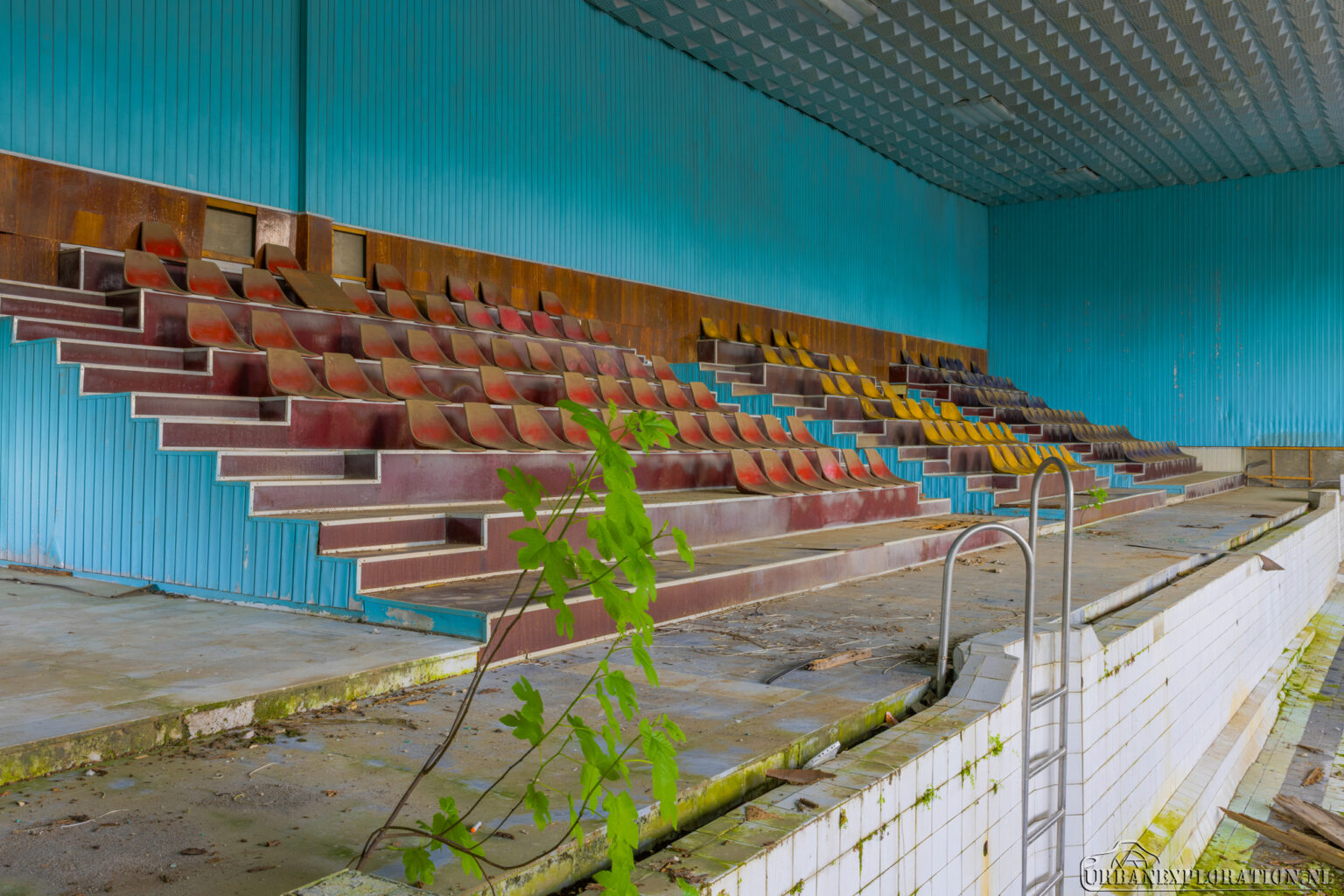
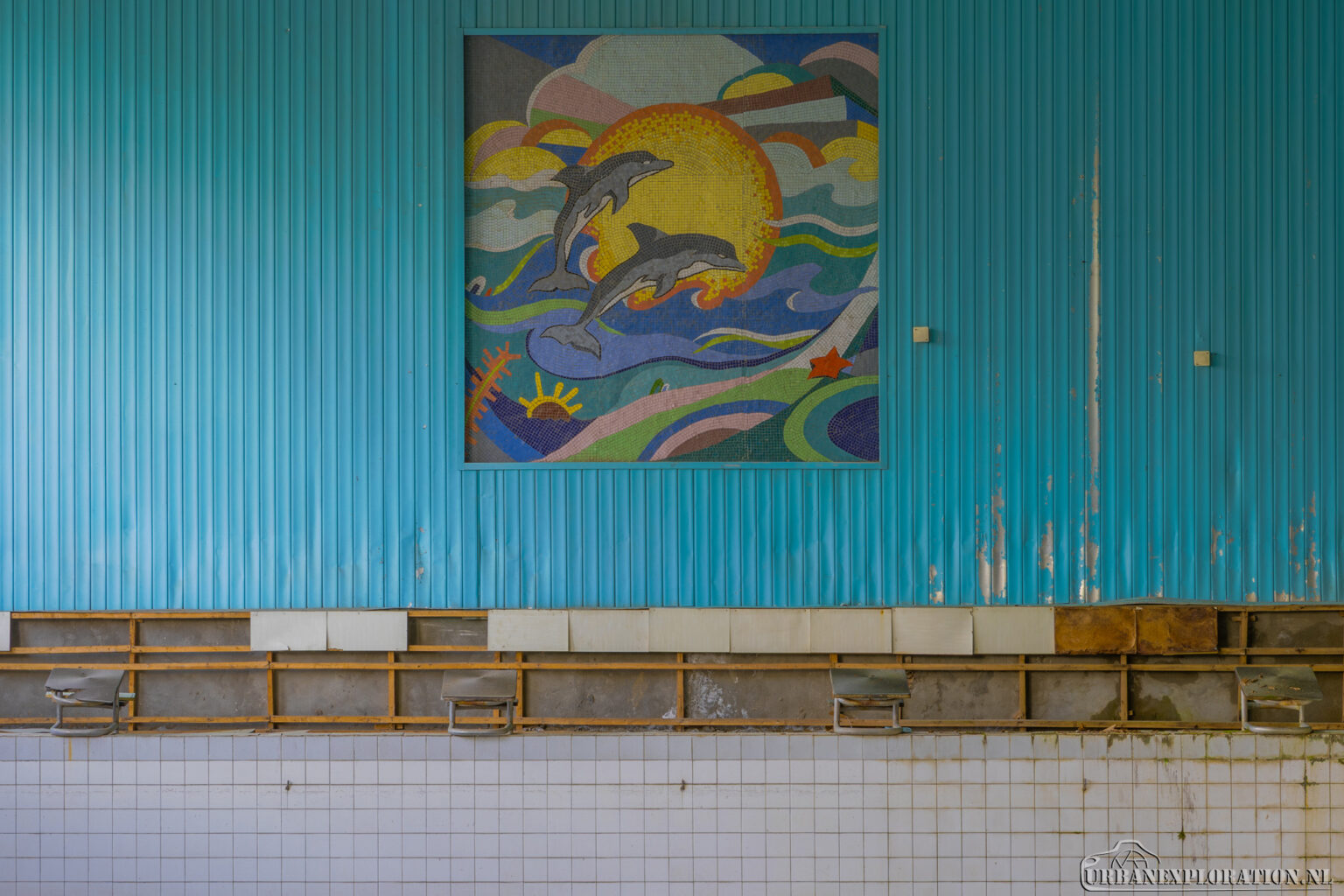
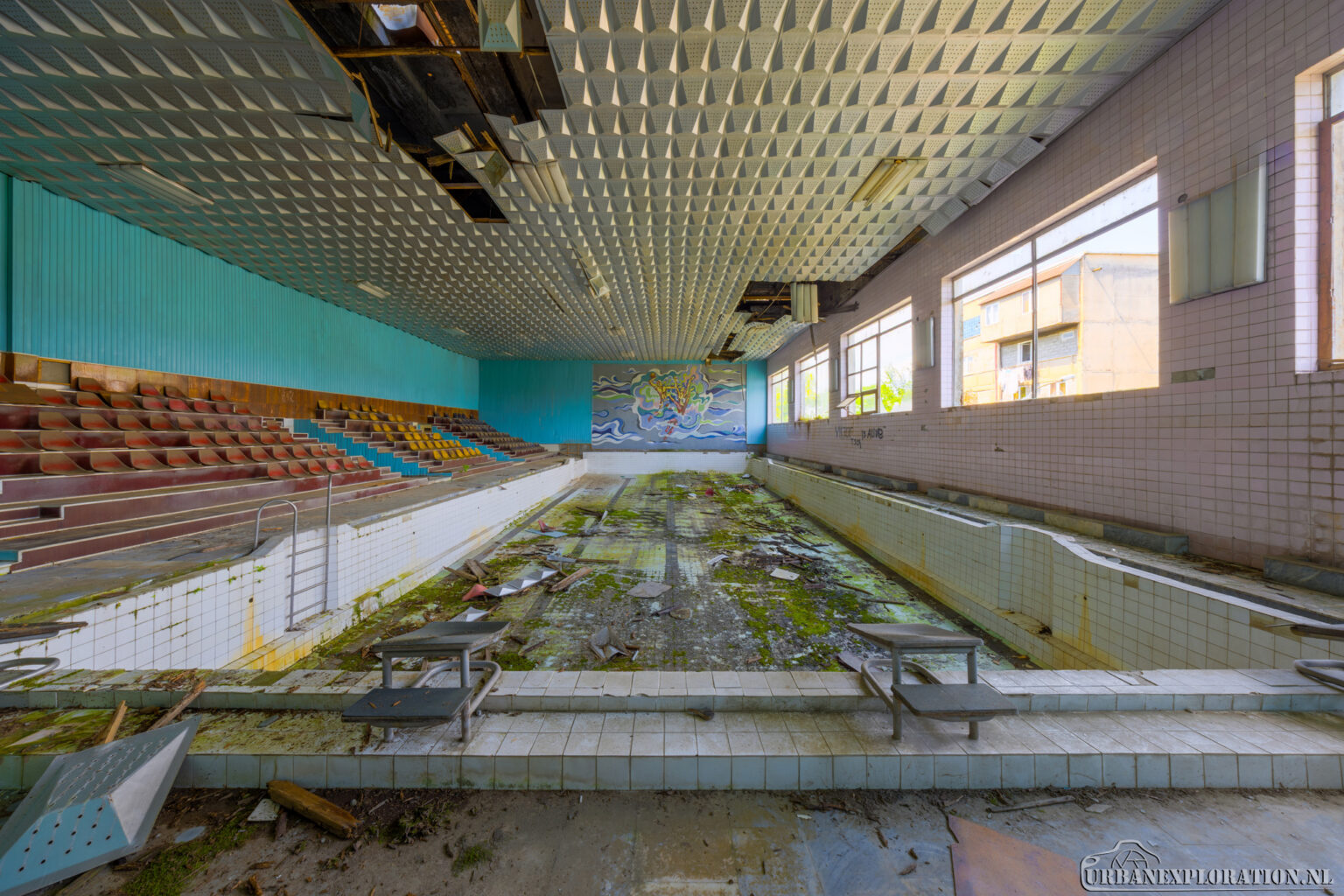
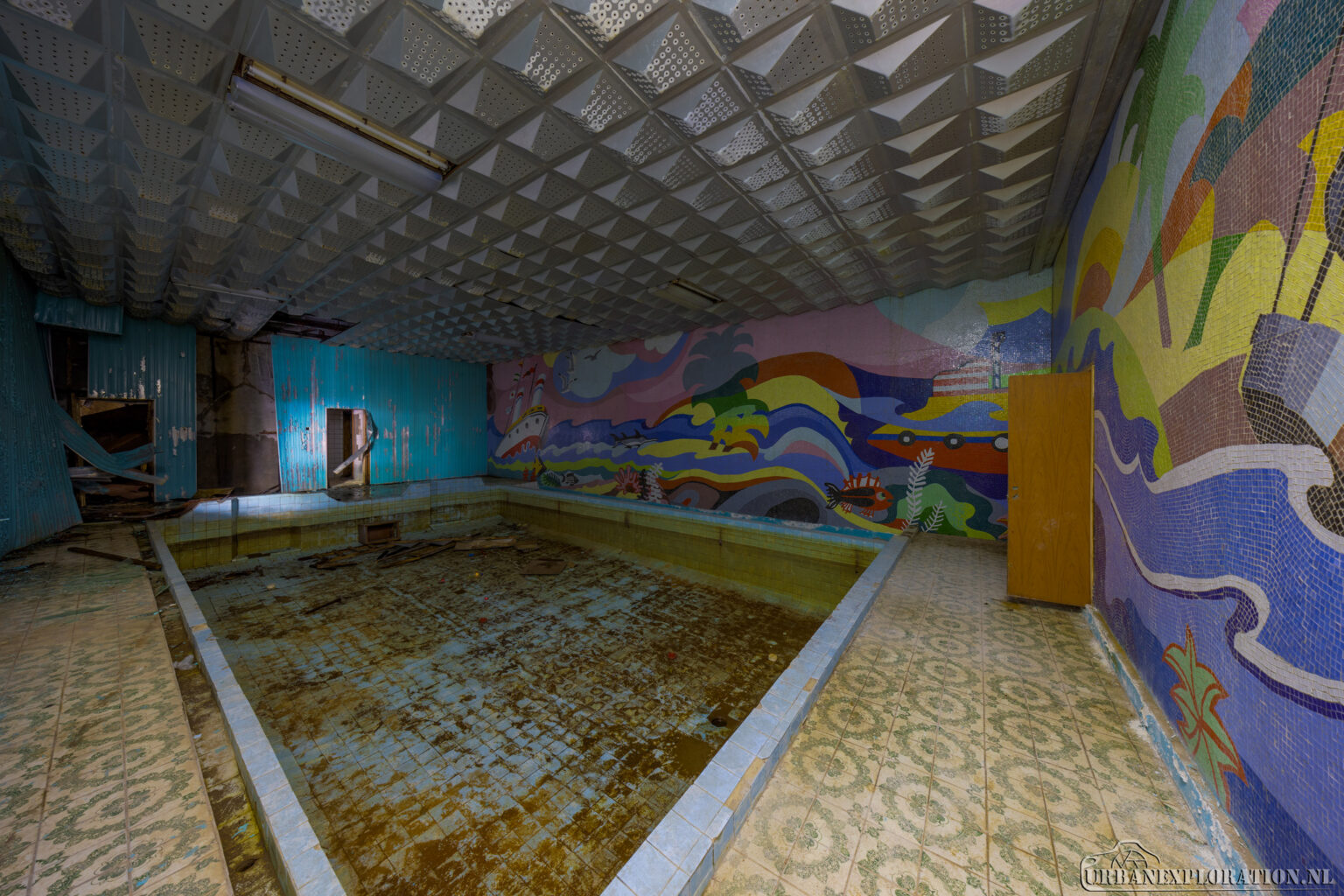
The swimming hall was also richly decorated. Large mosaics featuring dolphins, waves, the sun and human figures covered parts of the walls. The pool itself was equipped with starting blocks and permanent spectator seating, indicating that it was intended for organised swimming and competitions rather than recreational use alone.
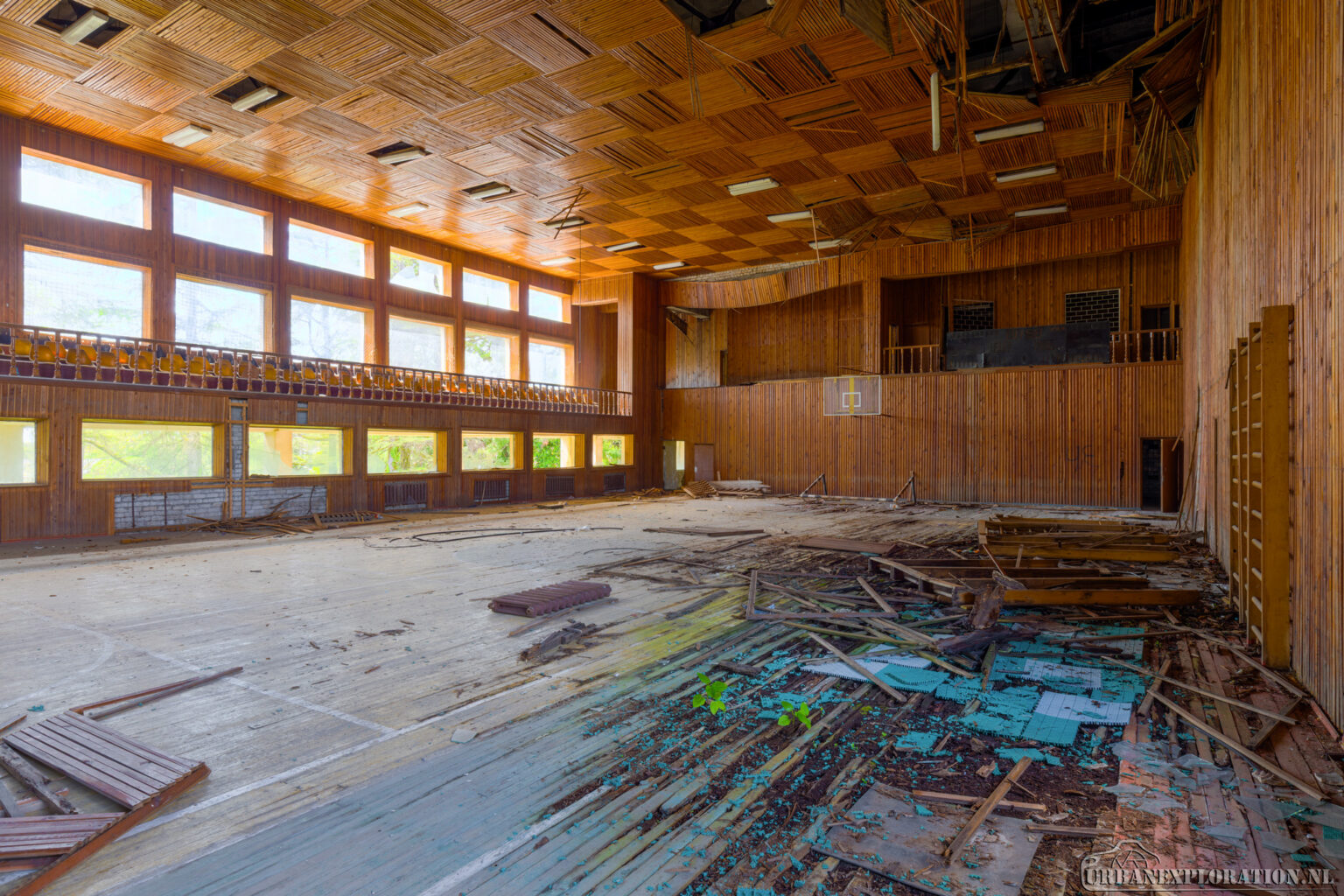
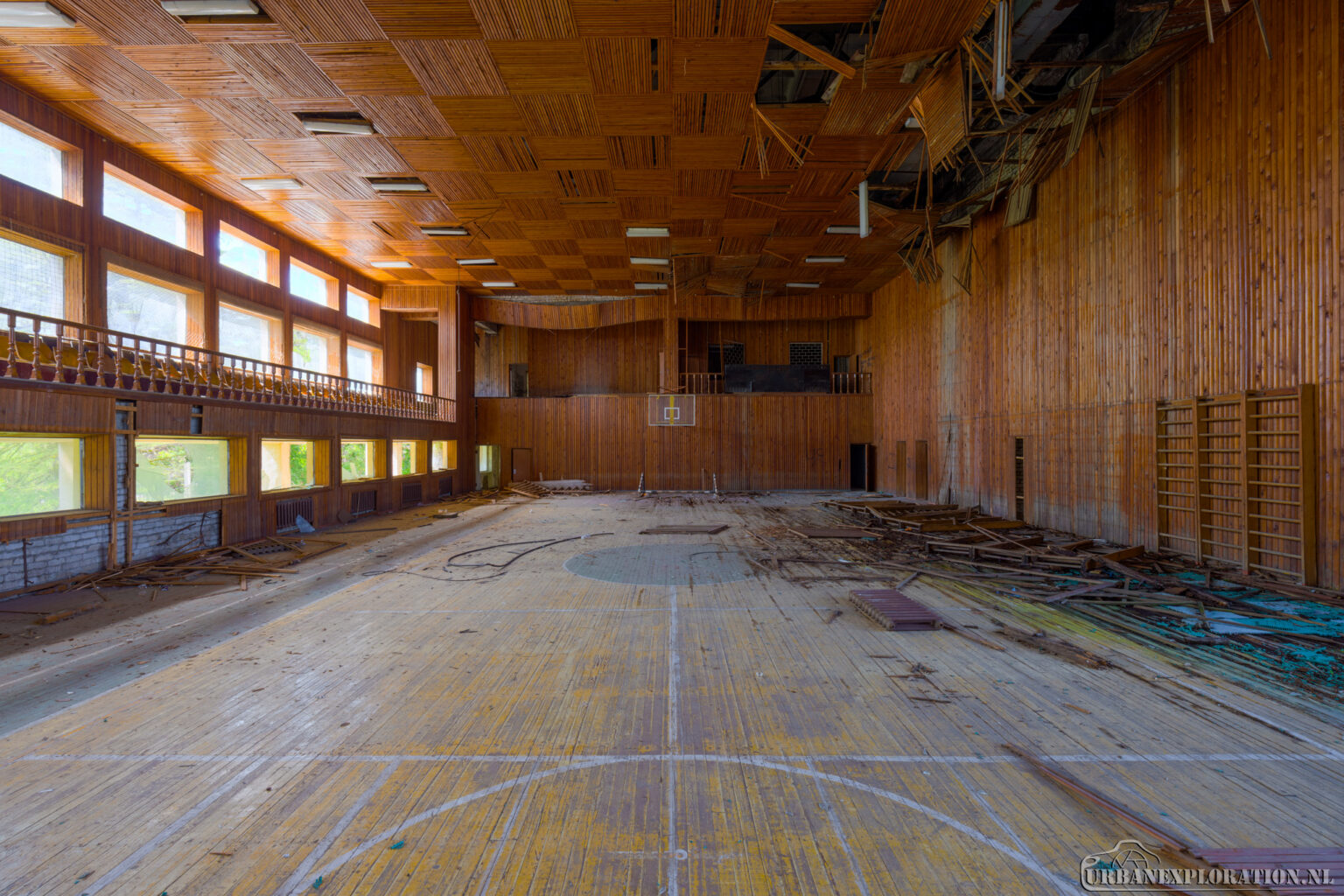
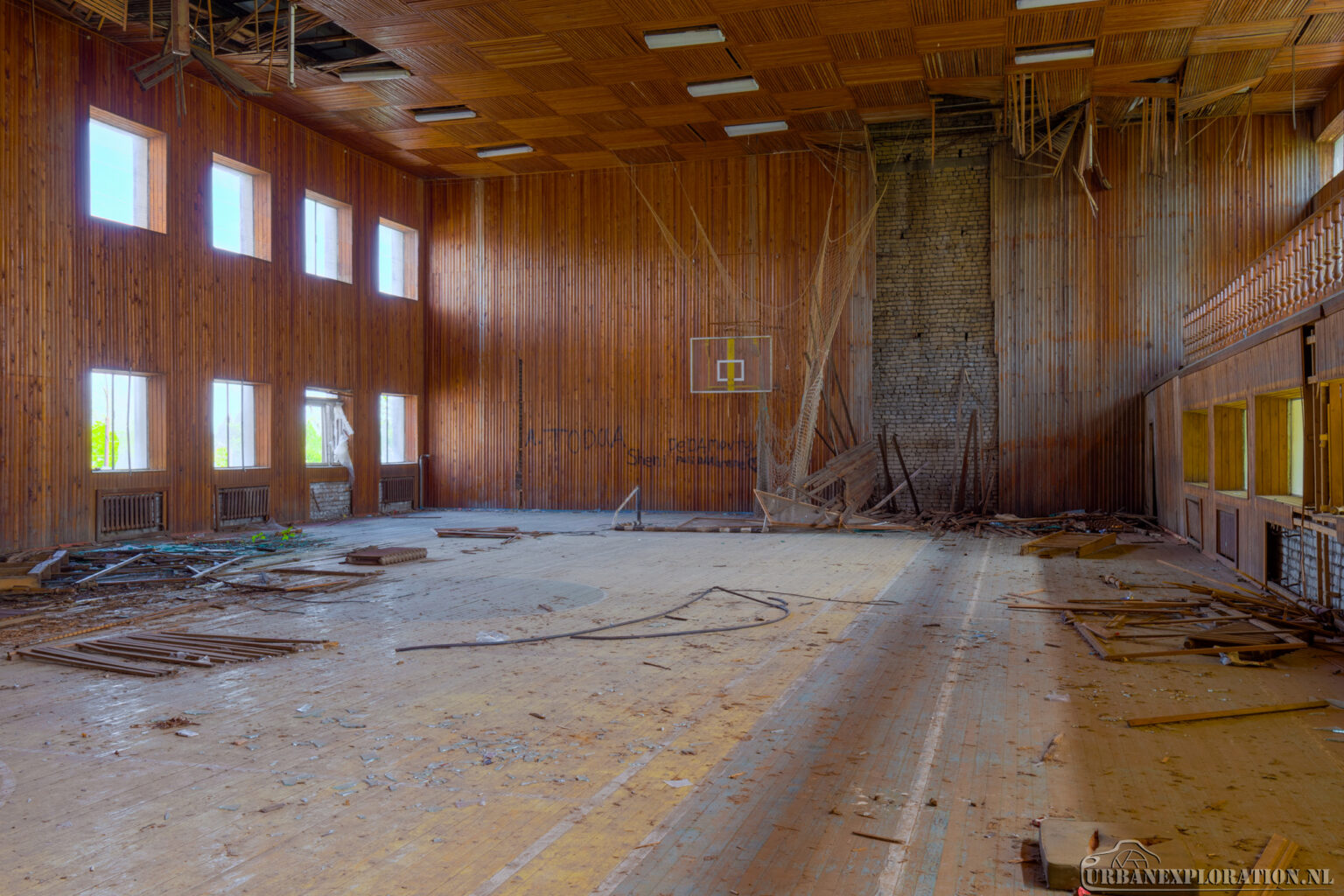
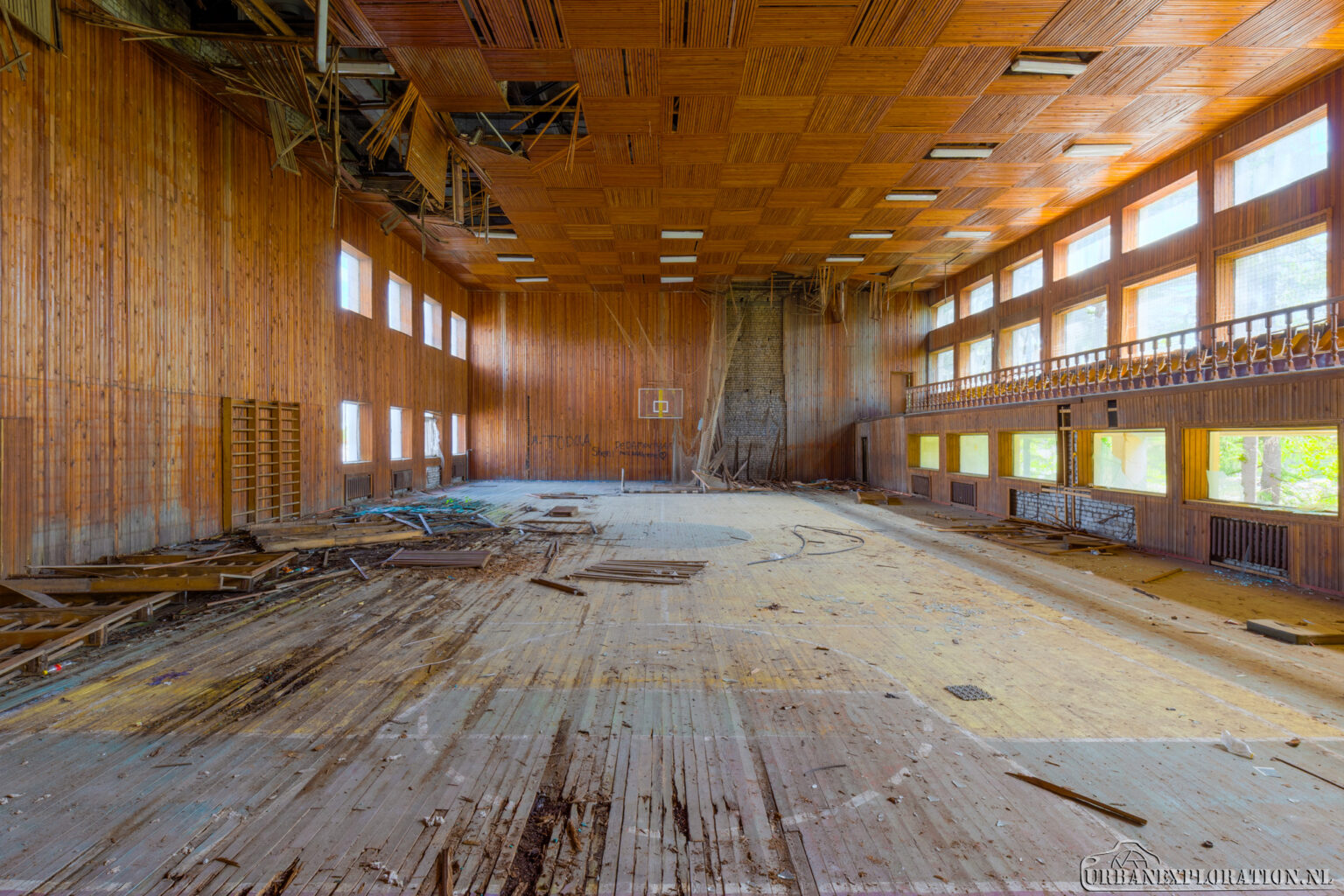
Elsewhere in the complex was a large wooden sports hall with a basketball court and spectator area. Much of its original wooden wall and ceiling finish still survives, although sections of the roof and ceiling have collapsed.
After the Soviet period the complex eventually fell out of use. The exact date of closure is not well documented. Years of abandonment have left the building heavily damaged by water, vegetation and decay. Parts of the ceilings have collapsed, windows have disappeared and plants now grow inside the empty swimming pool.
Despite its condition, much of the original character remains visible. The empty pool, wooden sports hall and especially the surviving mosaics make the Palace of Sports a remarkable example of Soviet-era sports architecture and monumental art.
Visited - May 2025
Defunct - Unknown
Status - In decline
Country - Georgia
Here are some other albums that might be of interest.