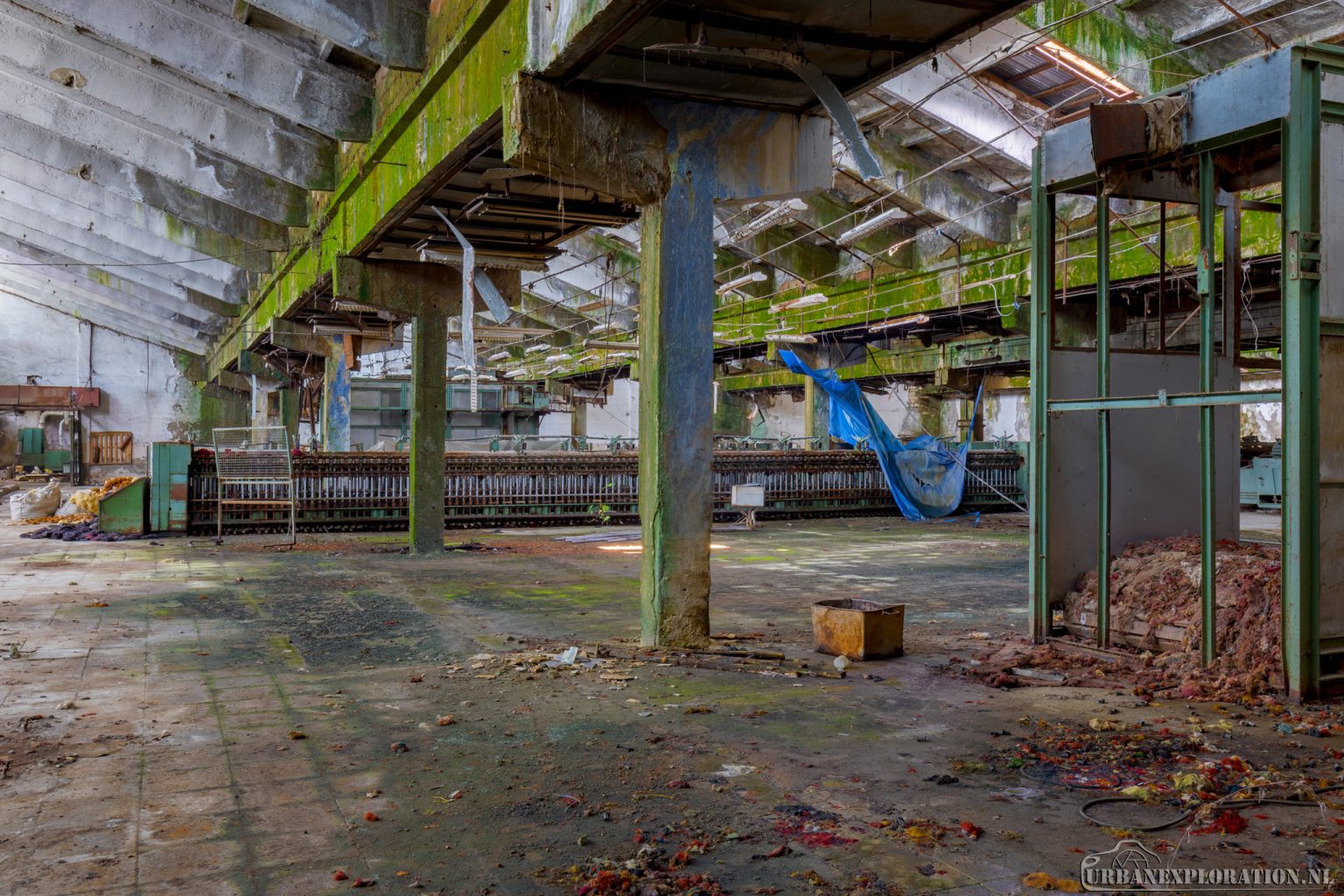
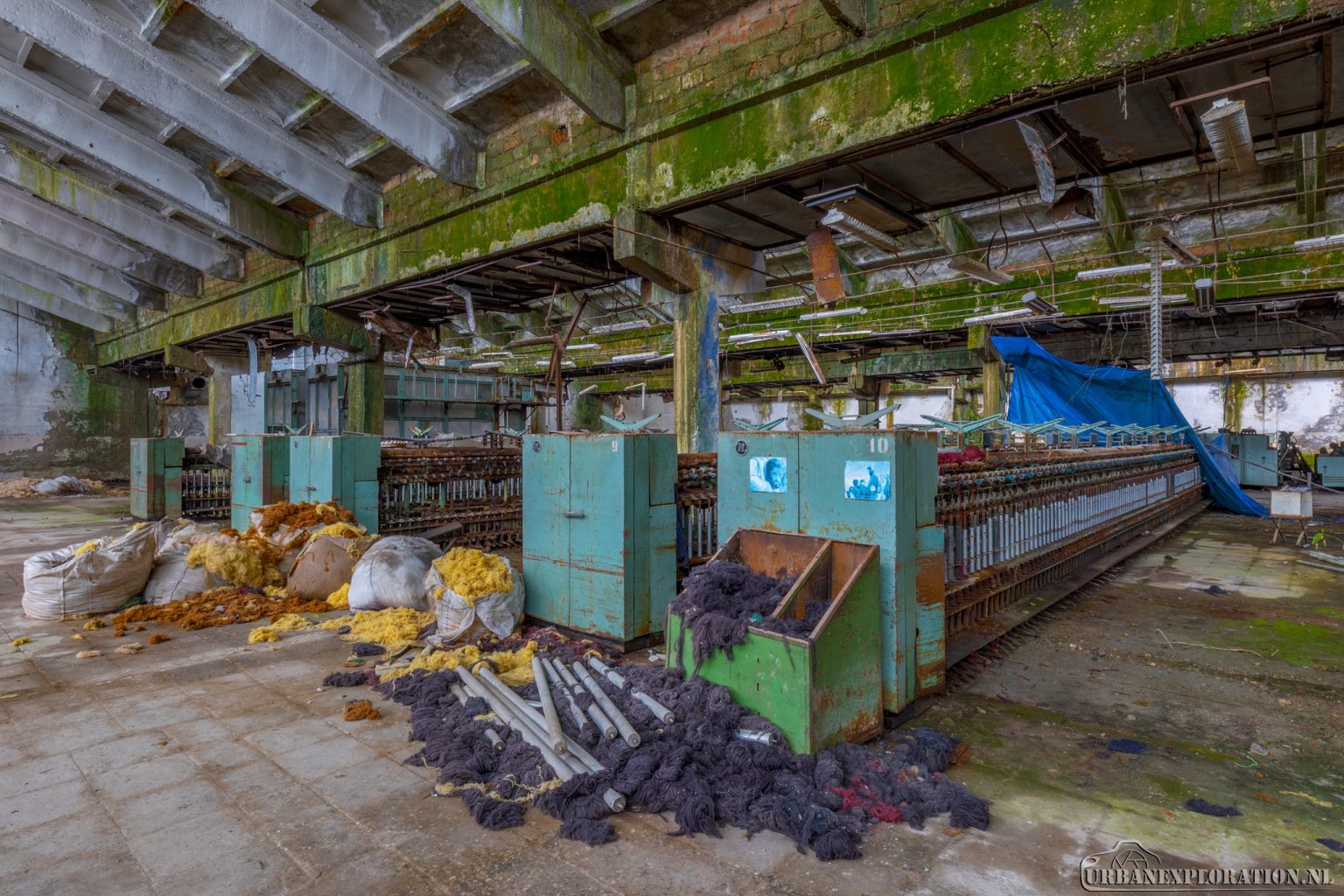
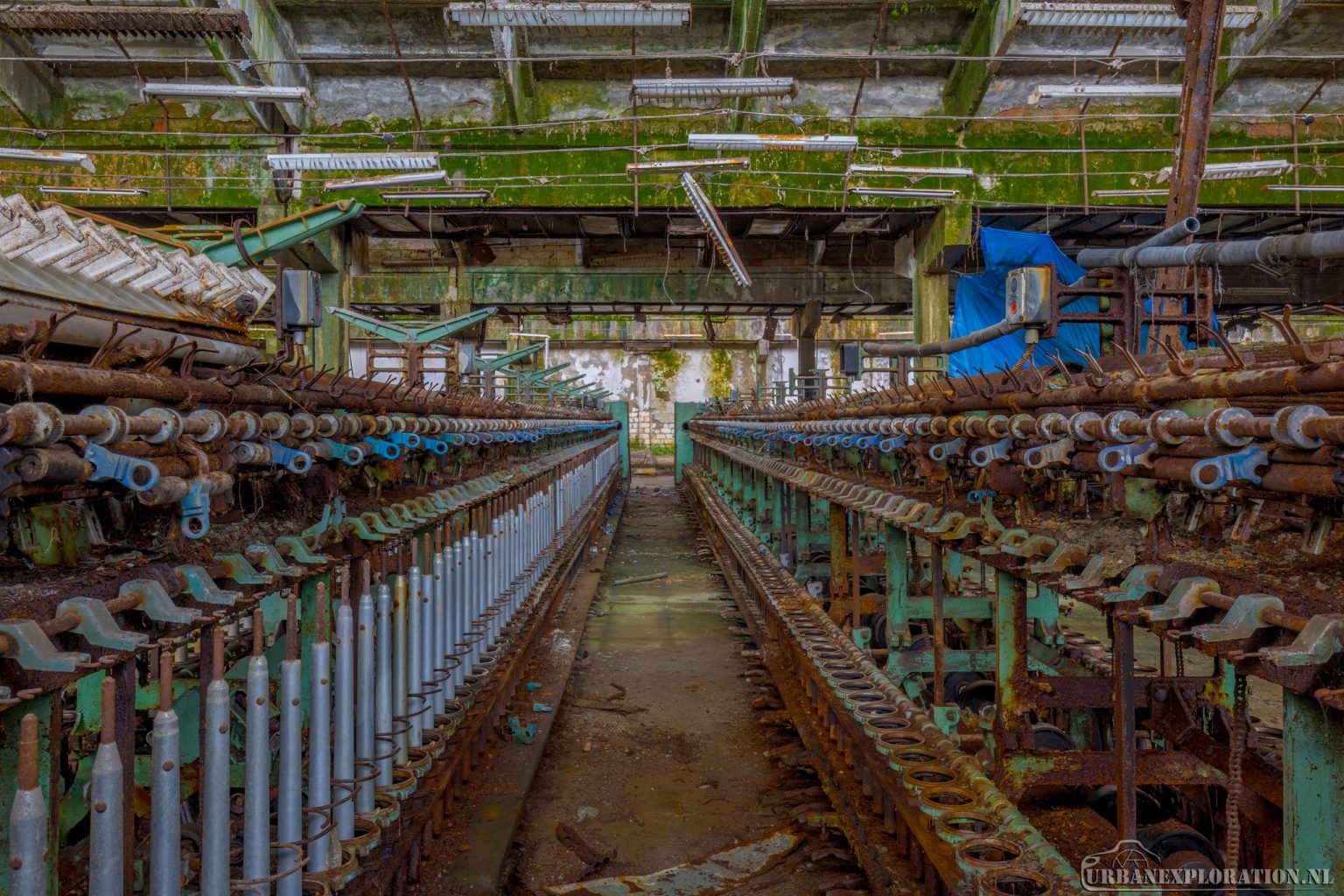
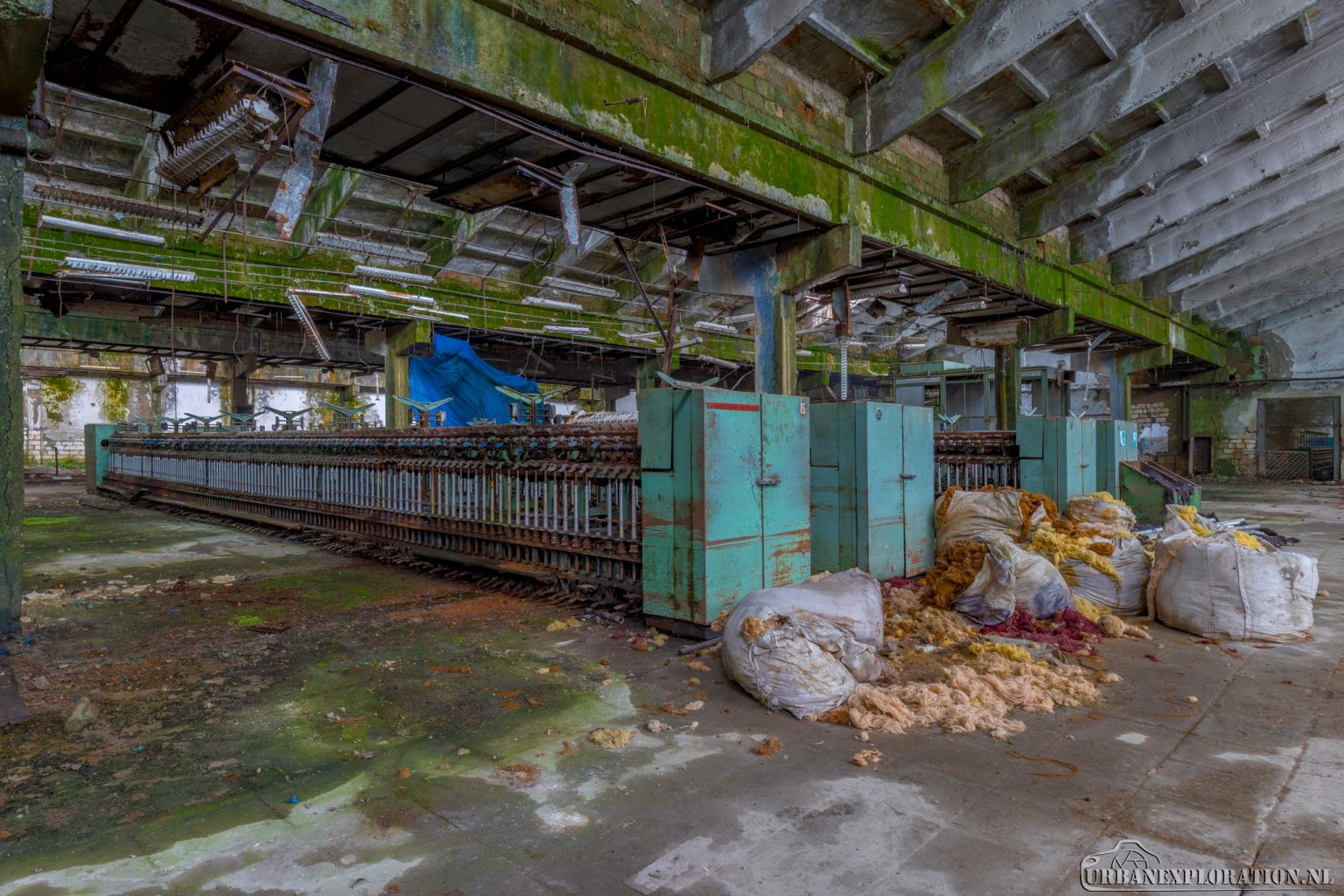
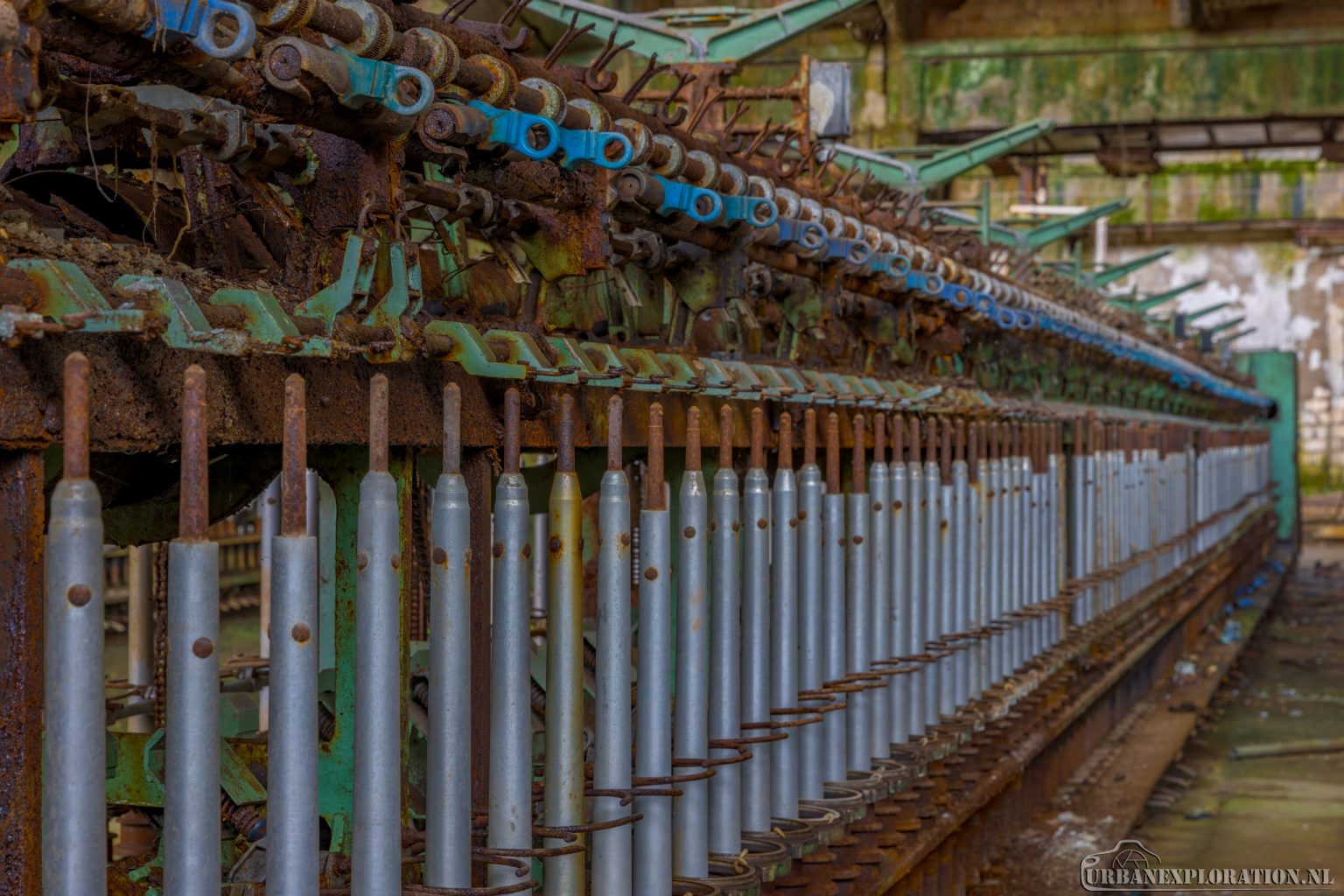
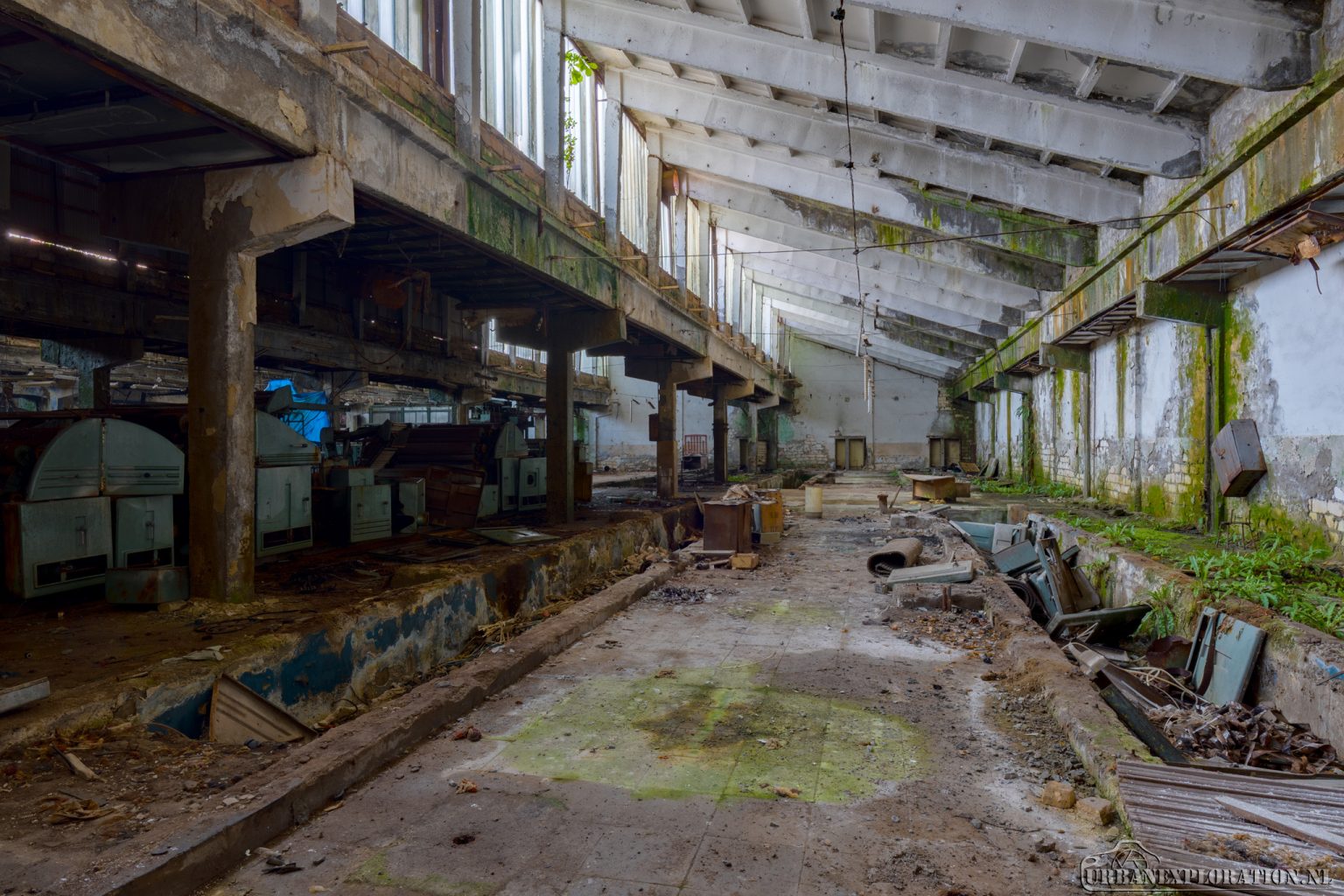
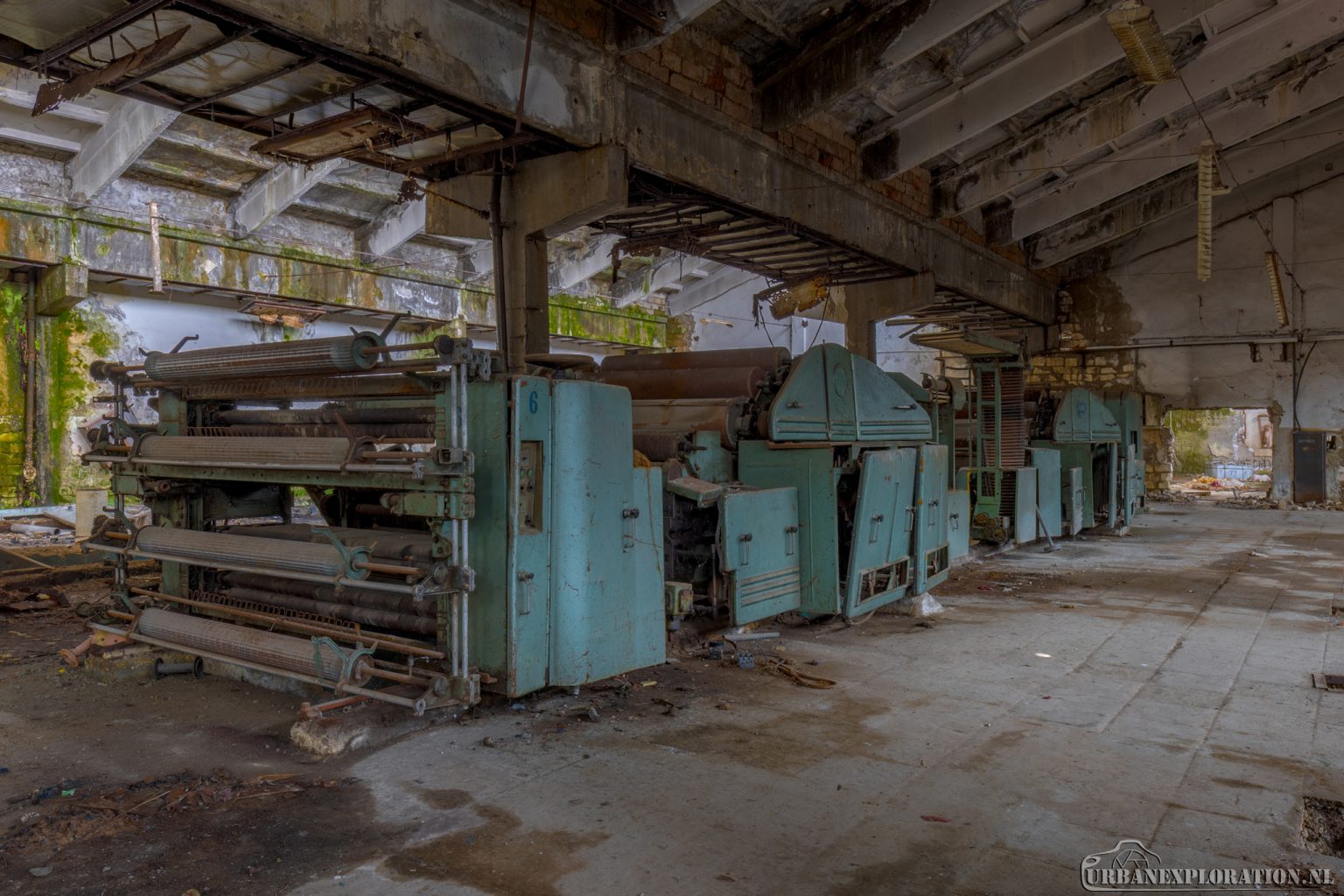
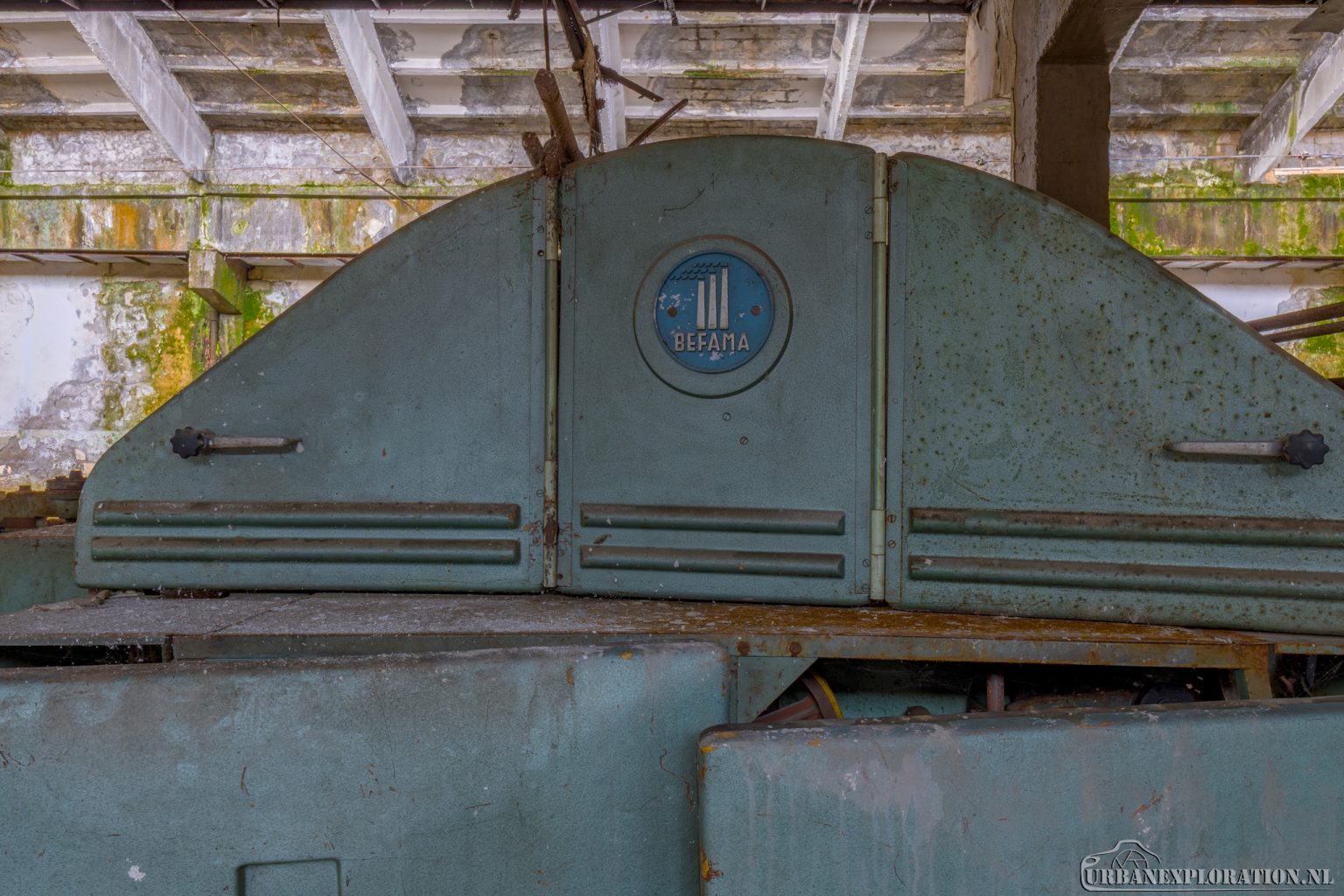
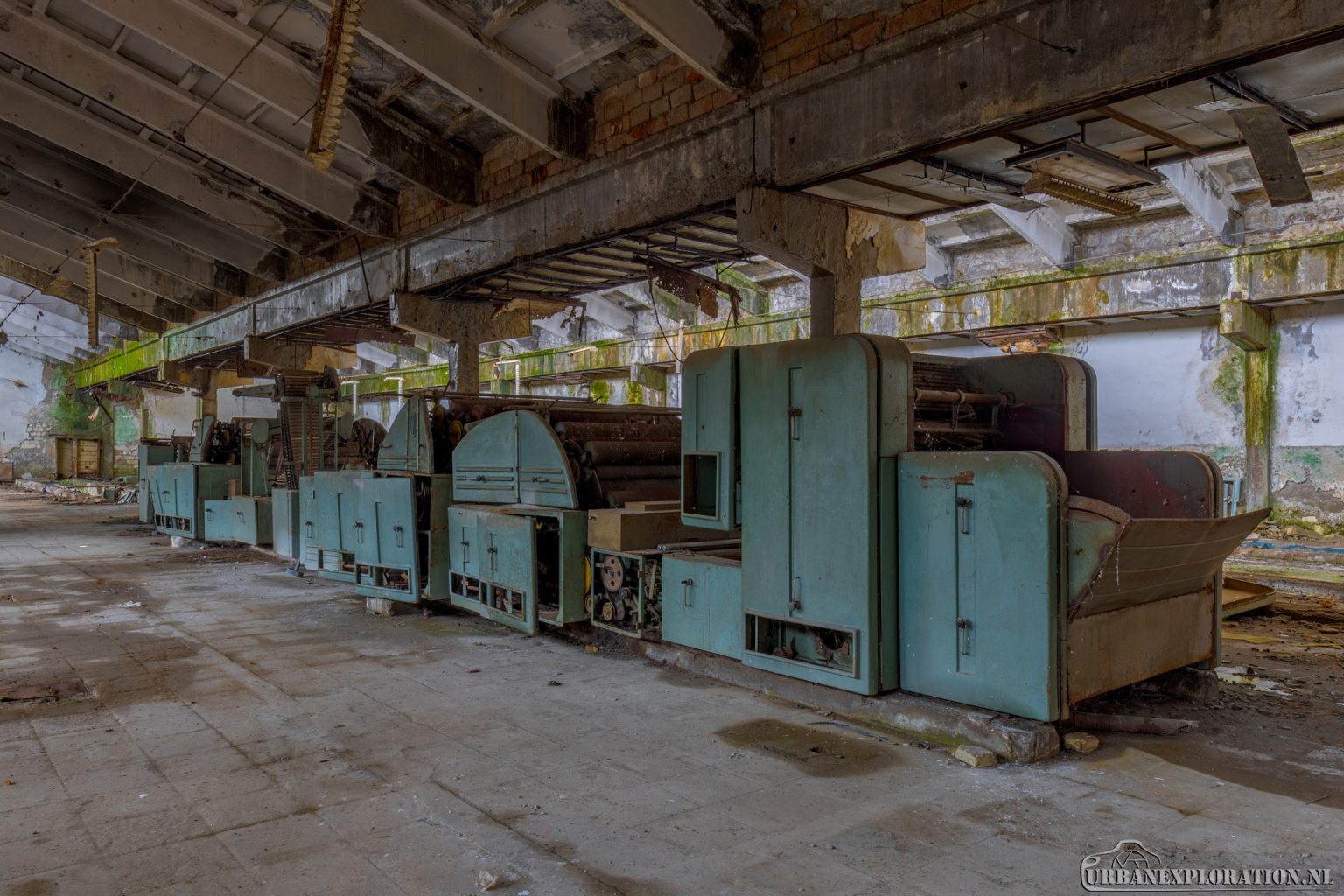
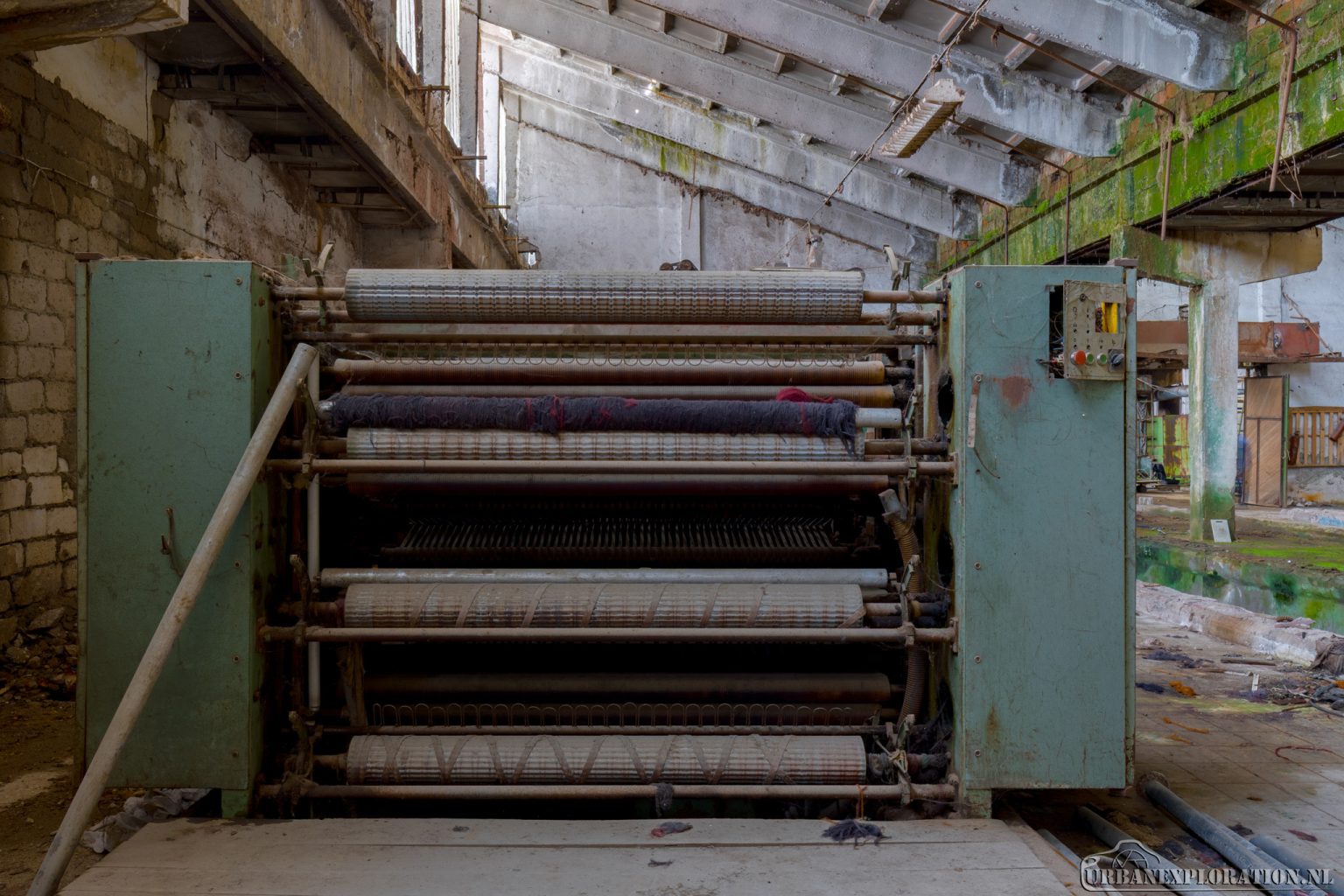
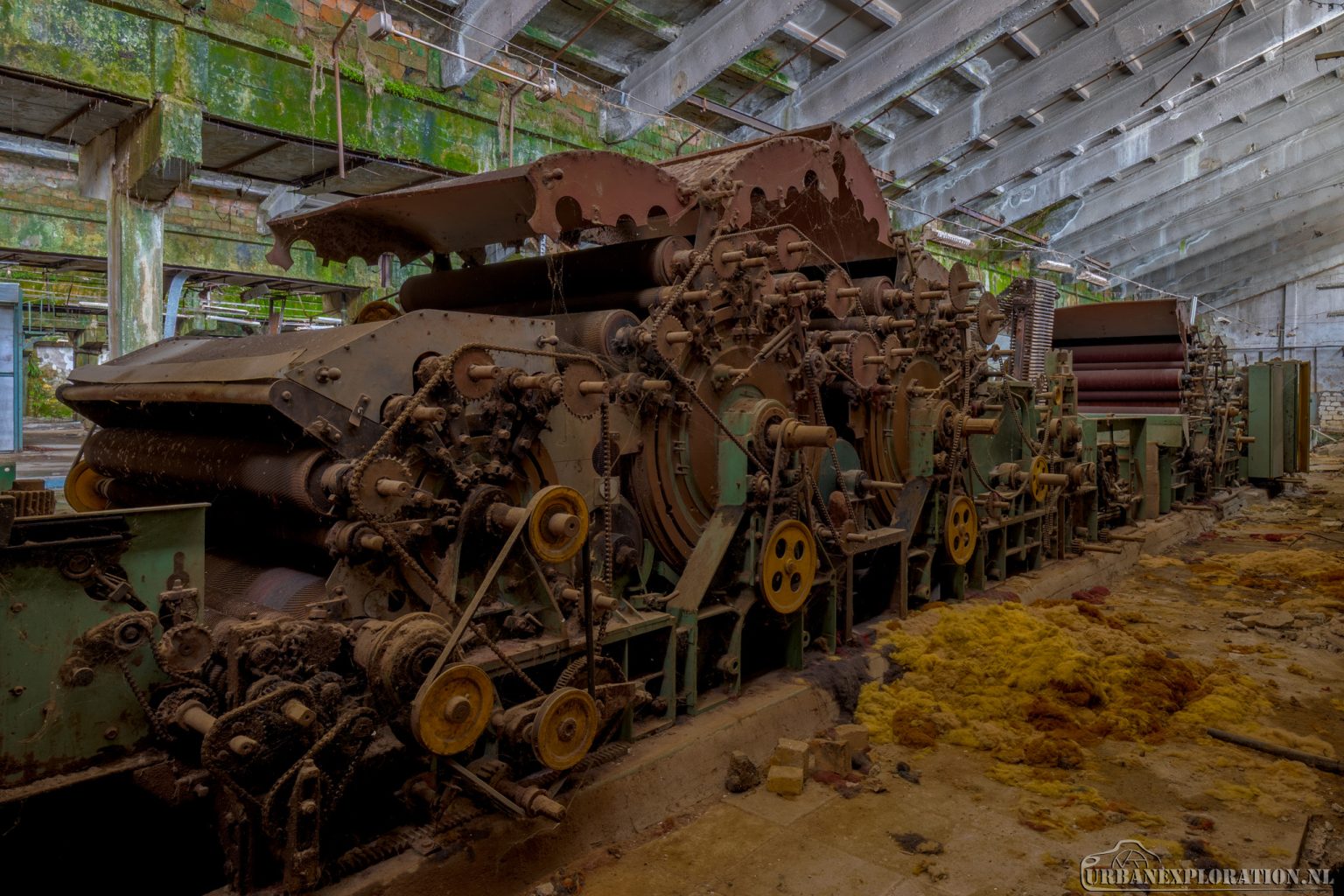
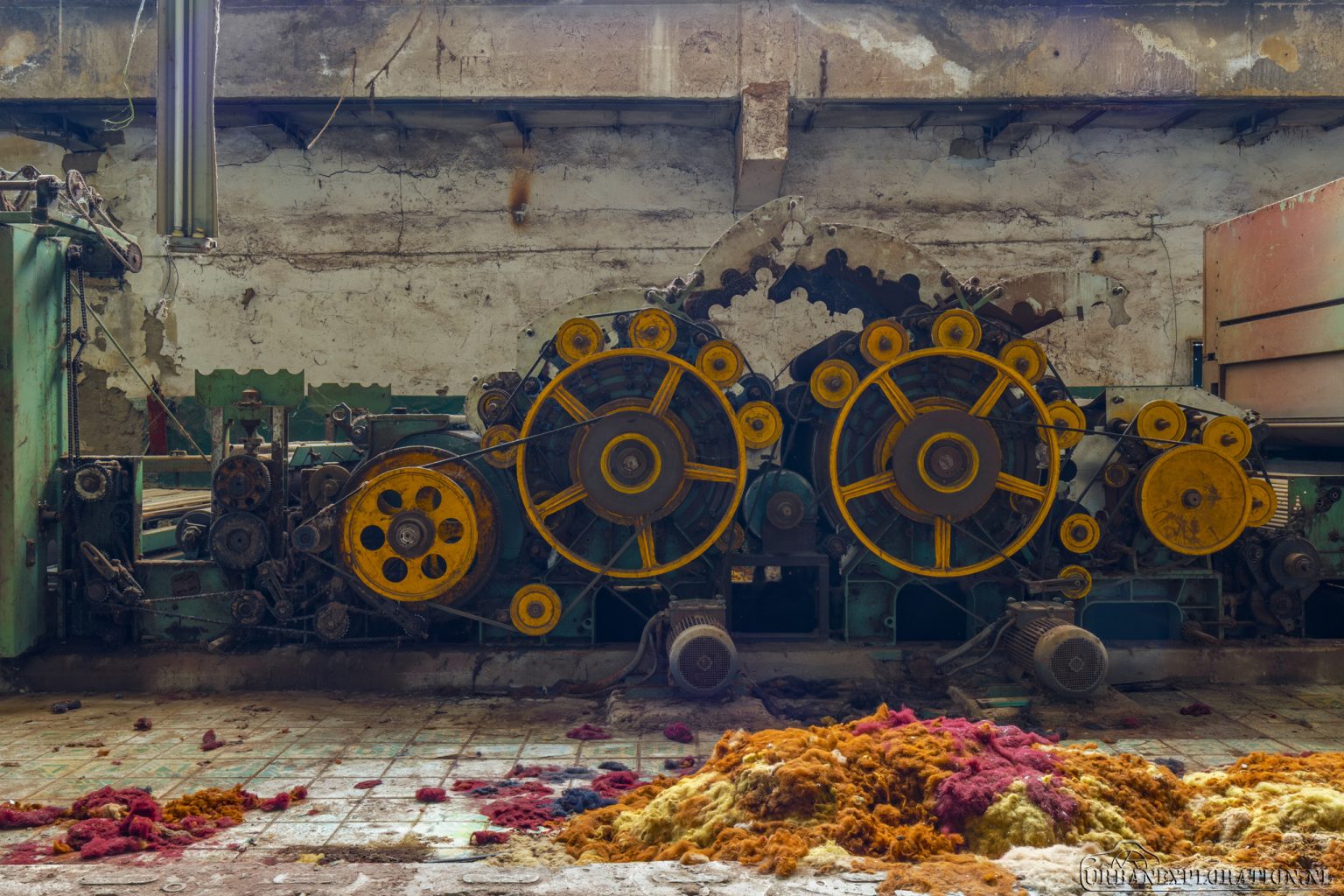
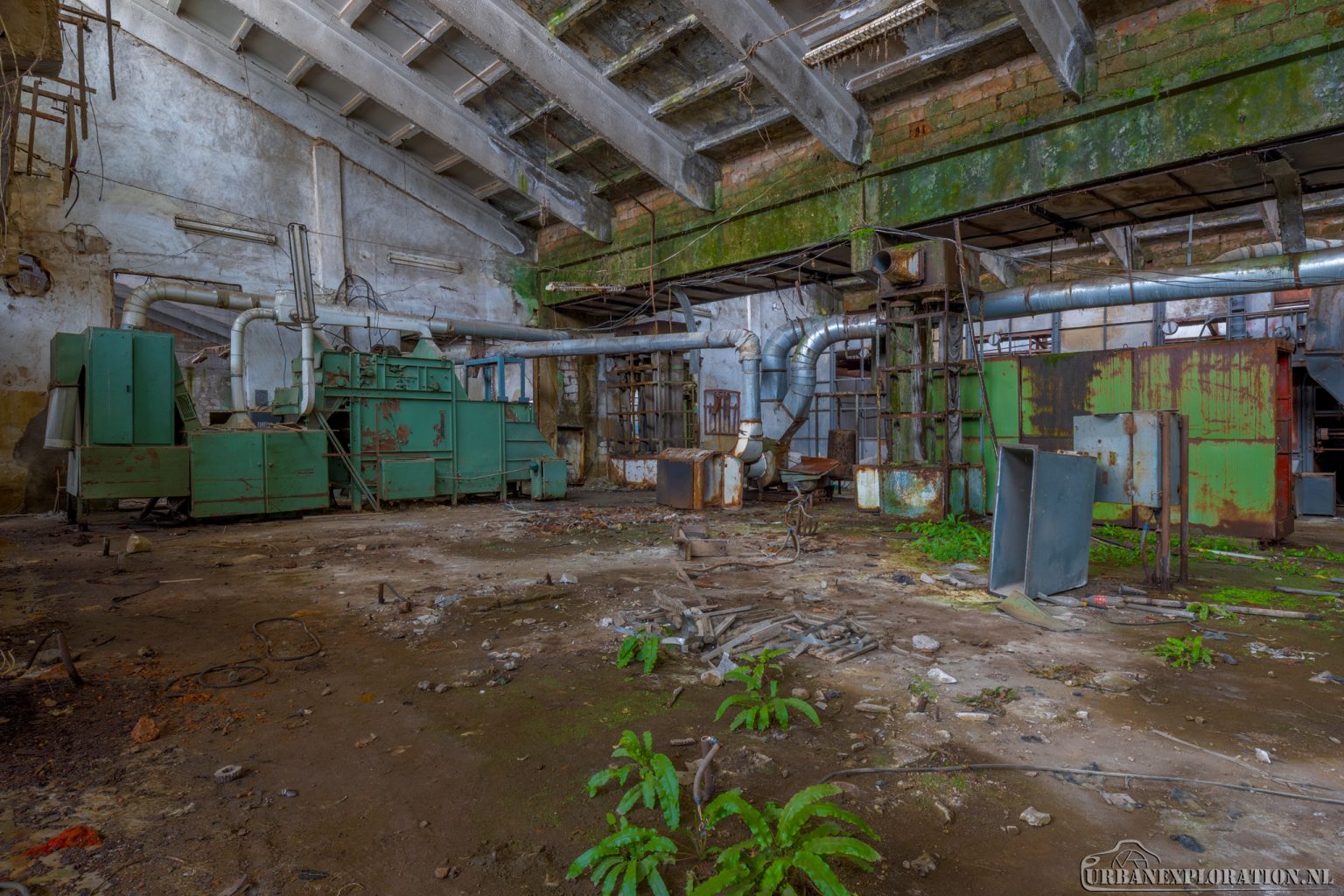
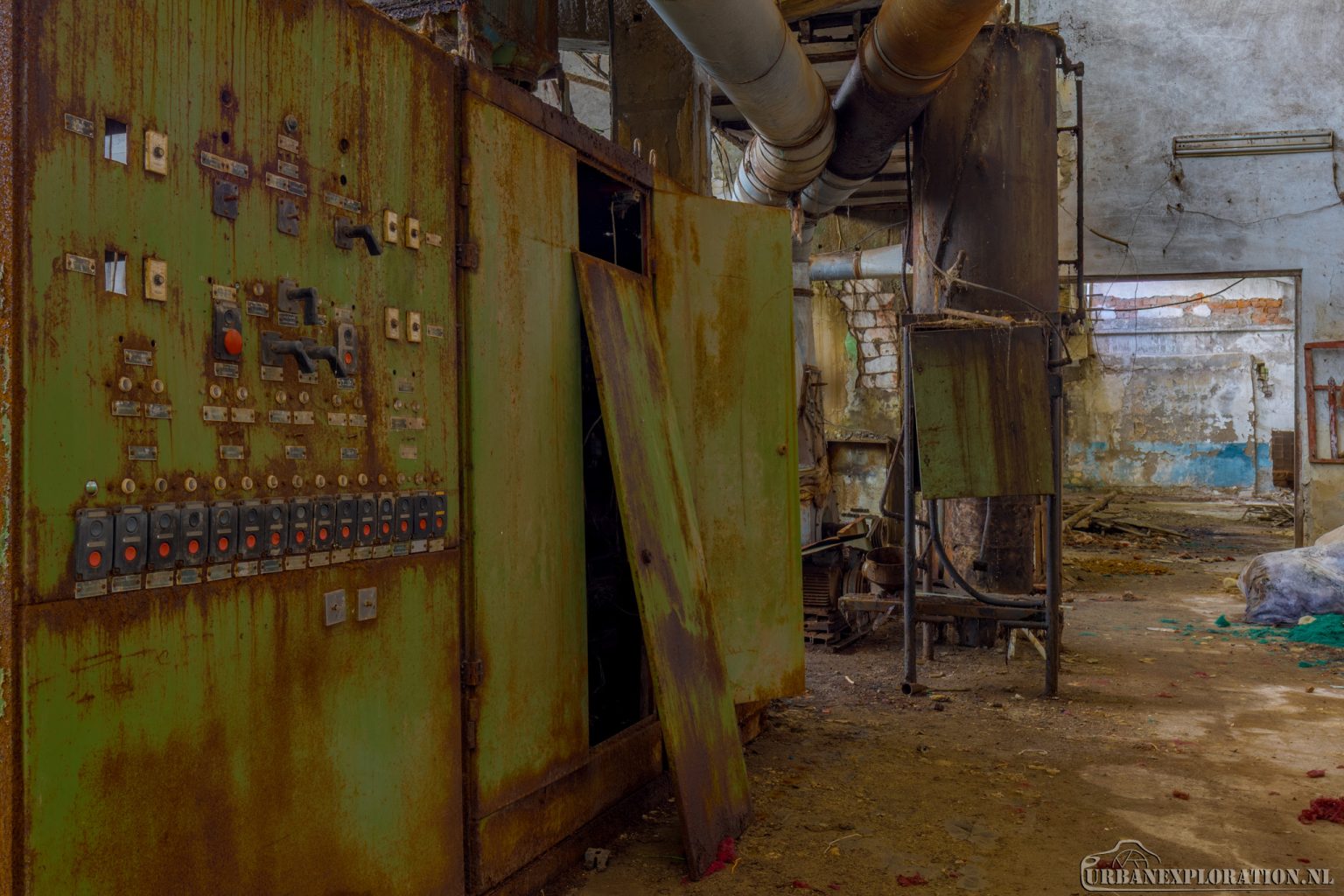
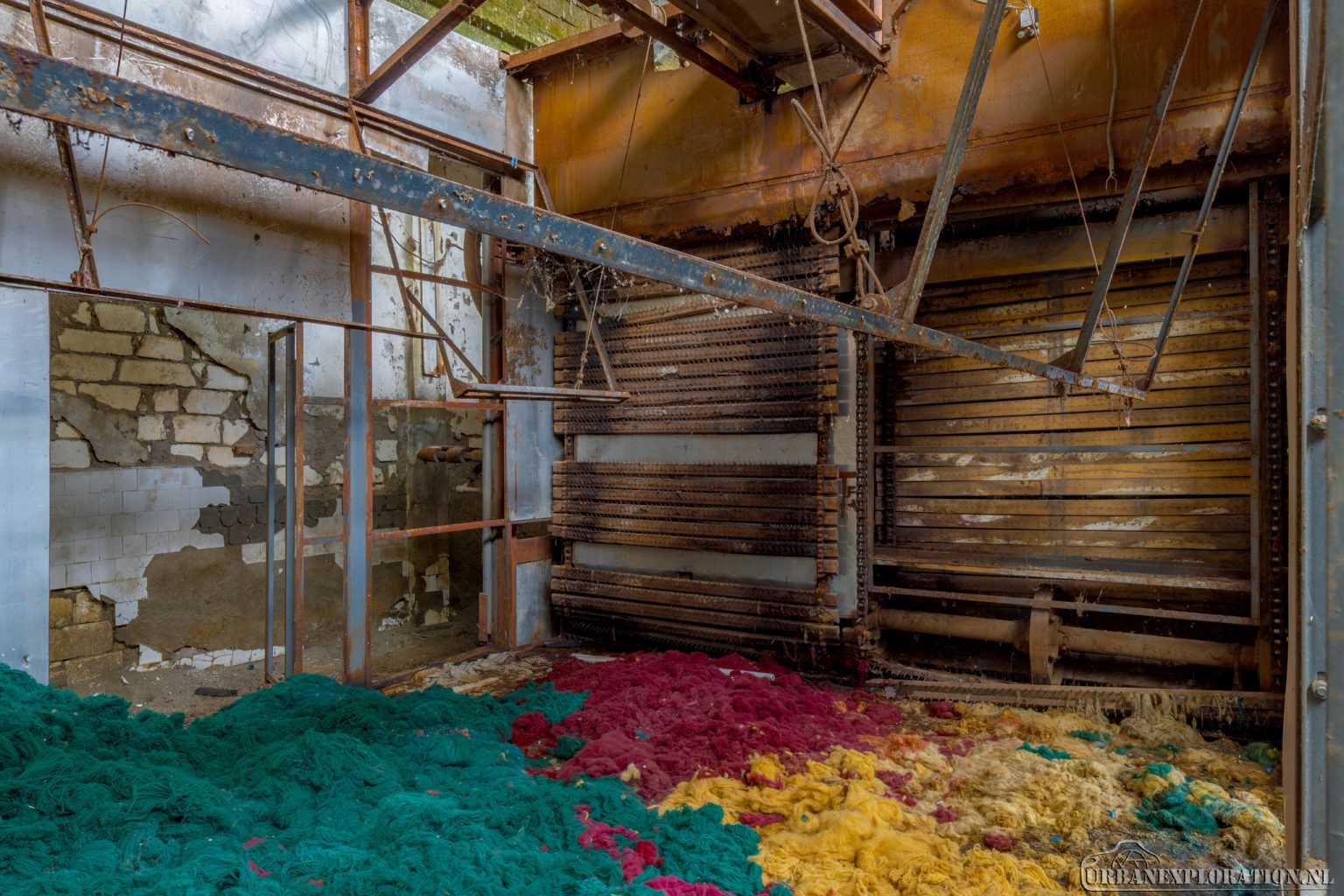
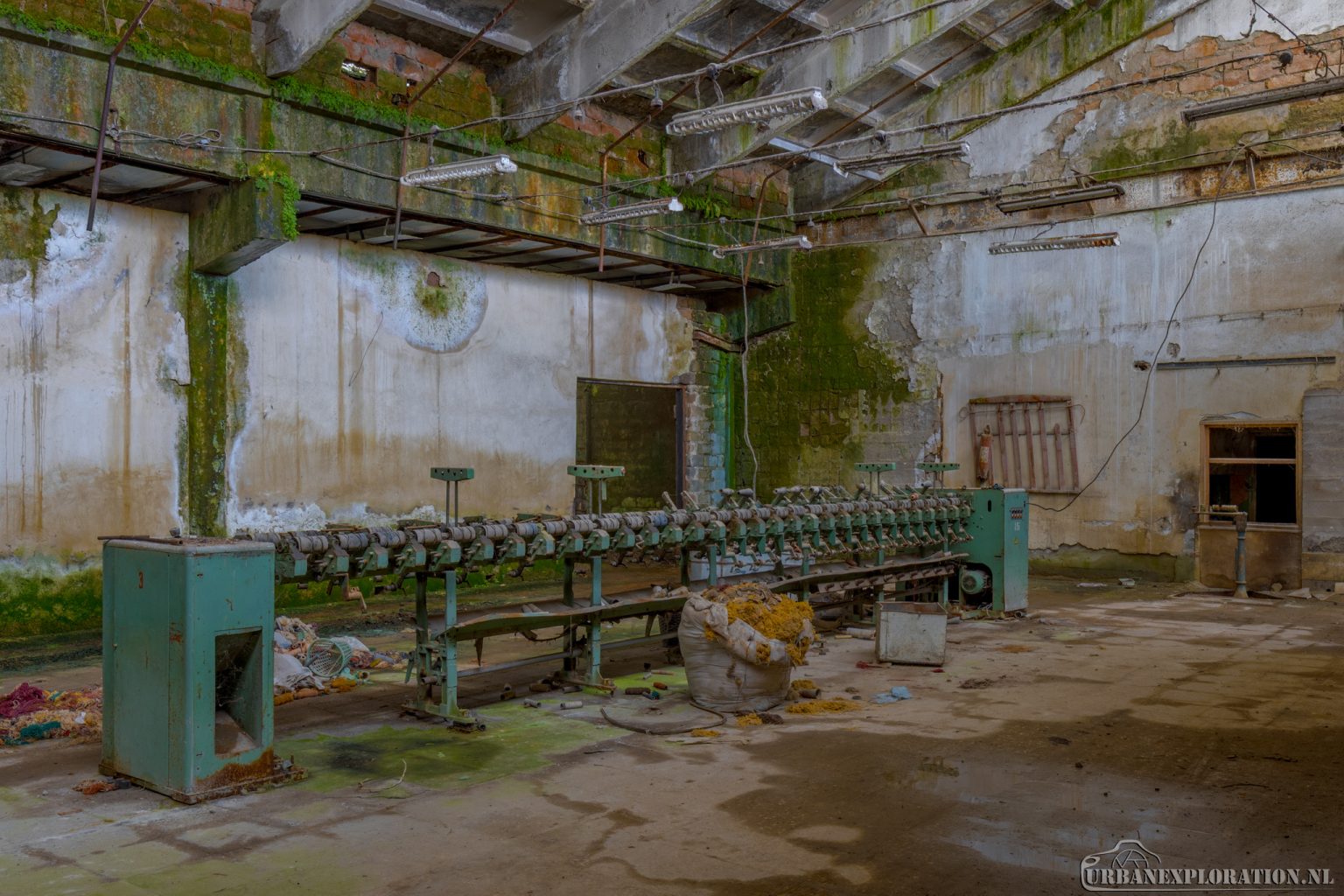
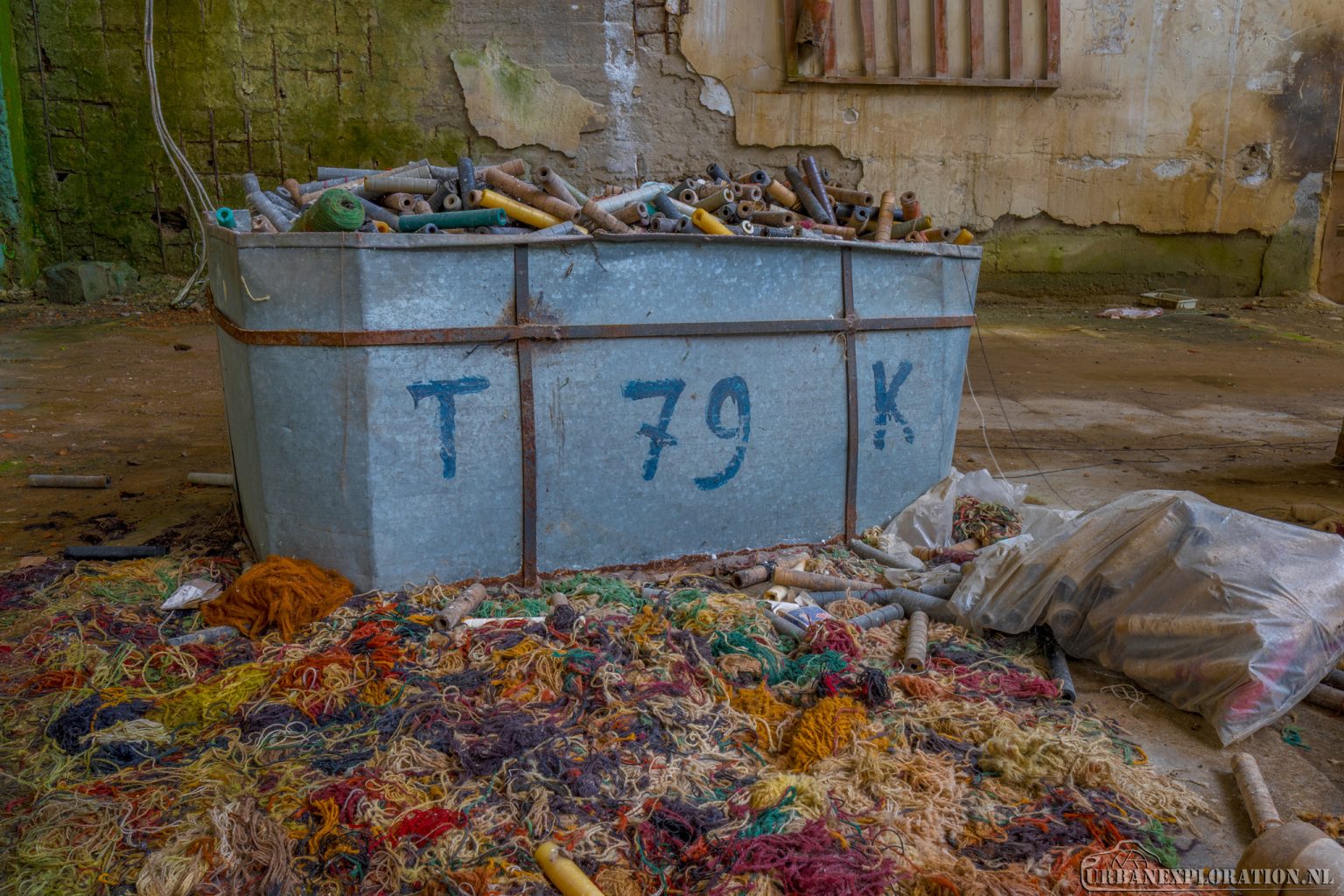
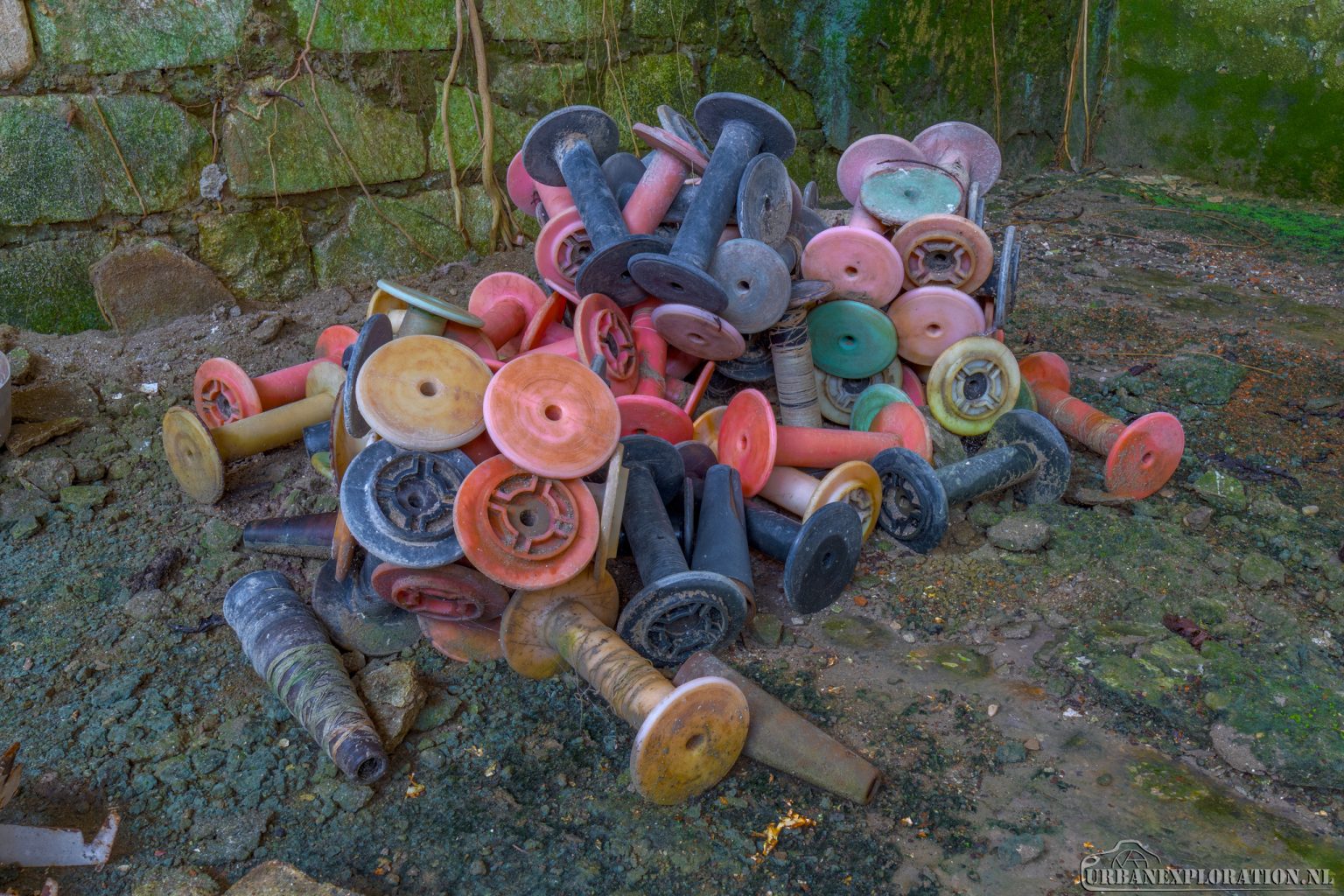
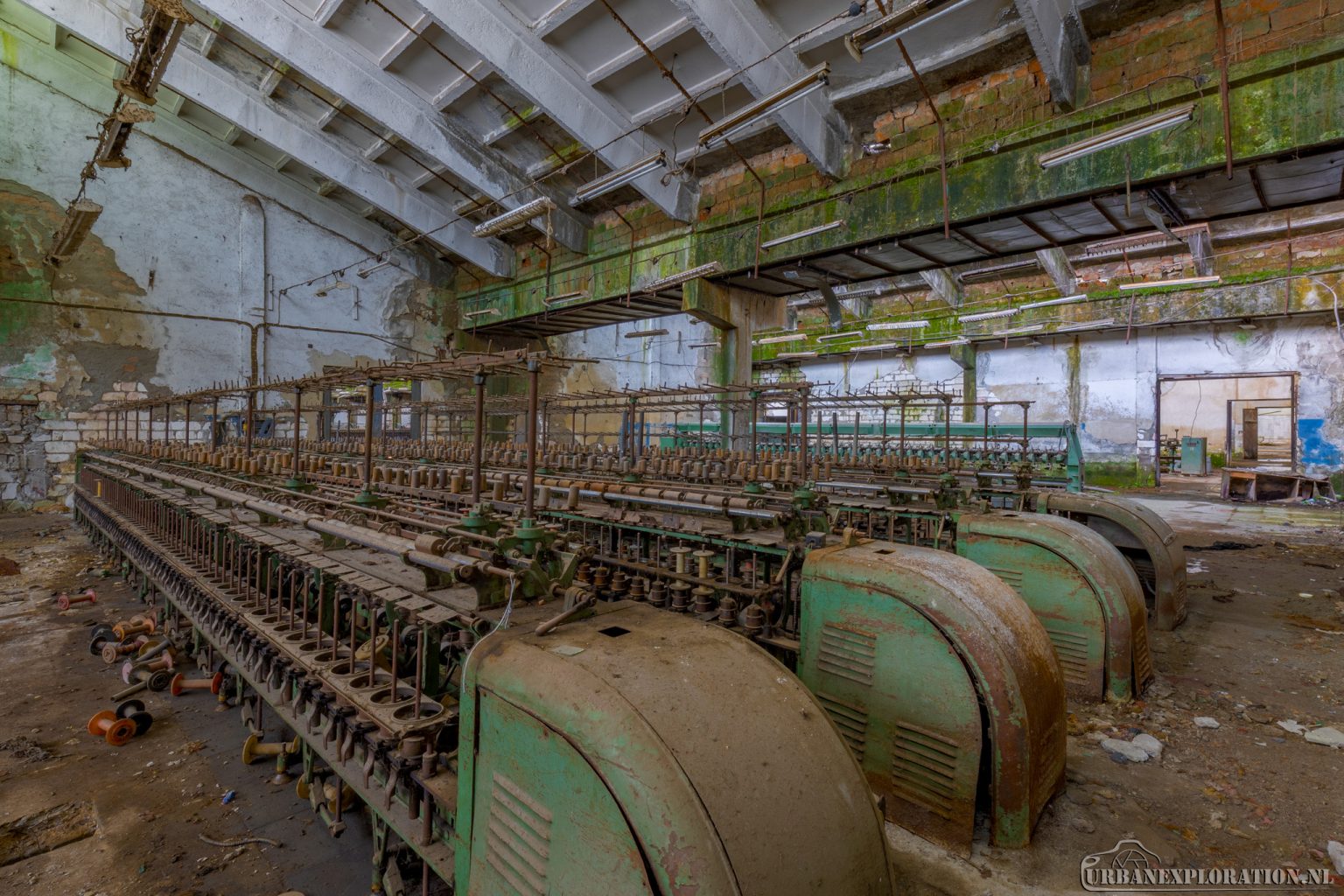
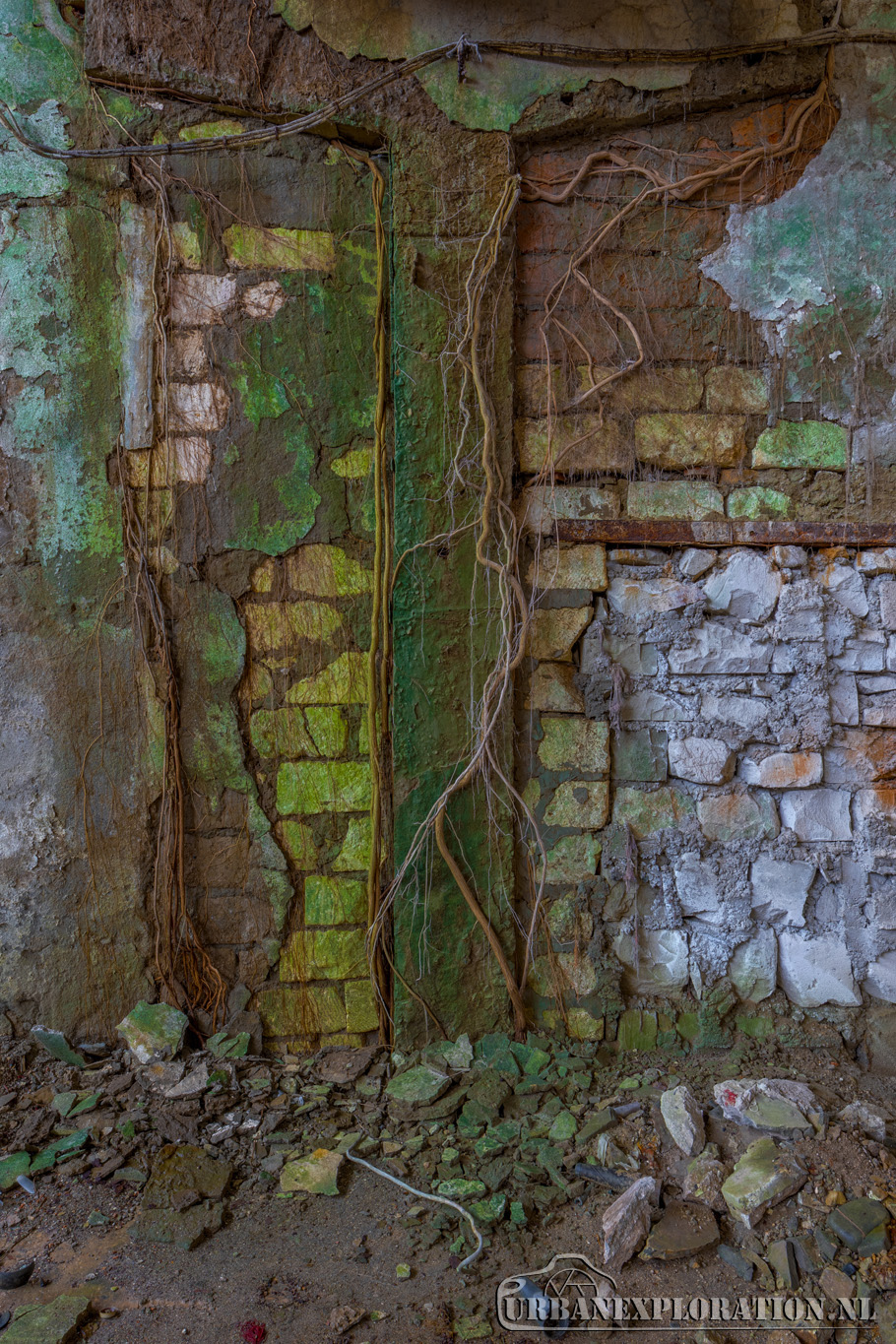
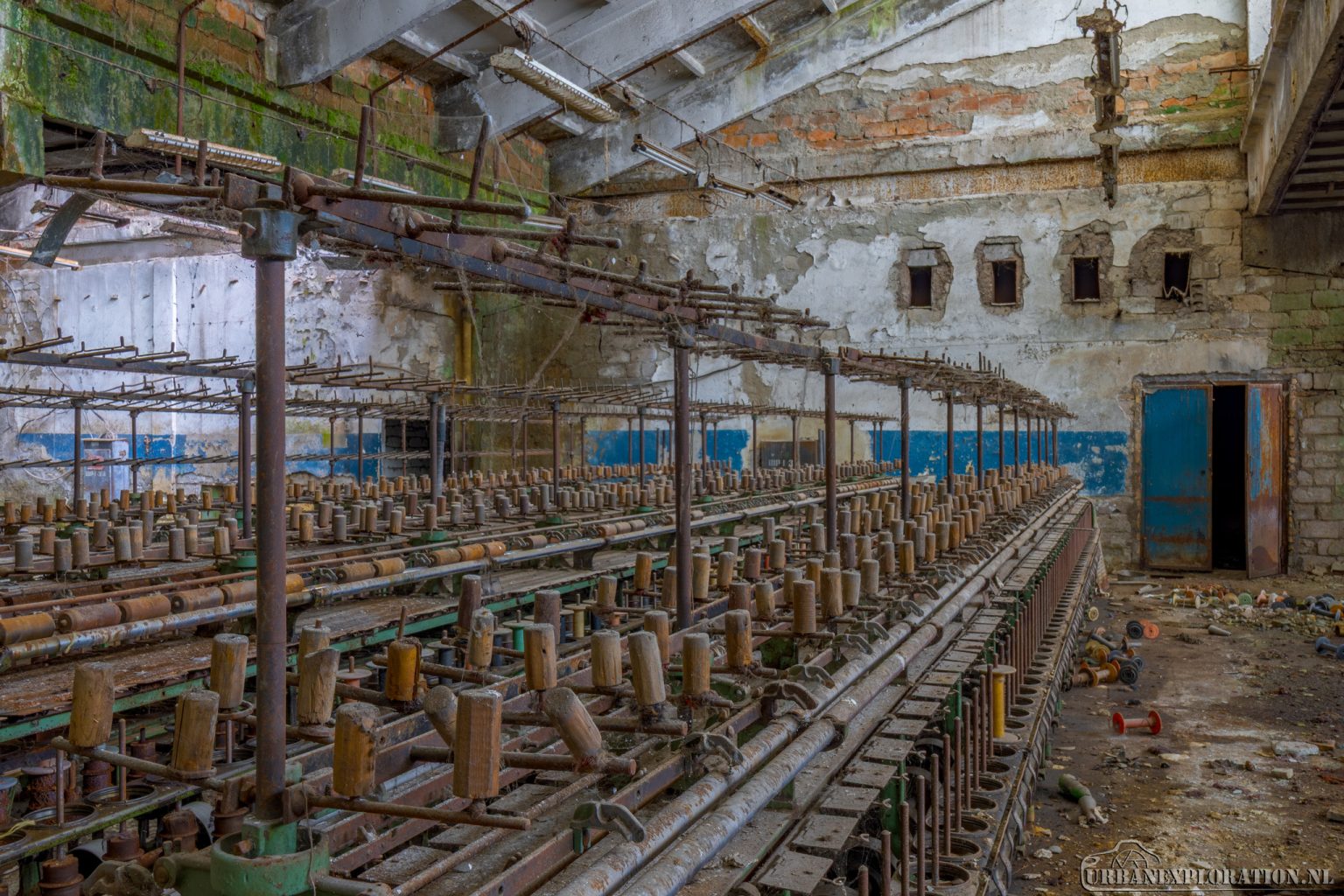
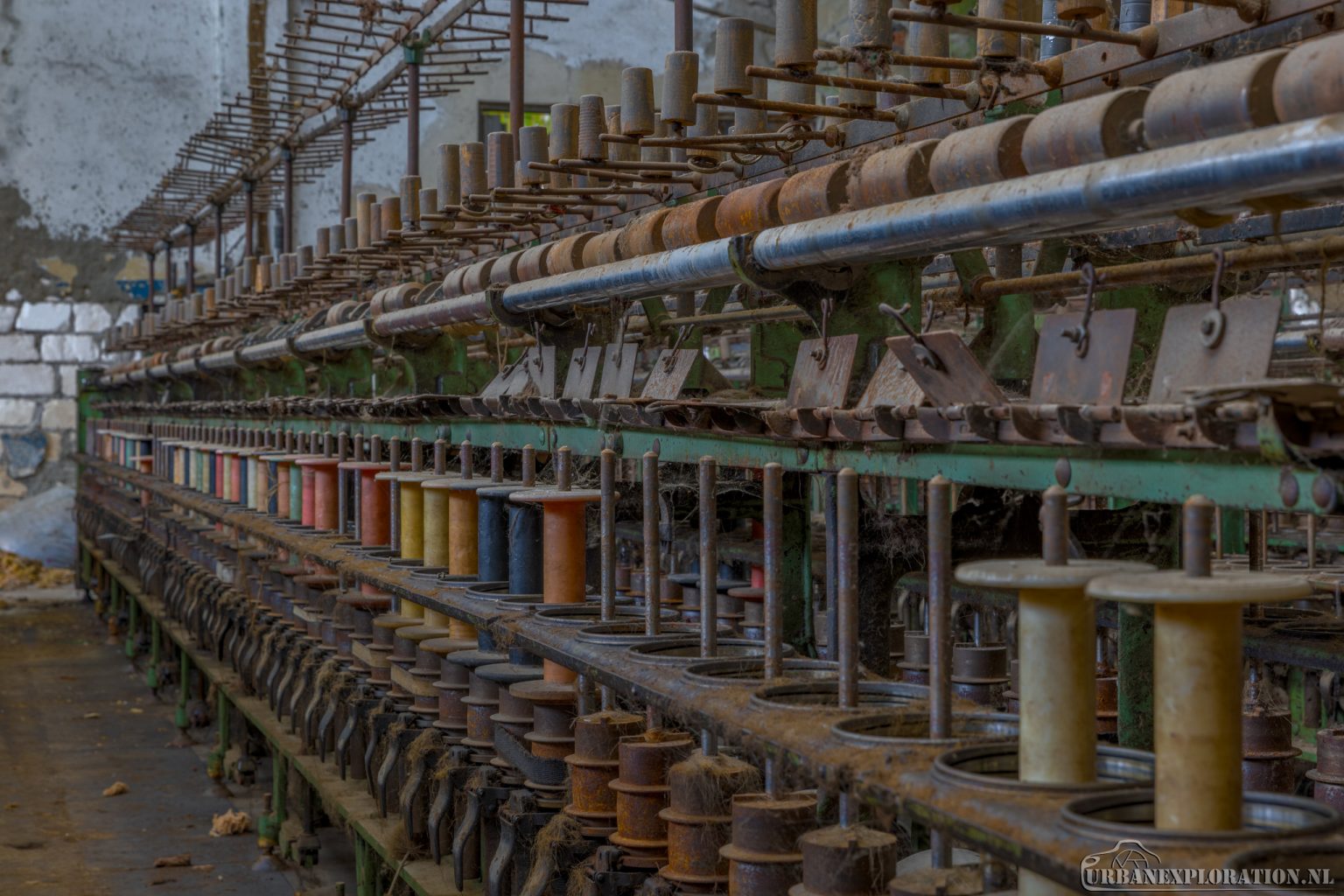
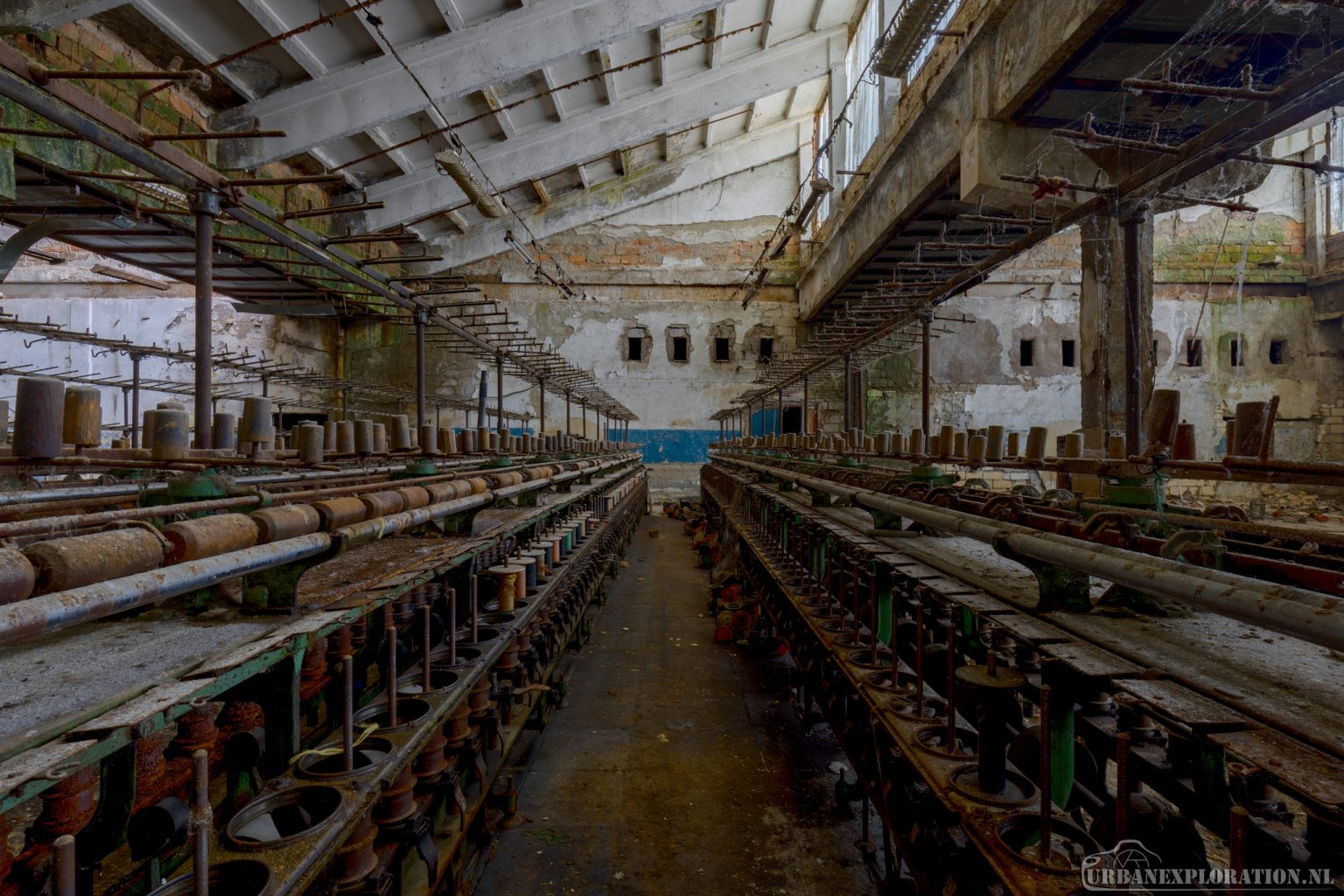
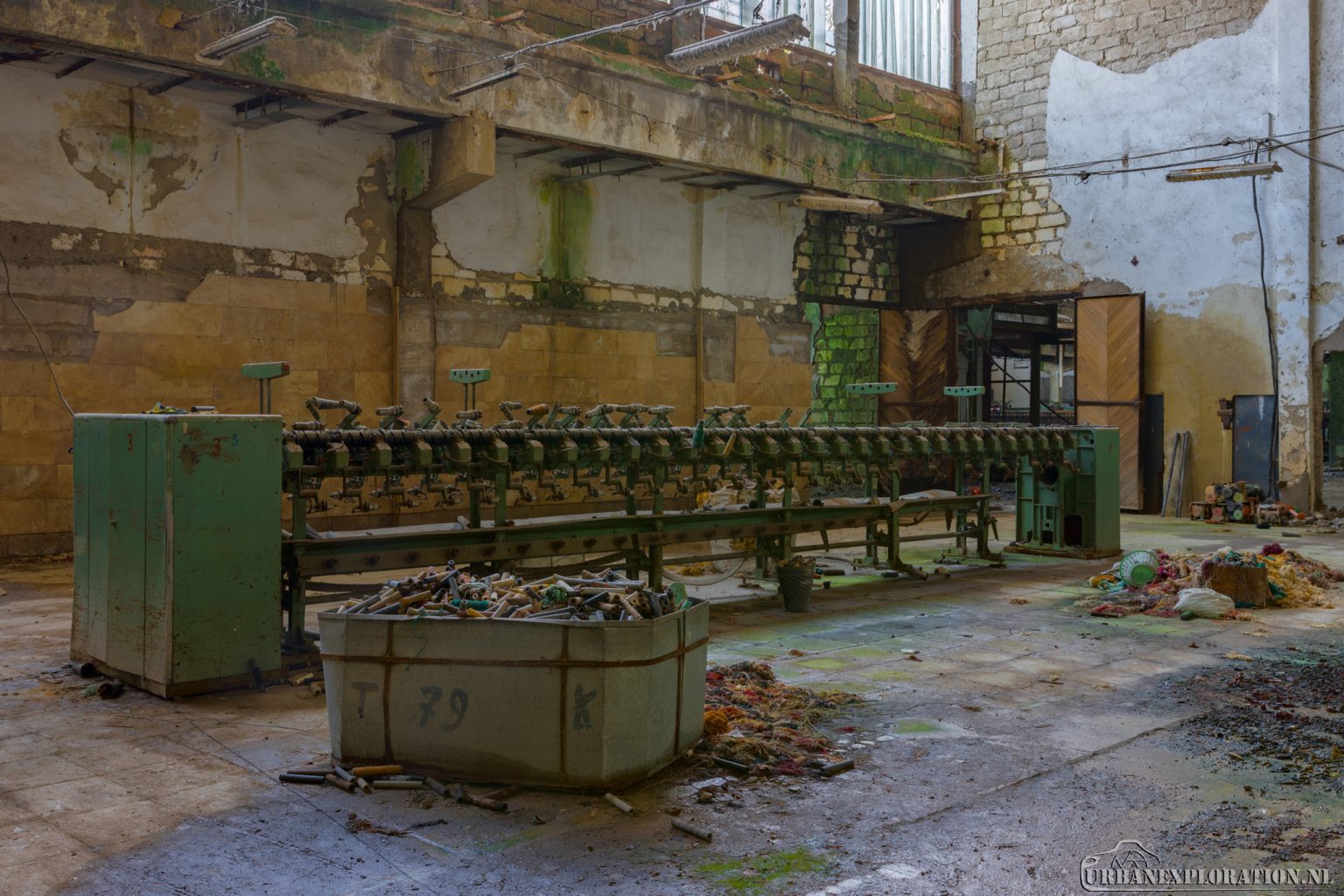
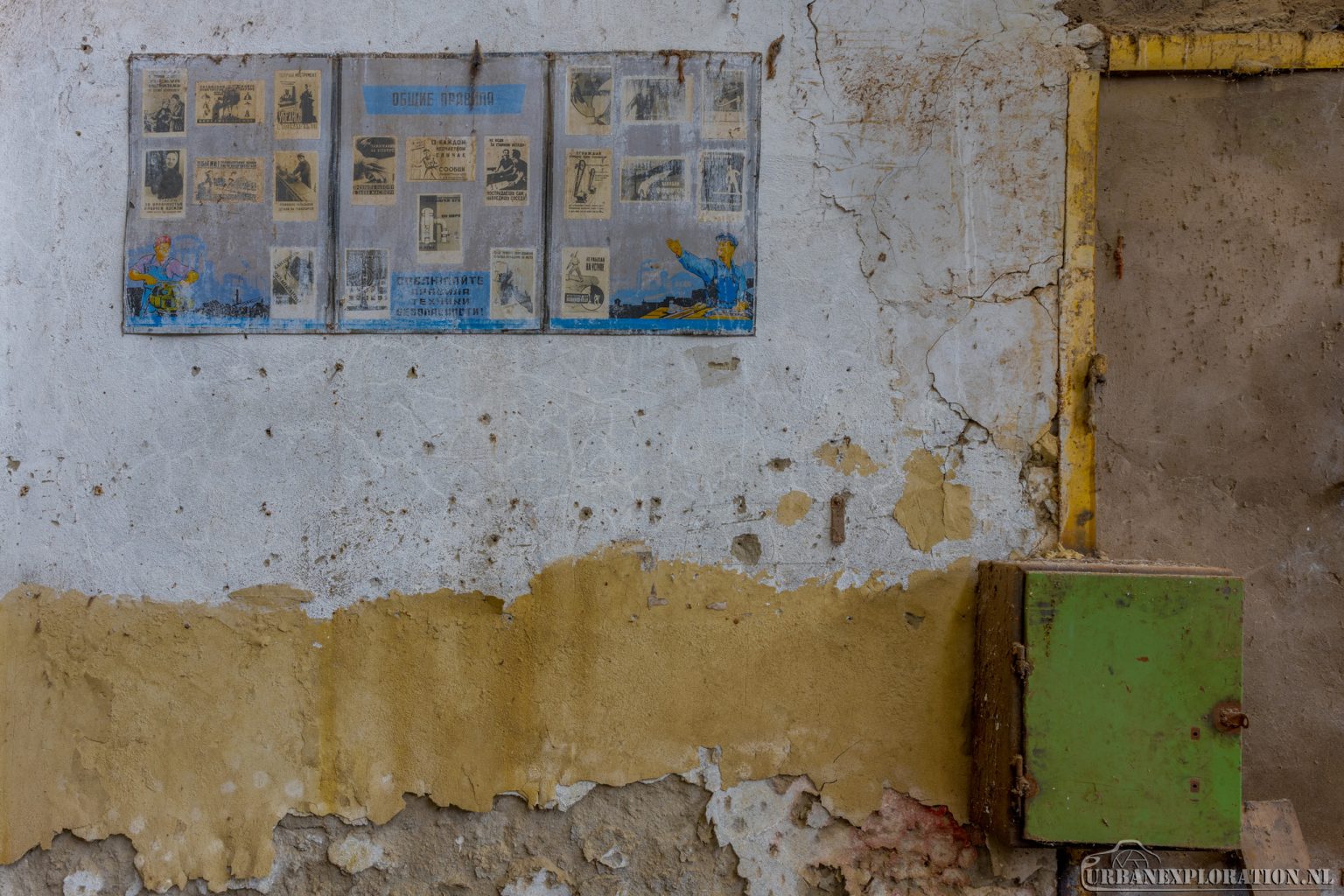
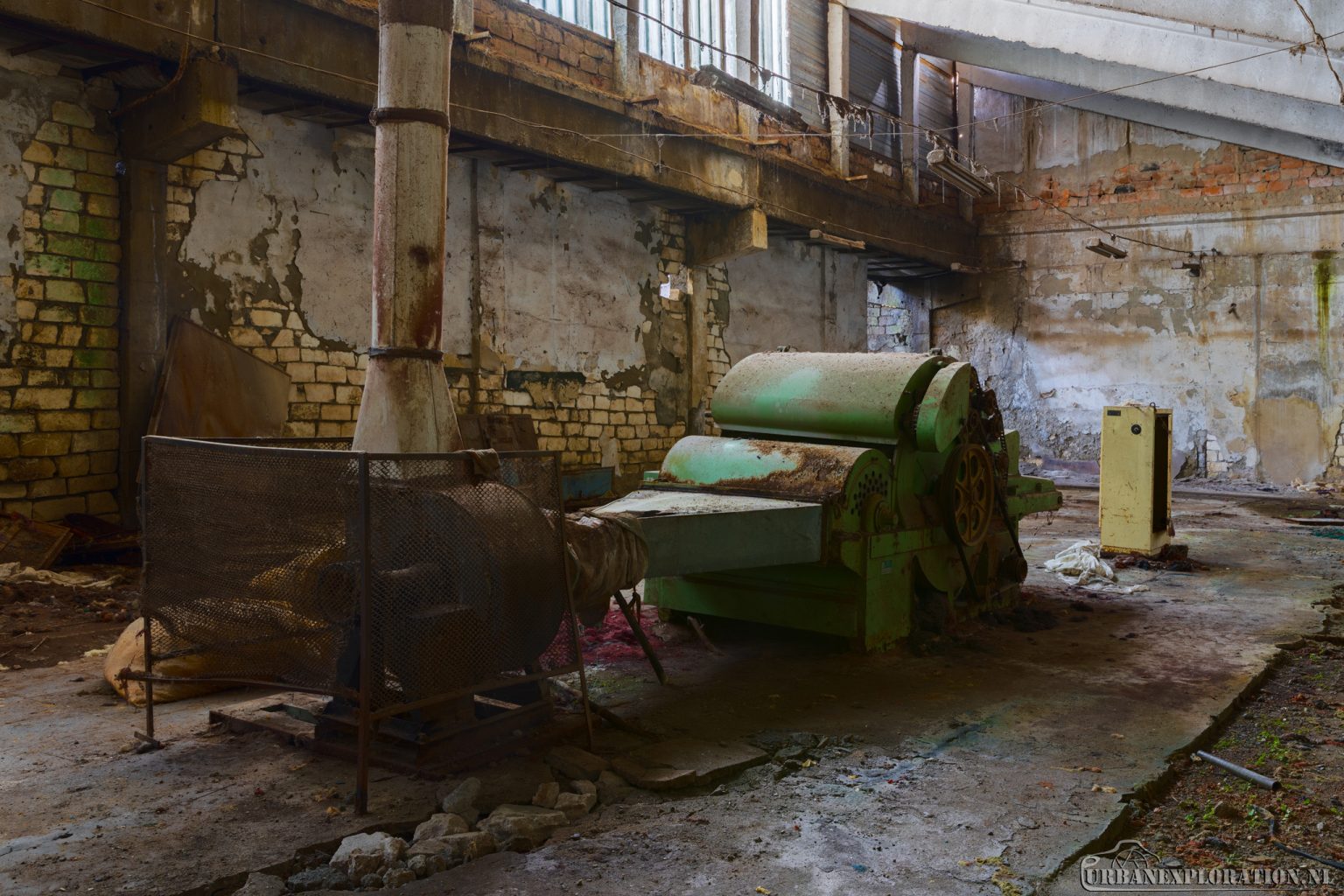
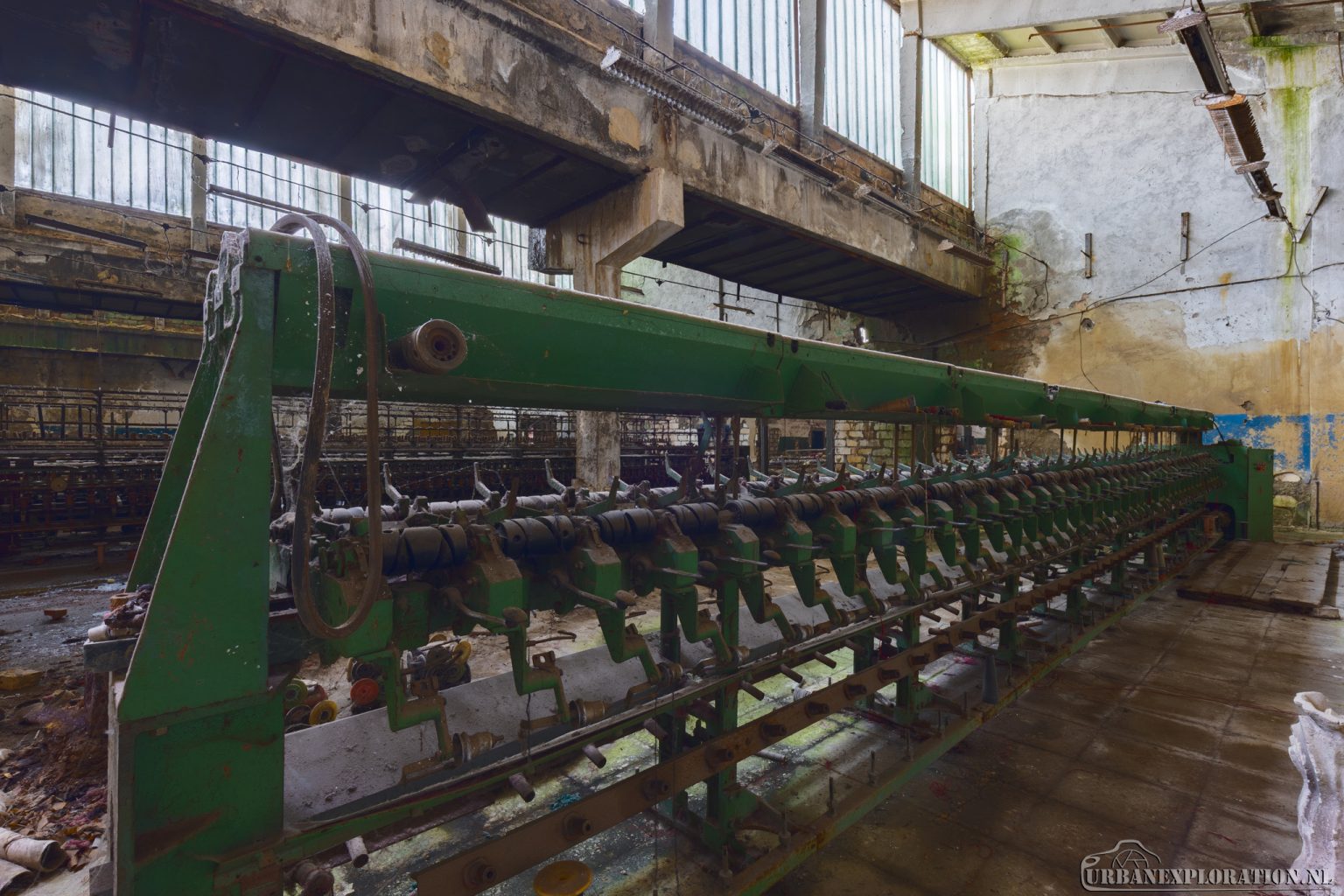
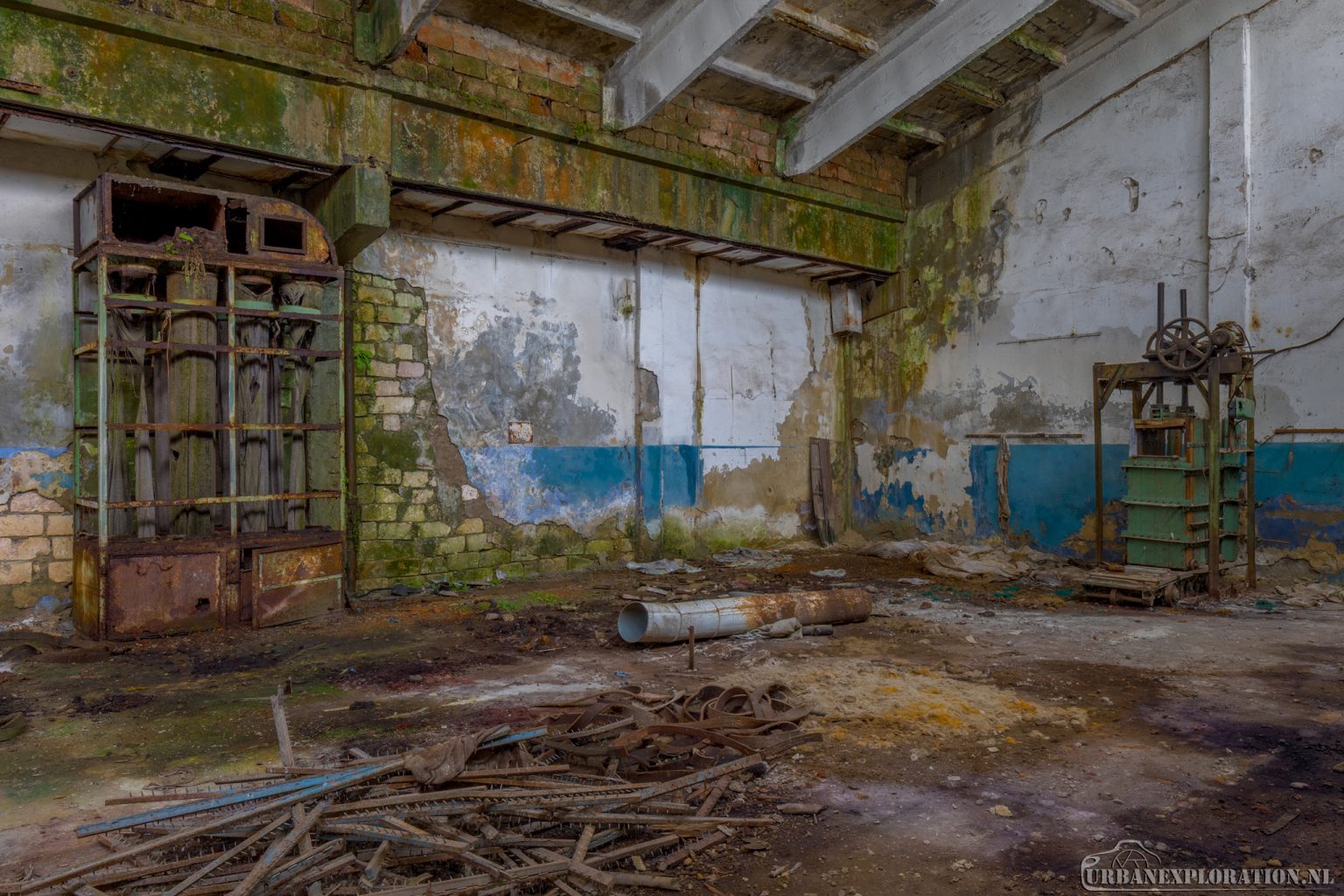
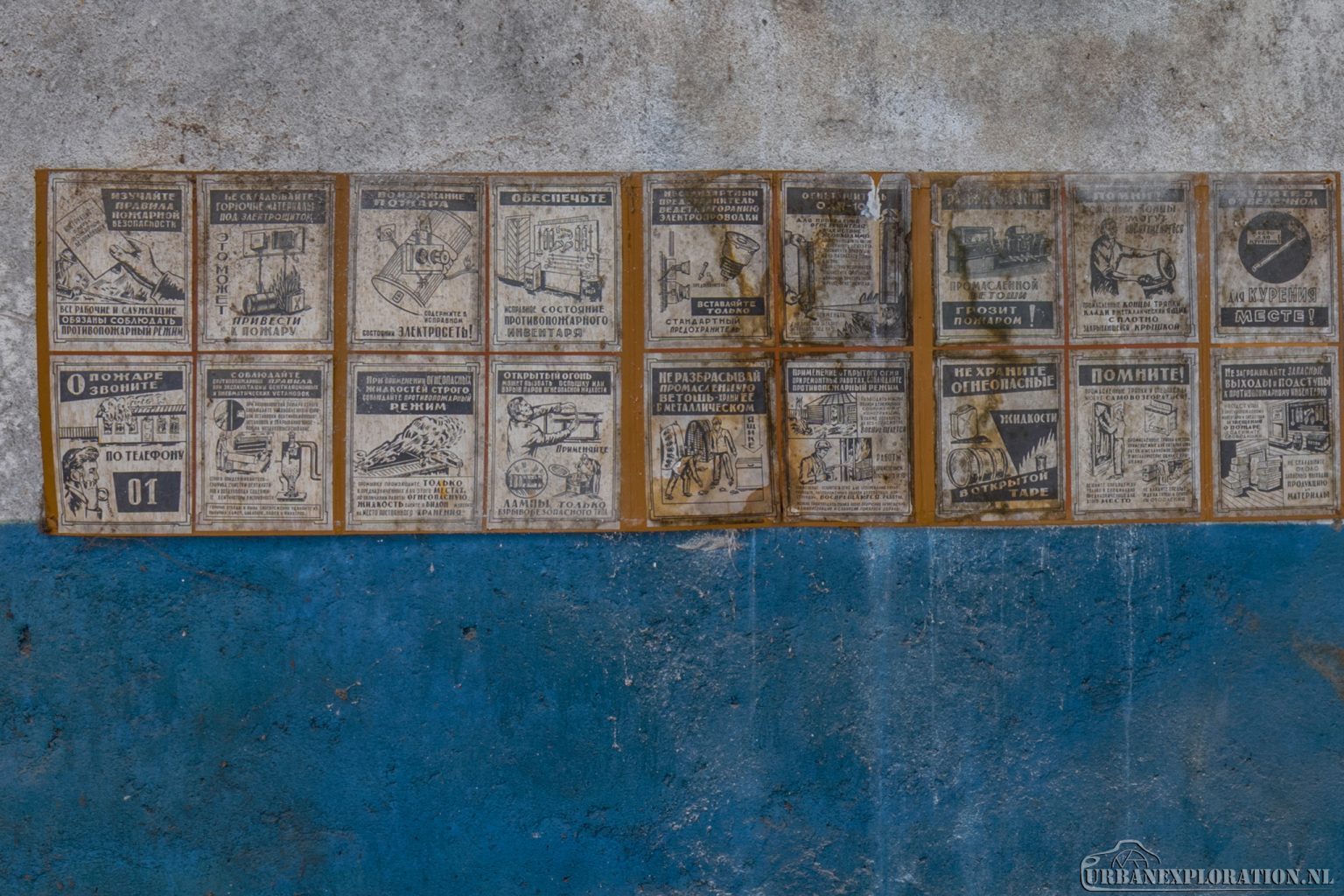
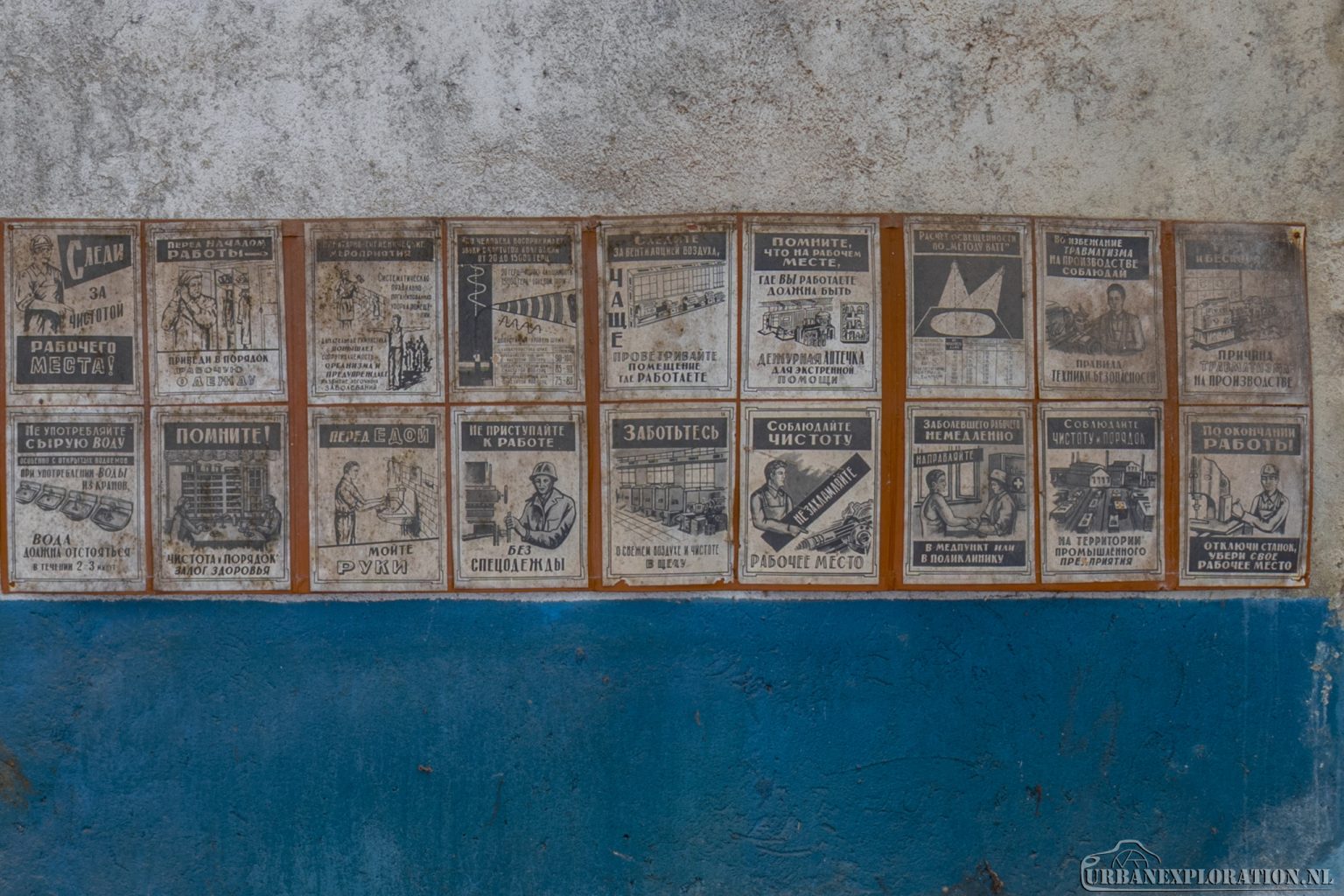
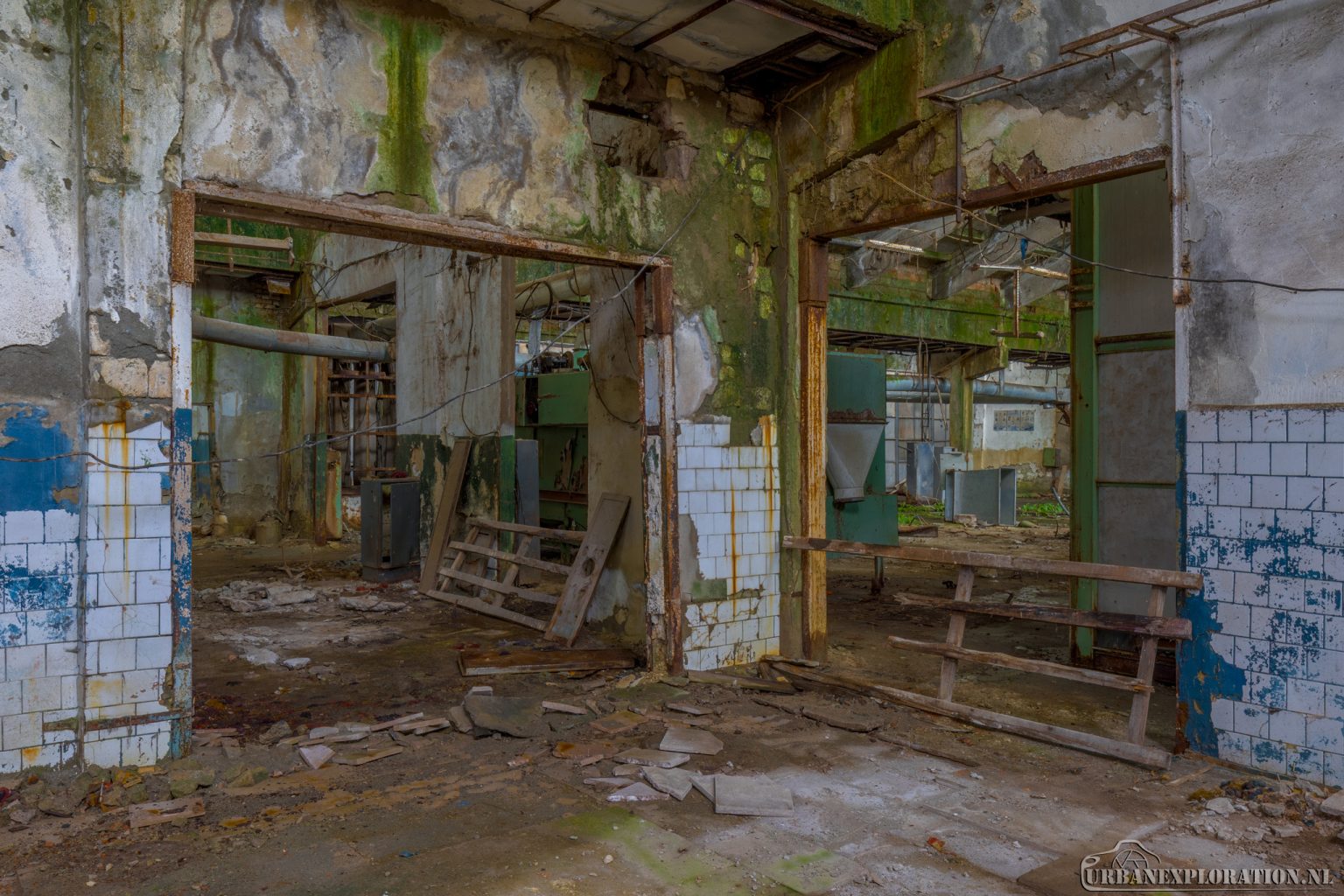
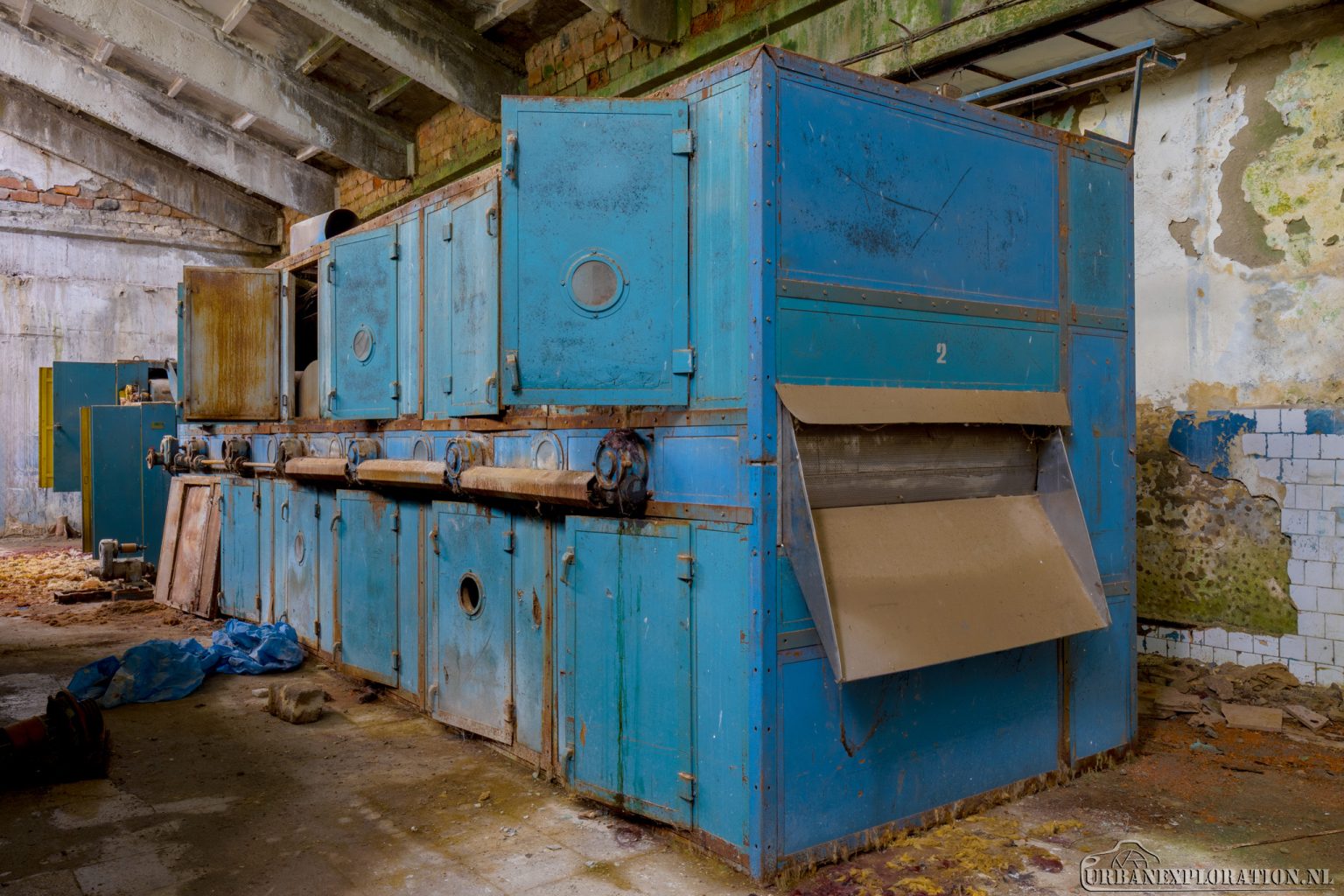
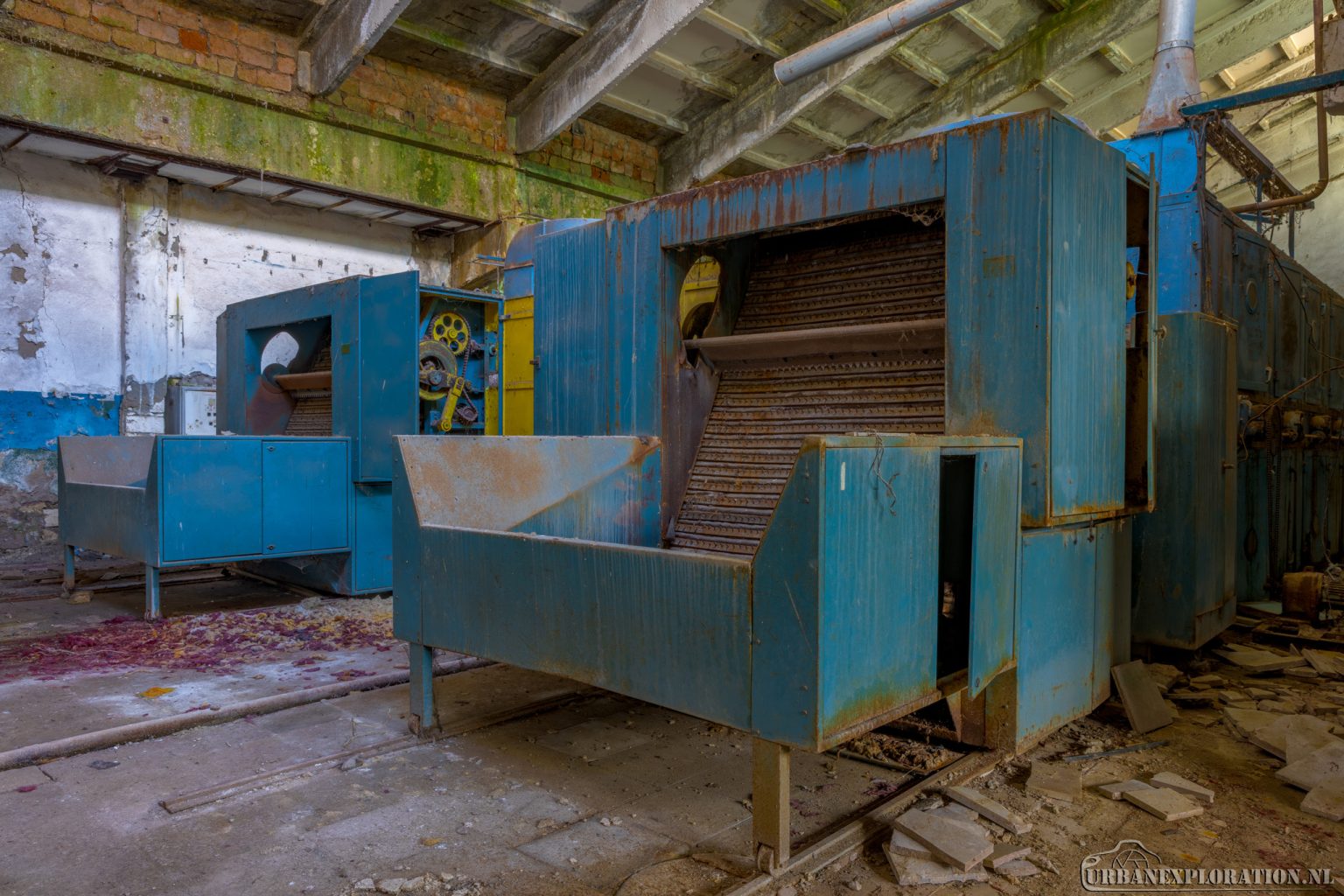
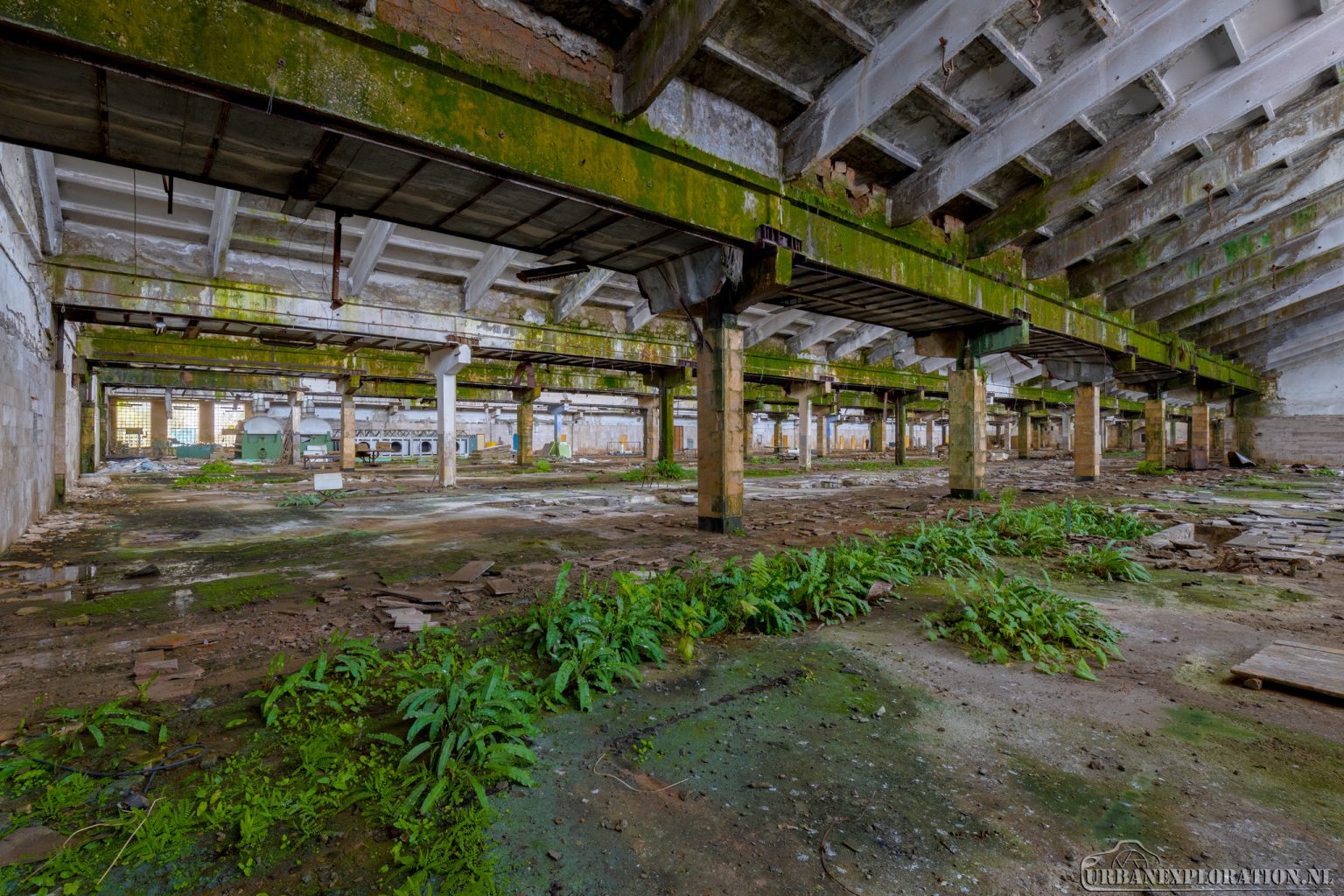
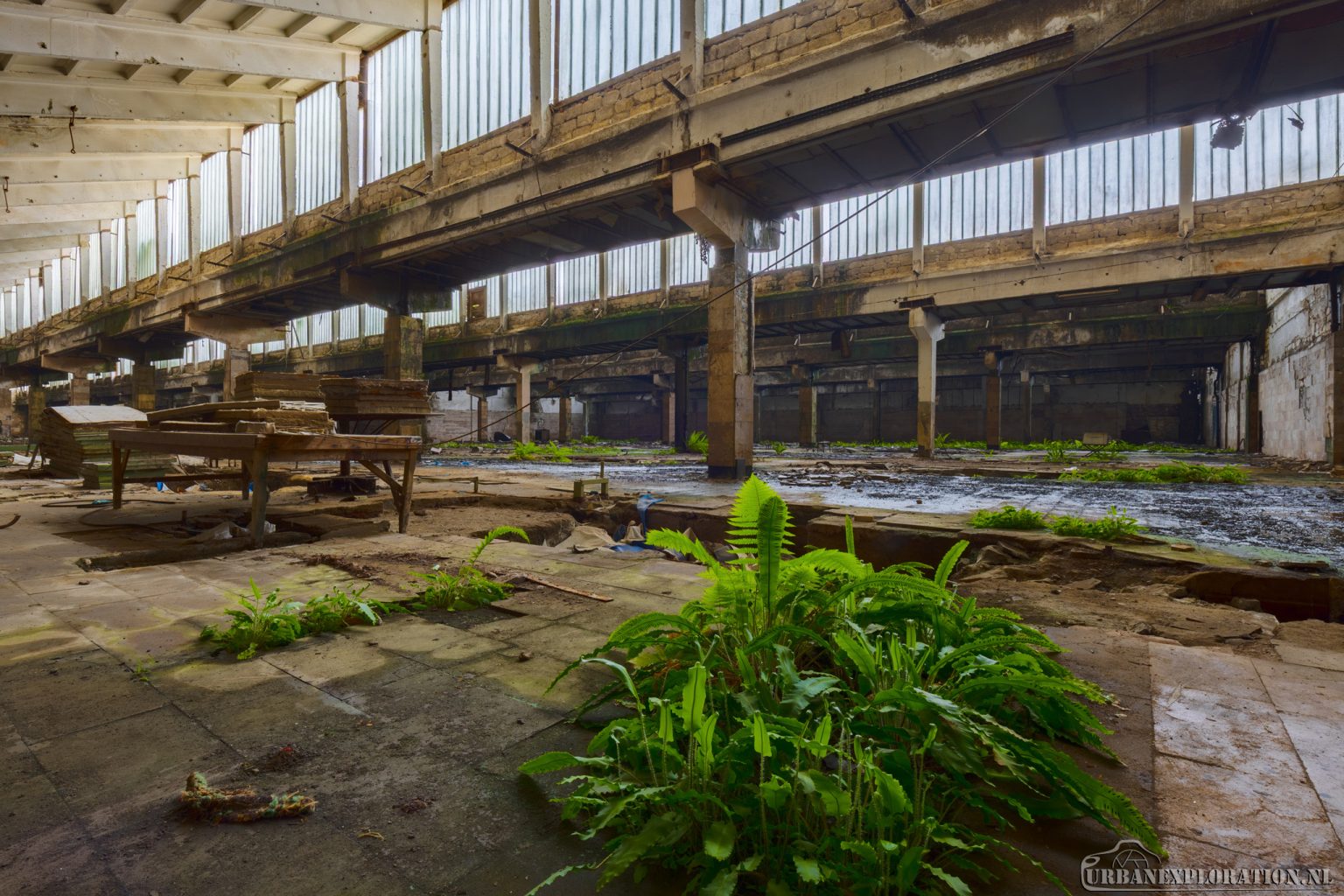
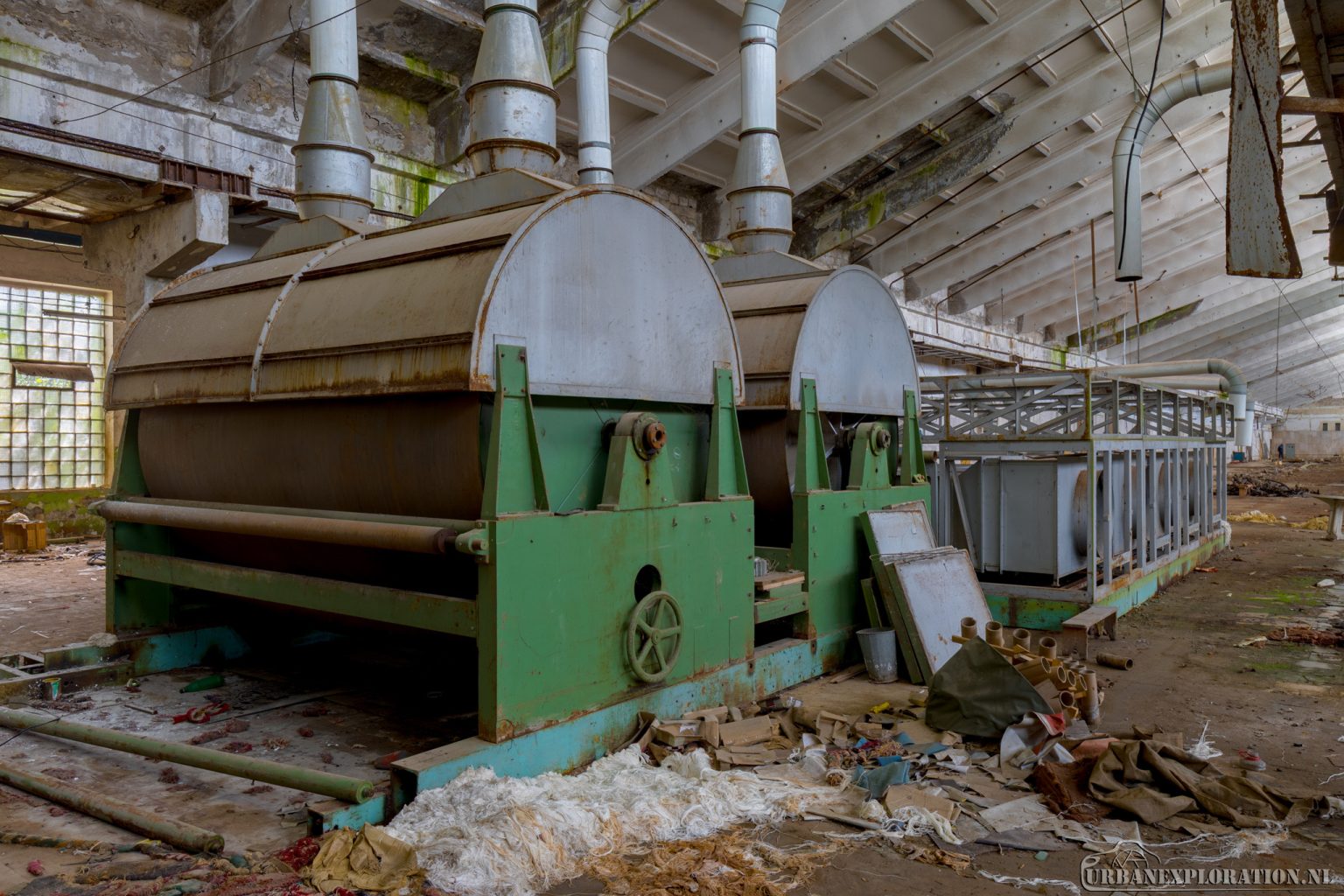
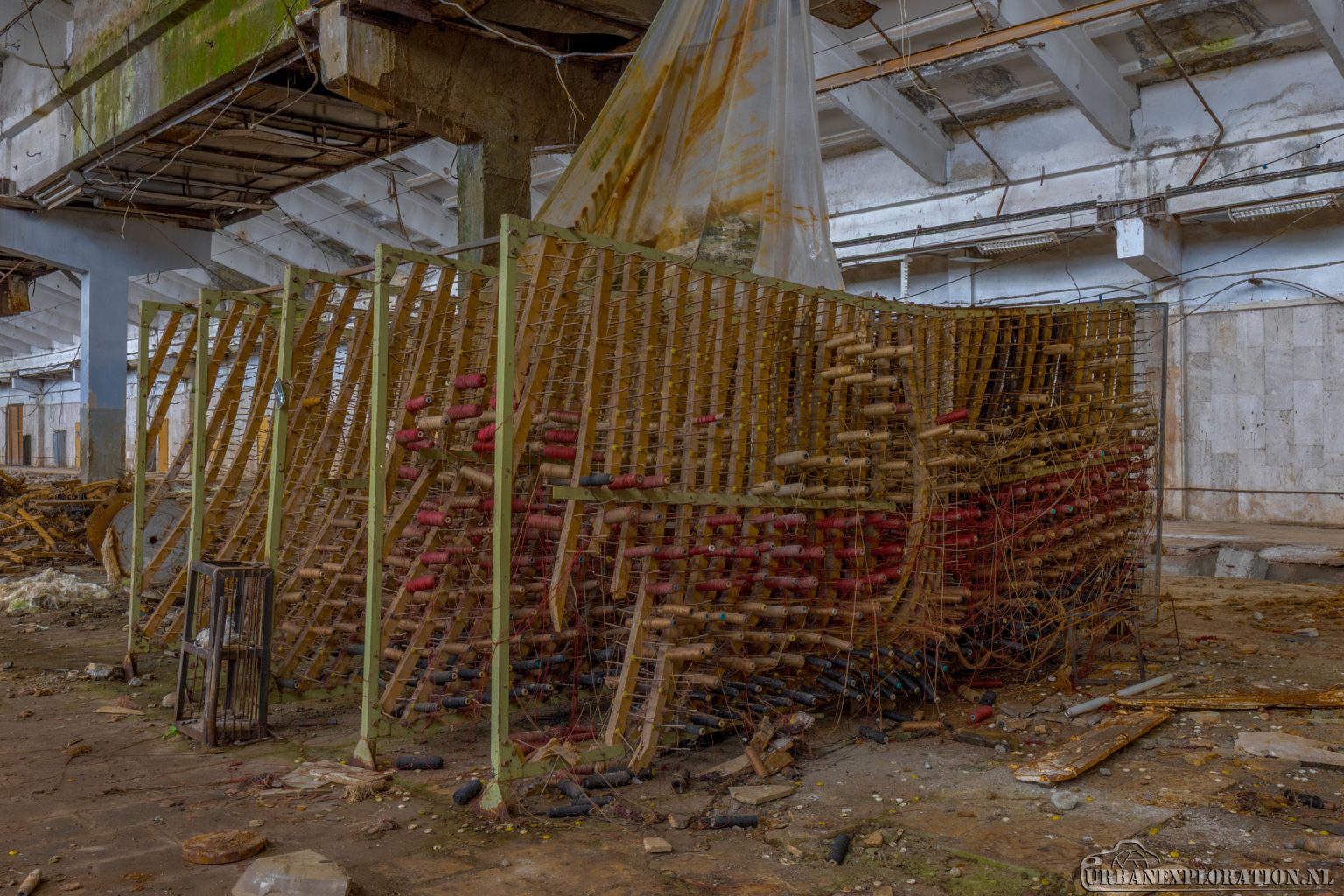
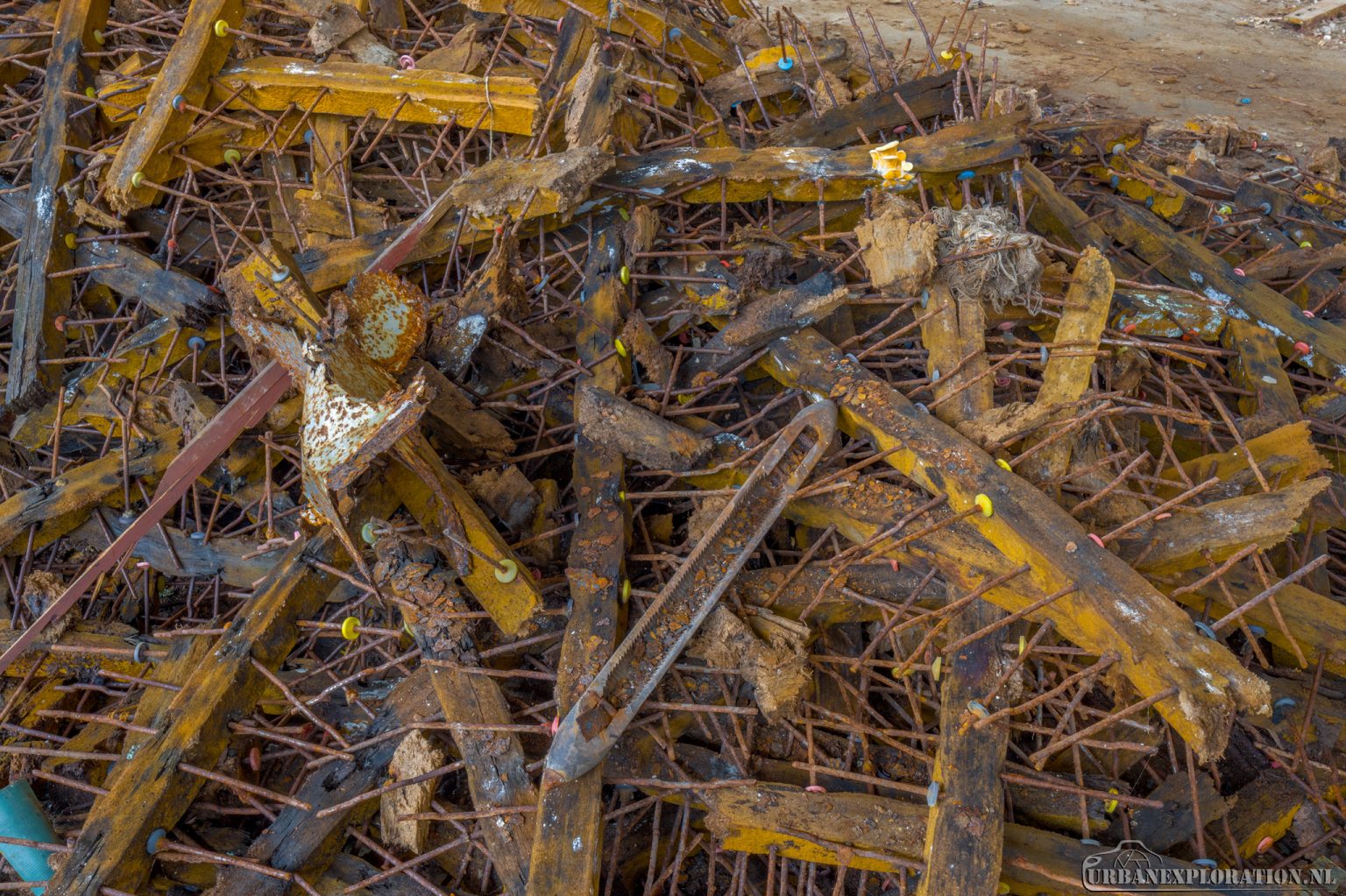
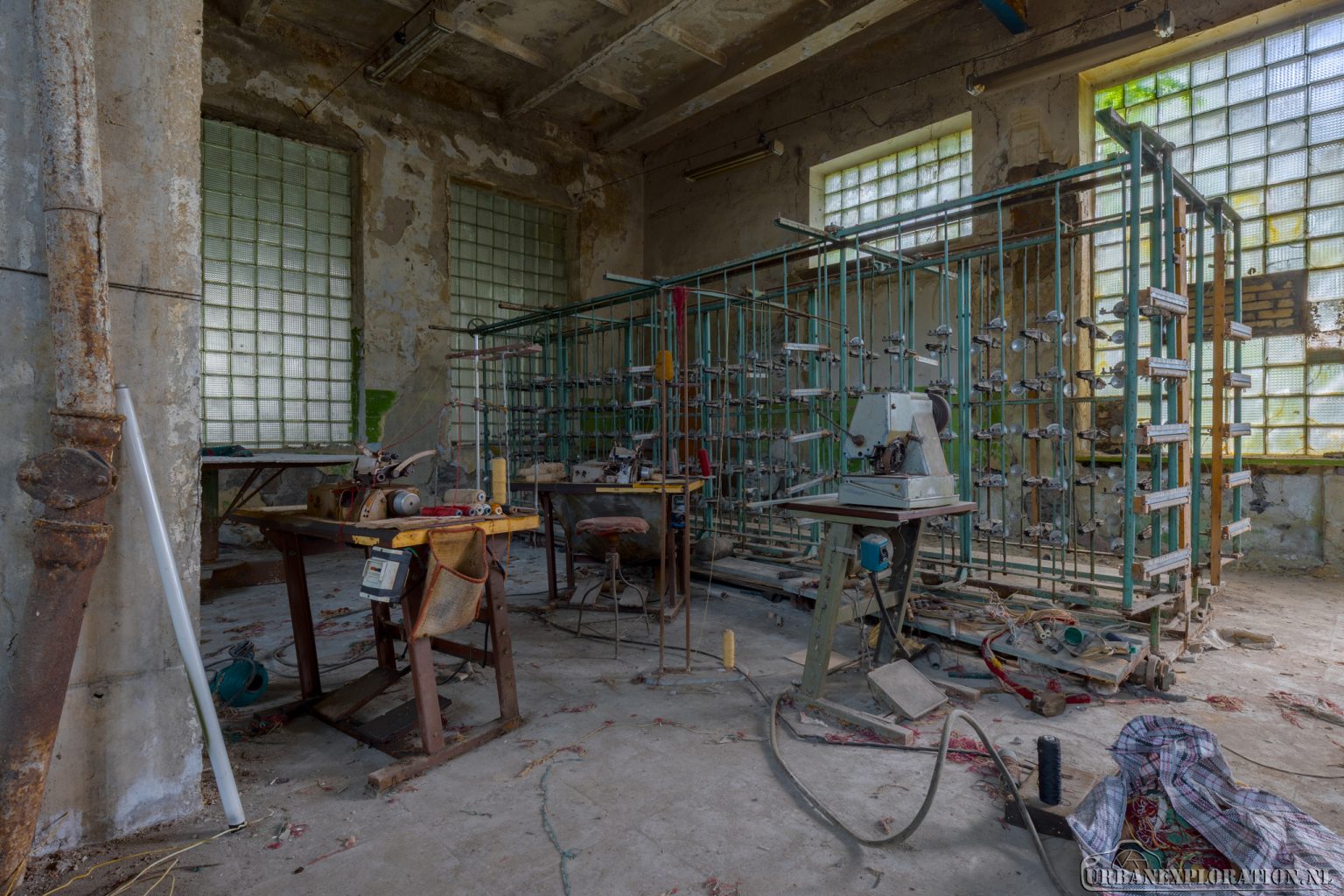
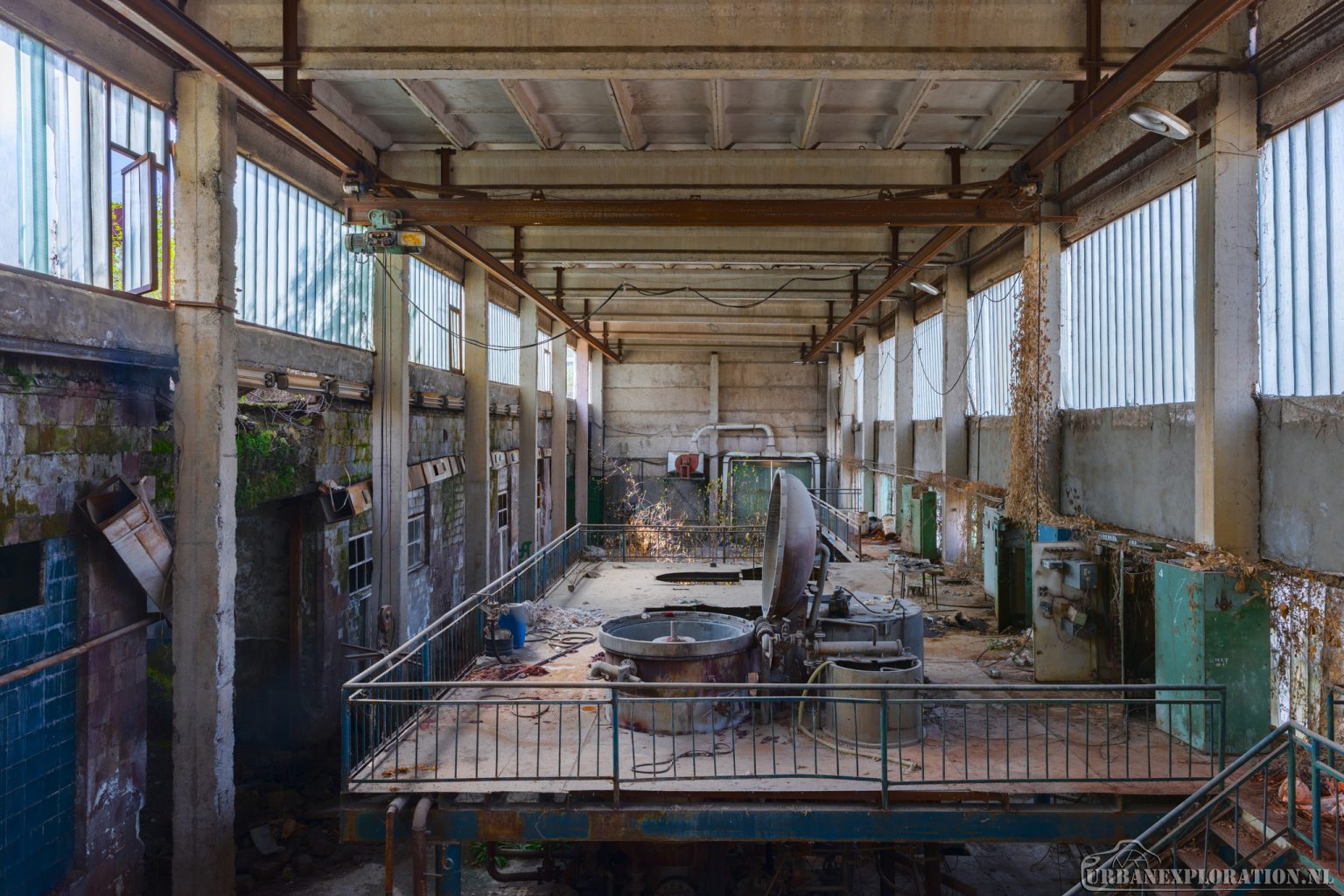
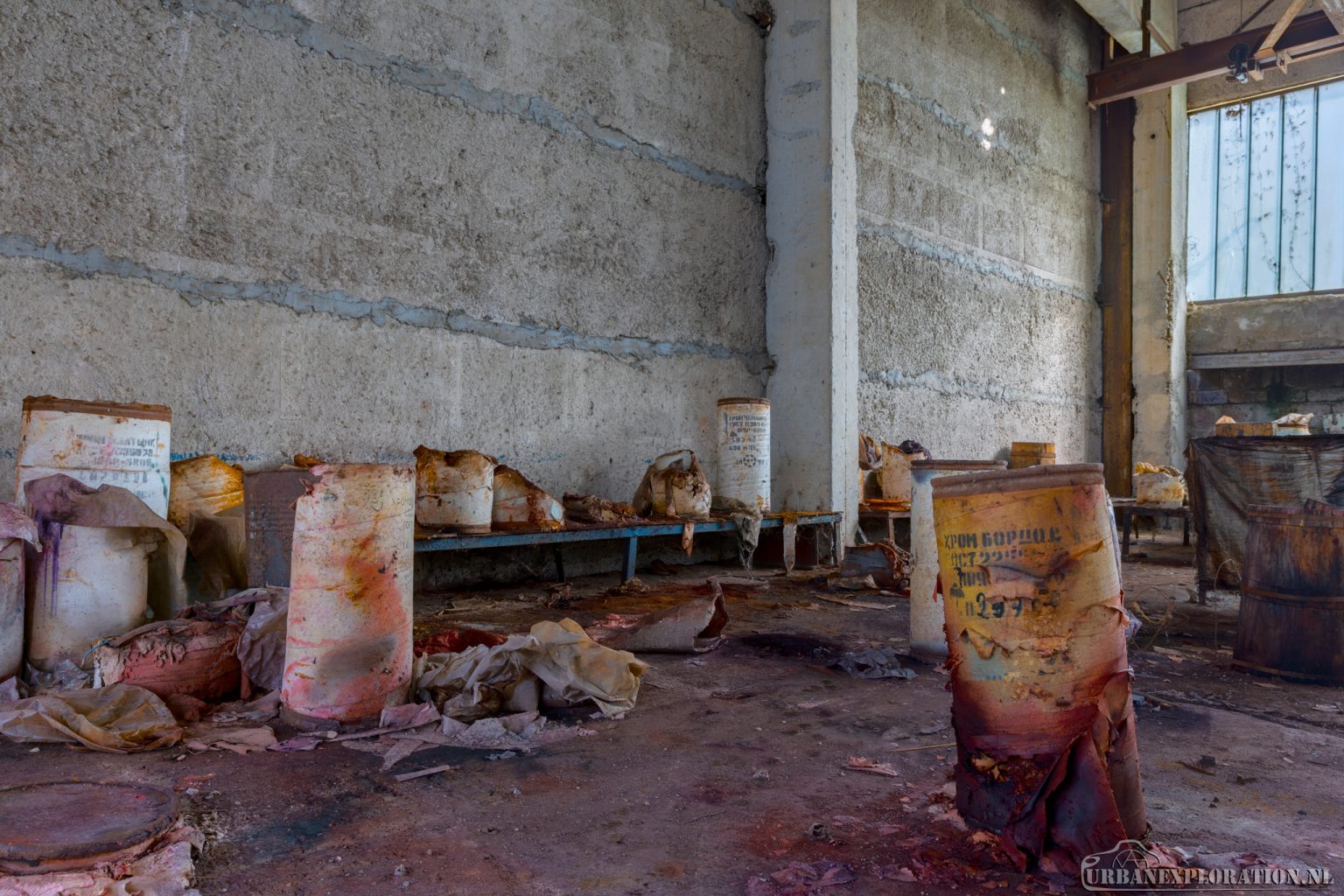
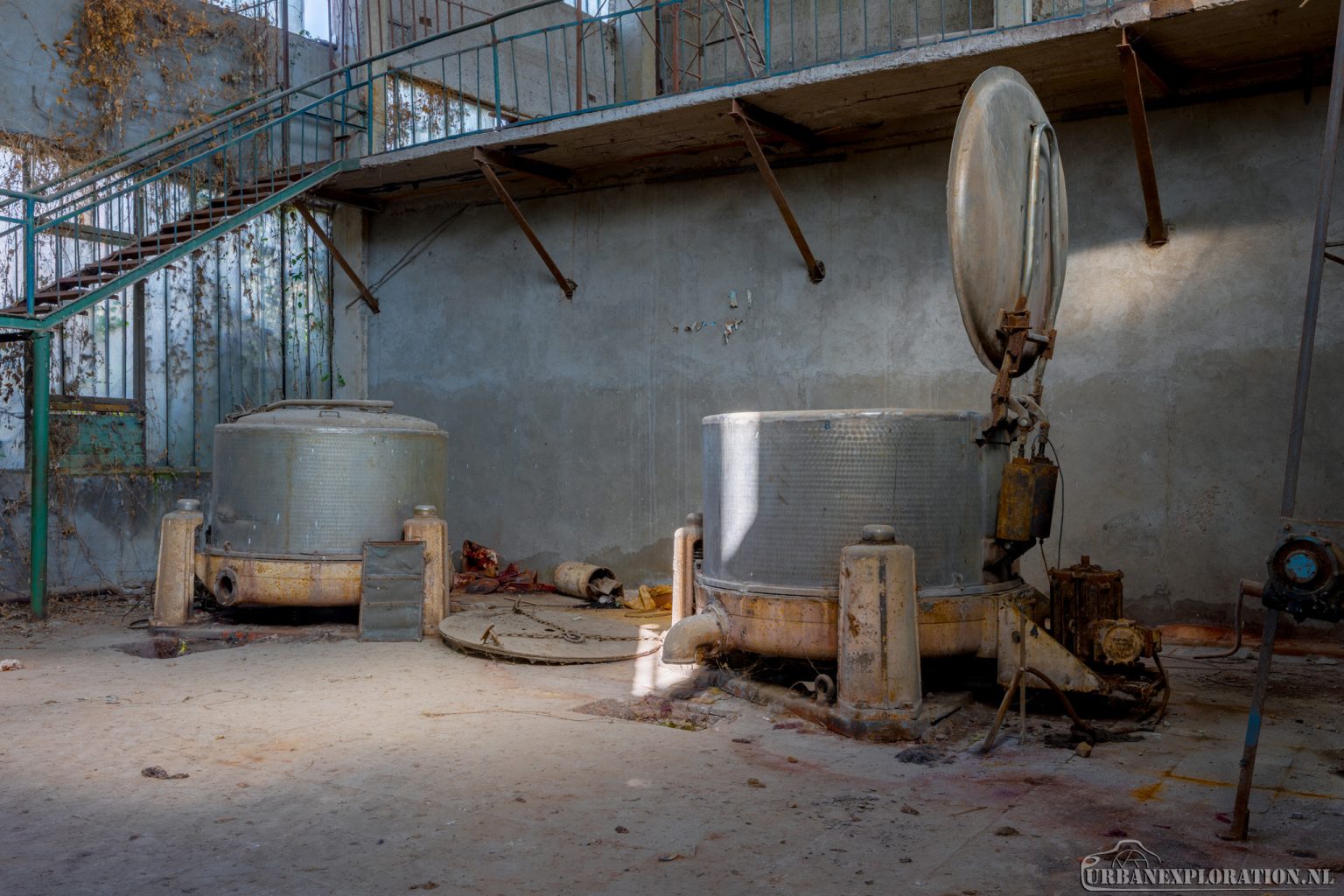
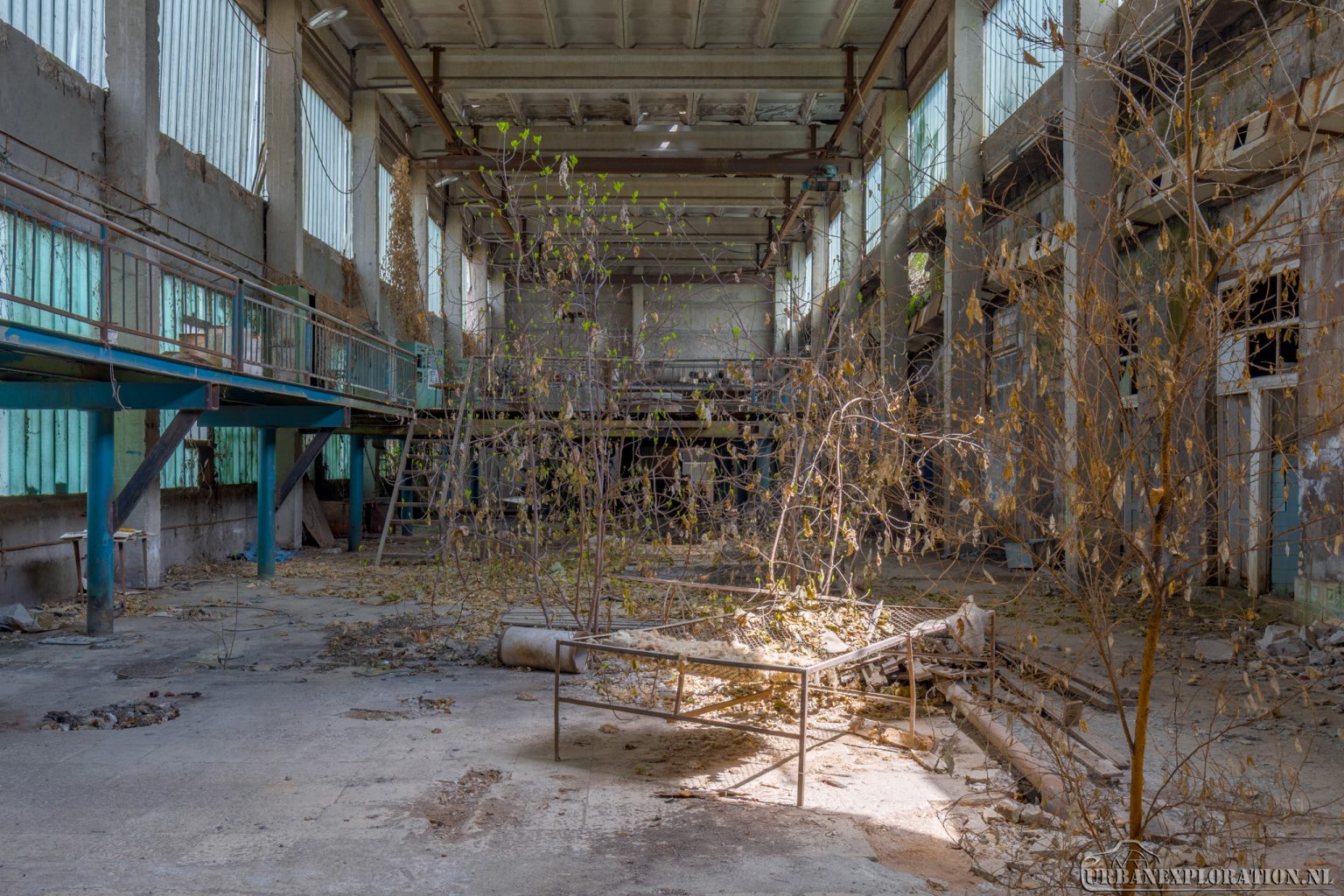
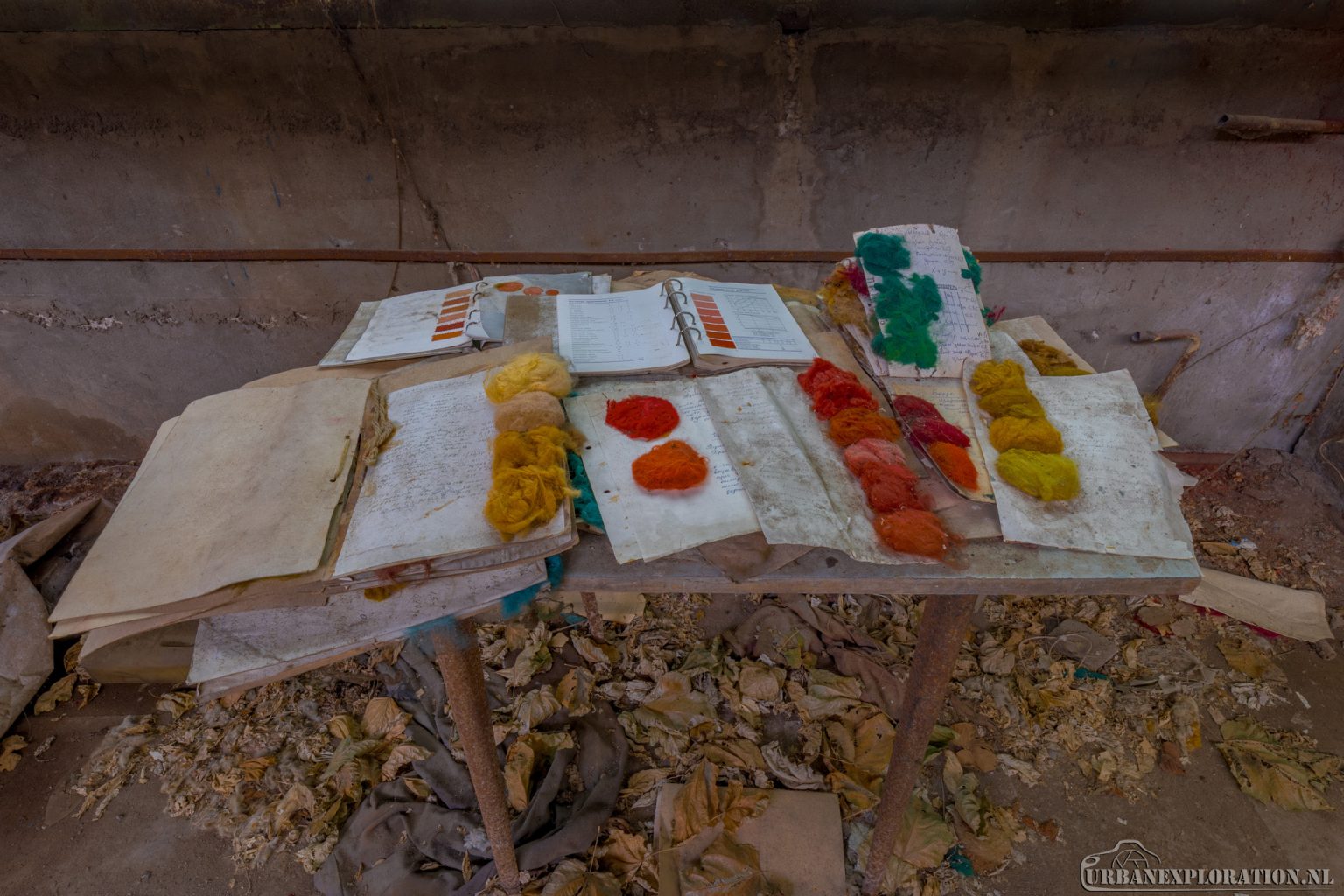
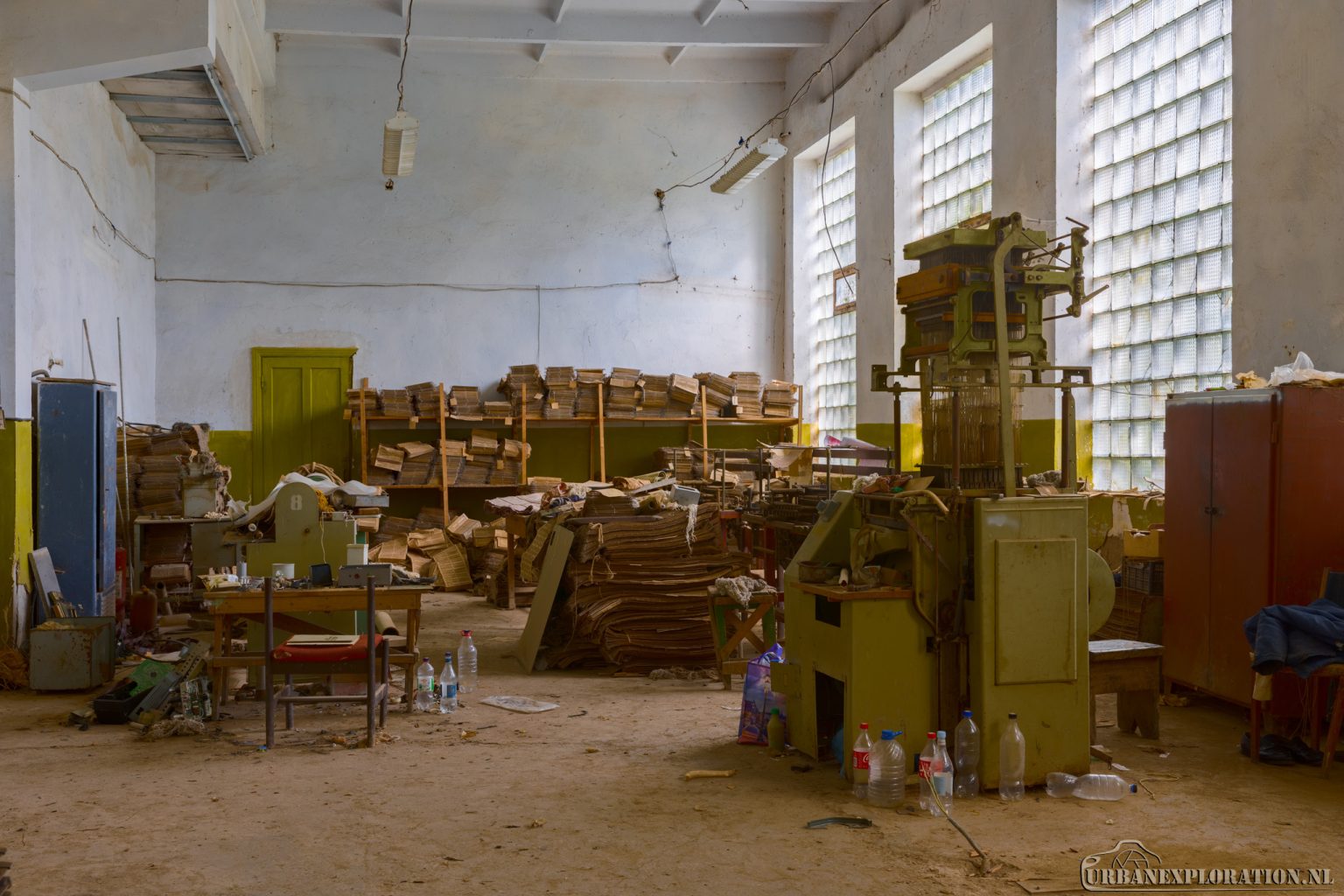
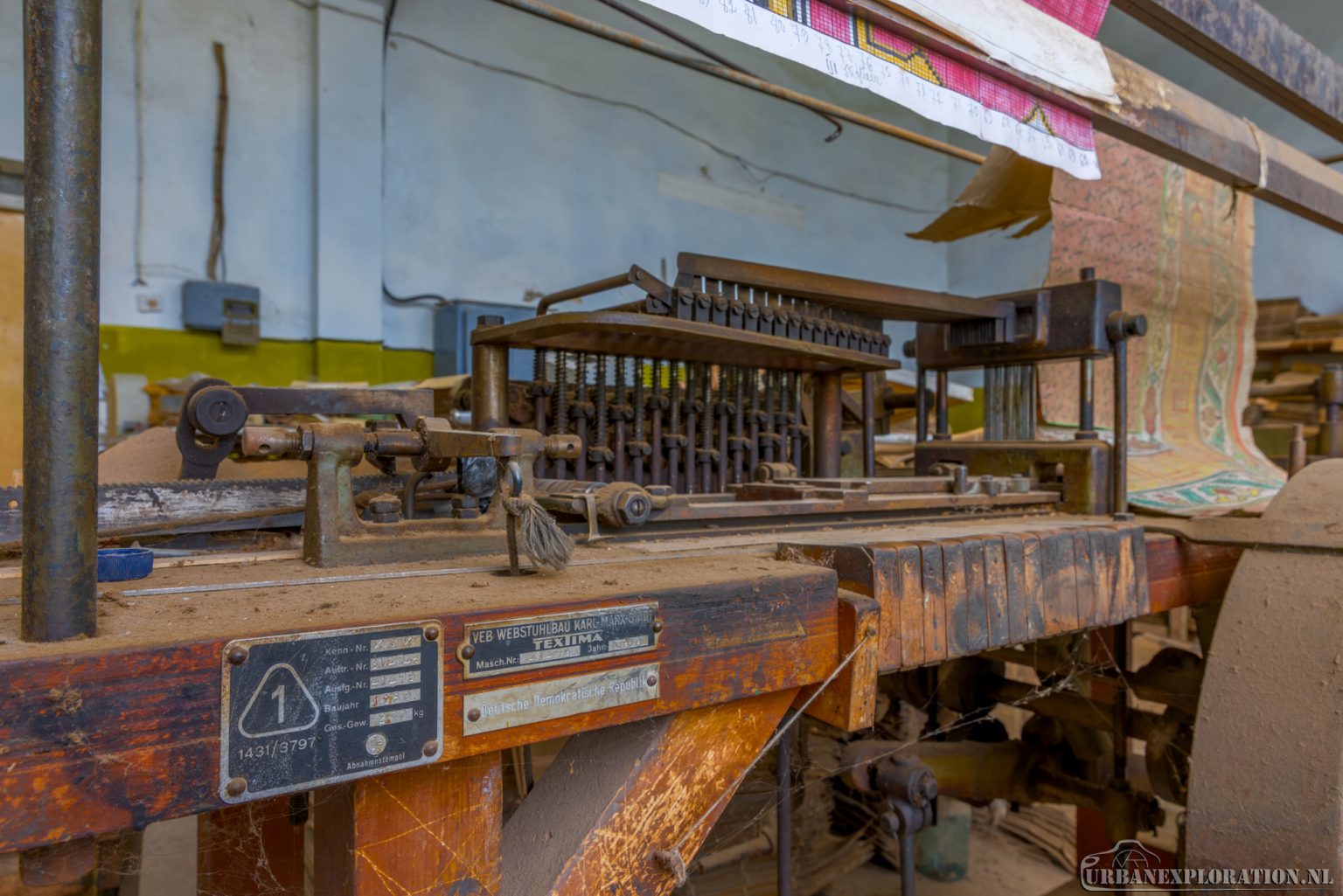
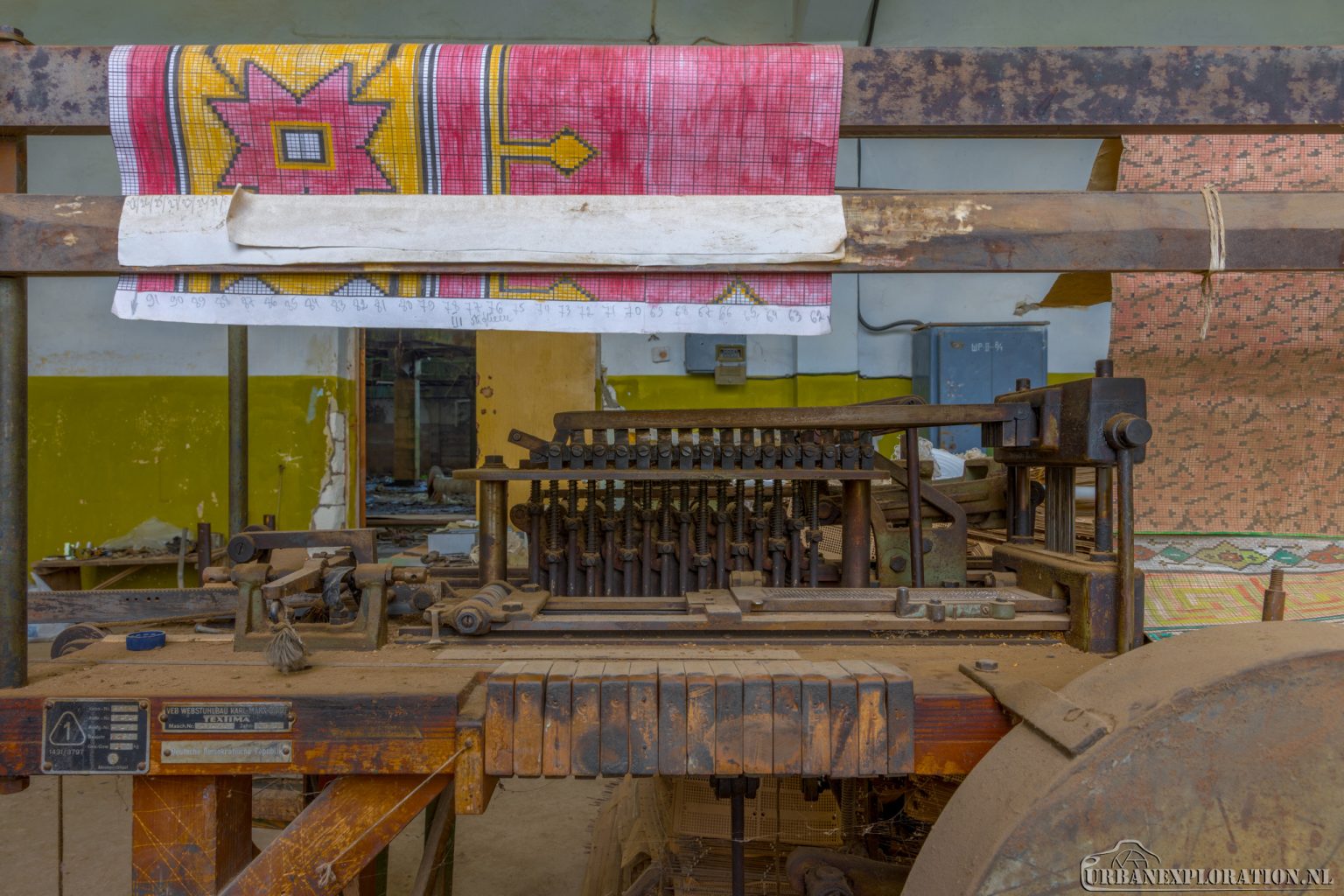
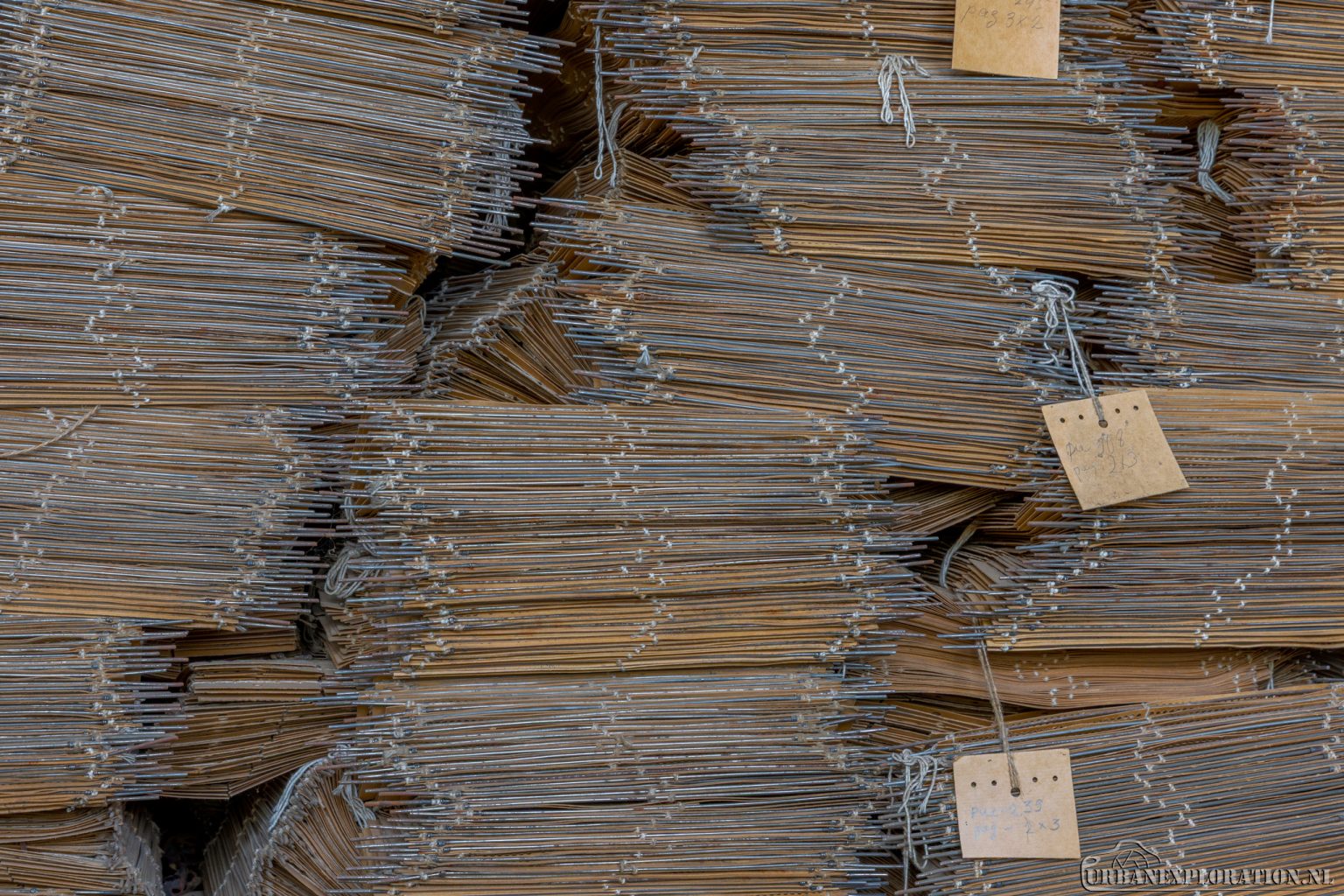
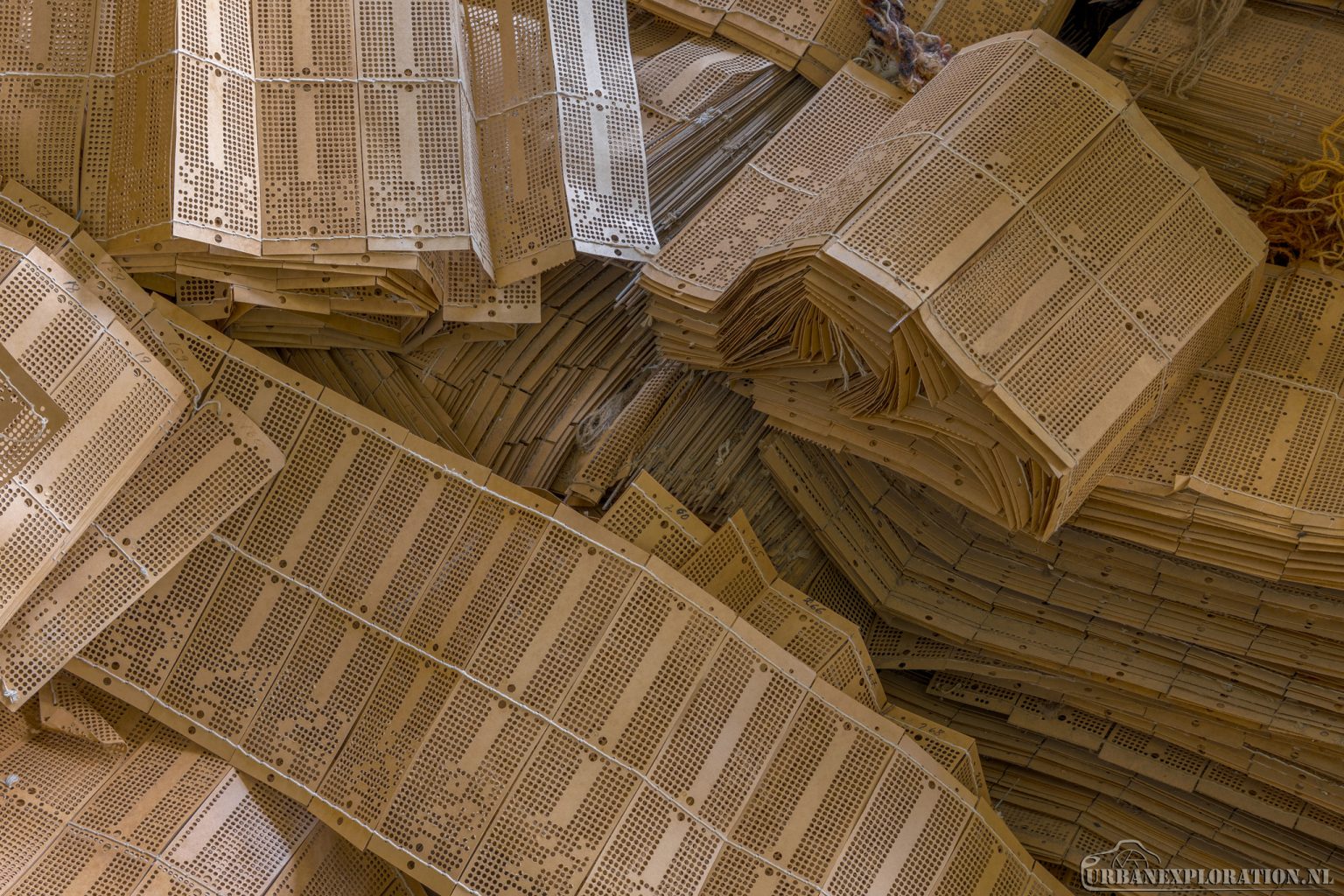
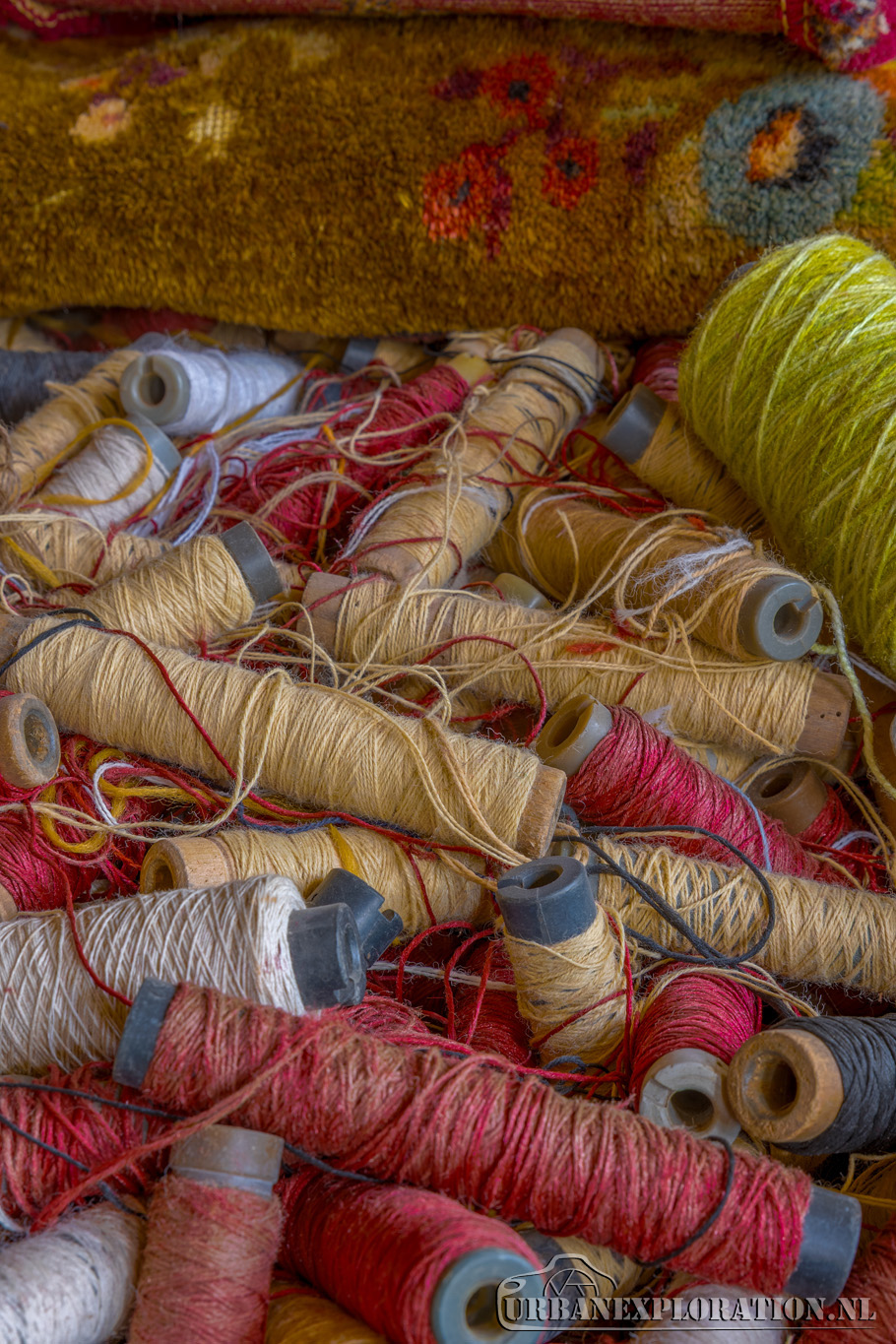
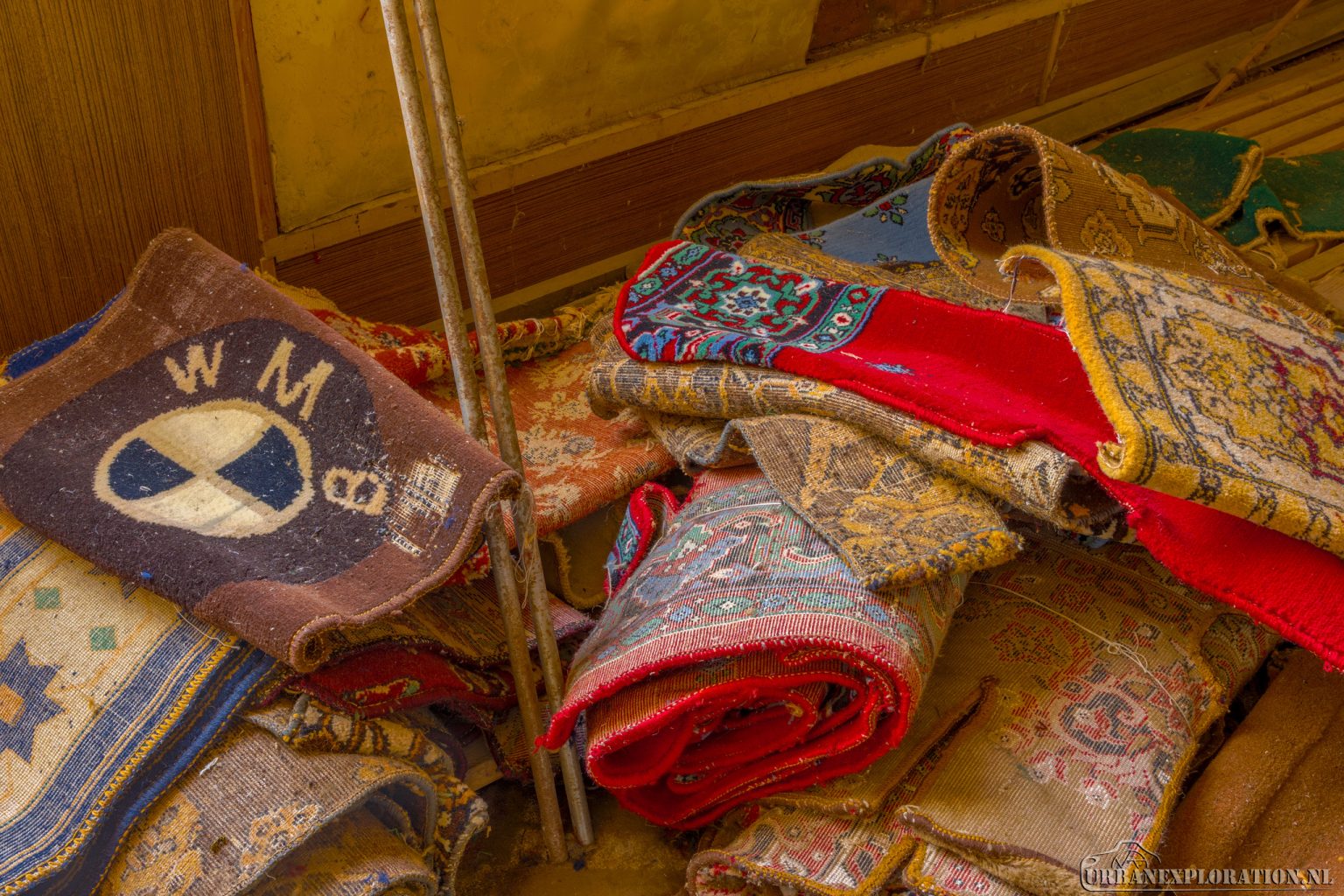
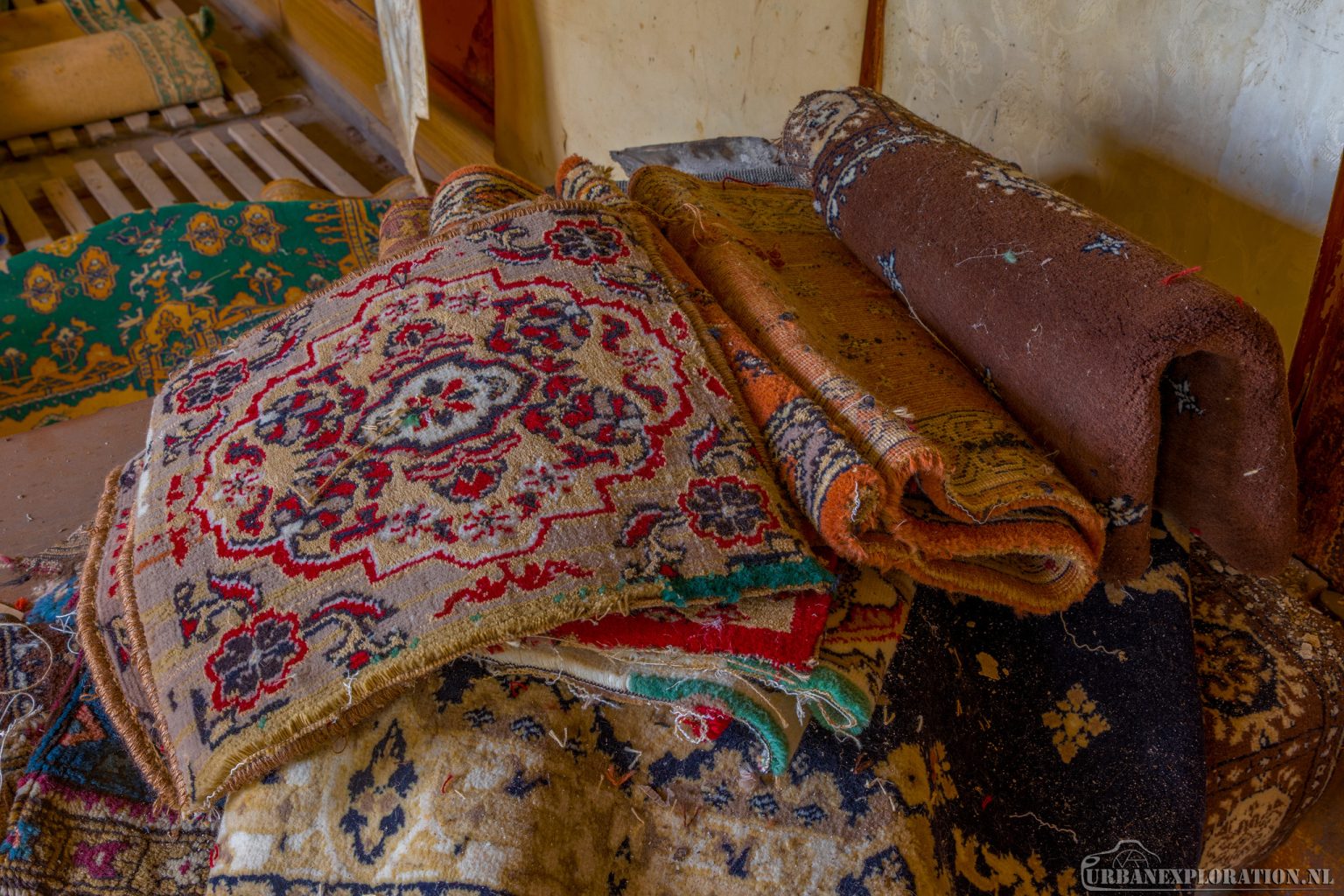
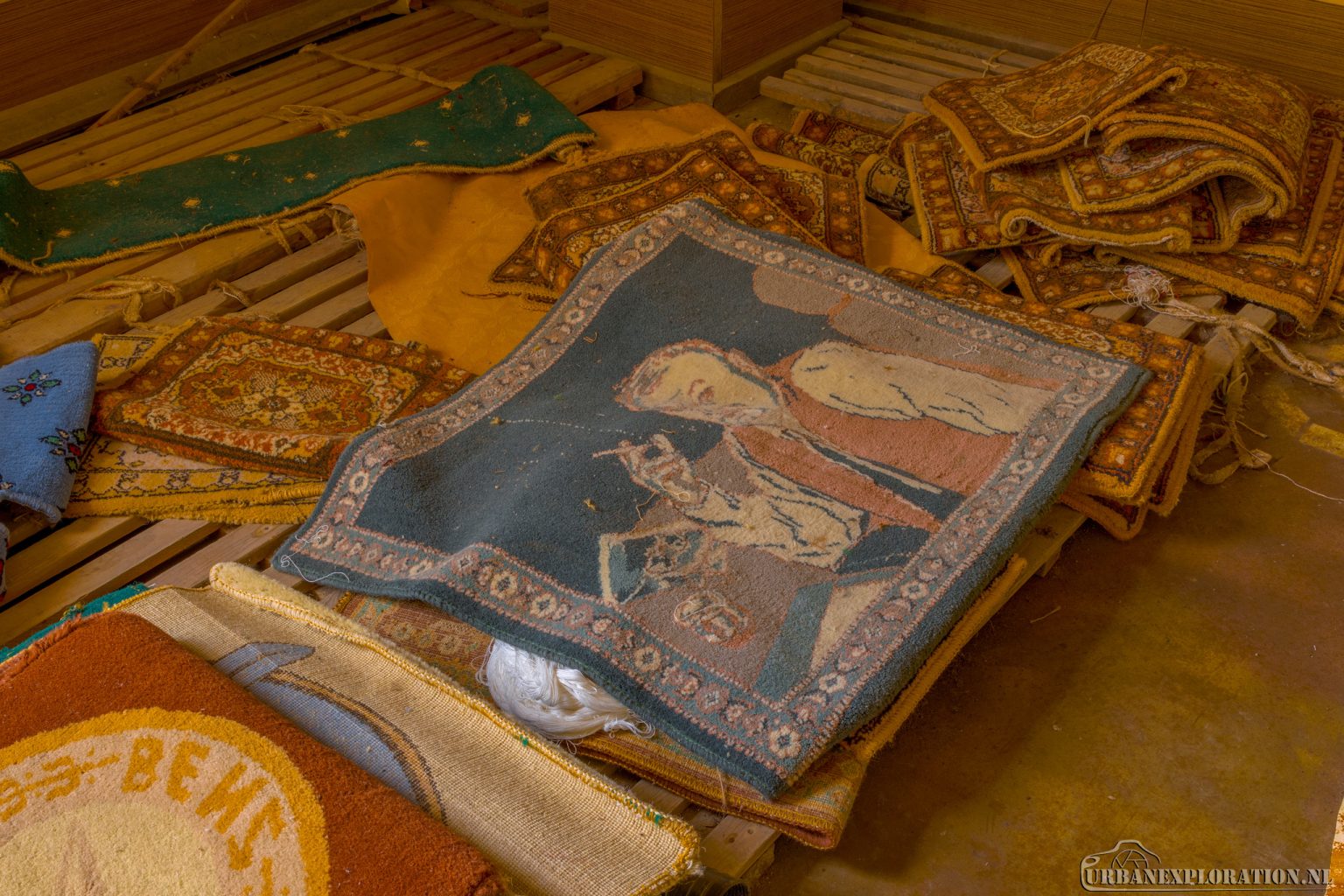
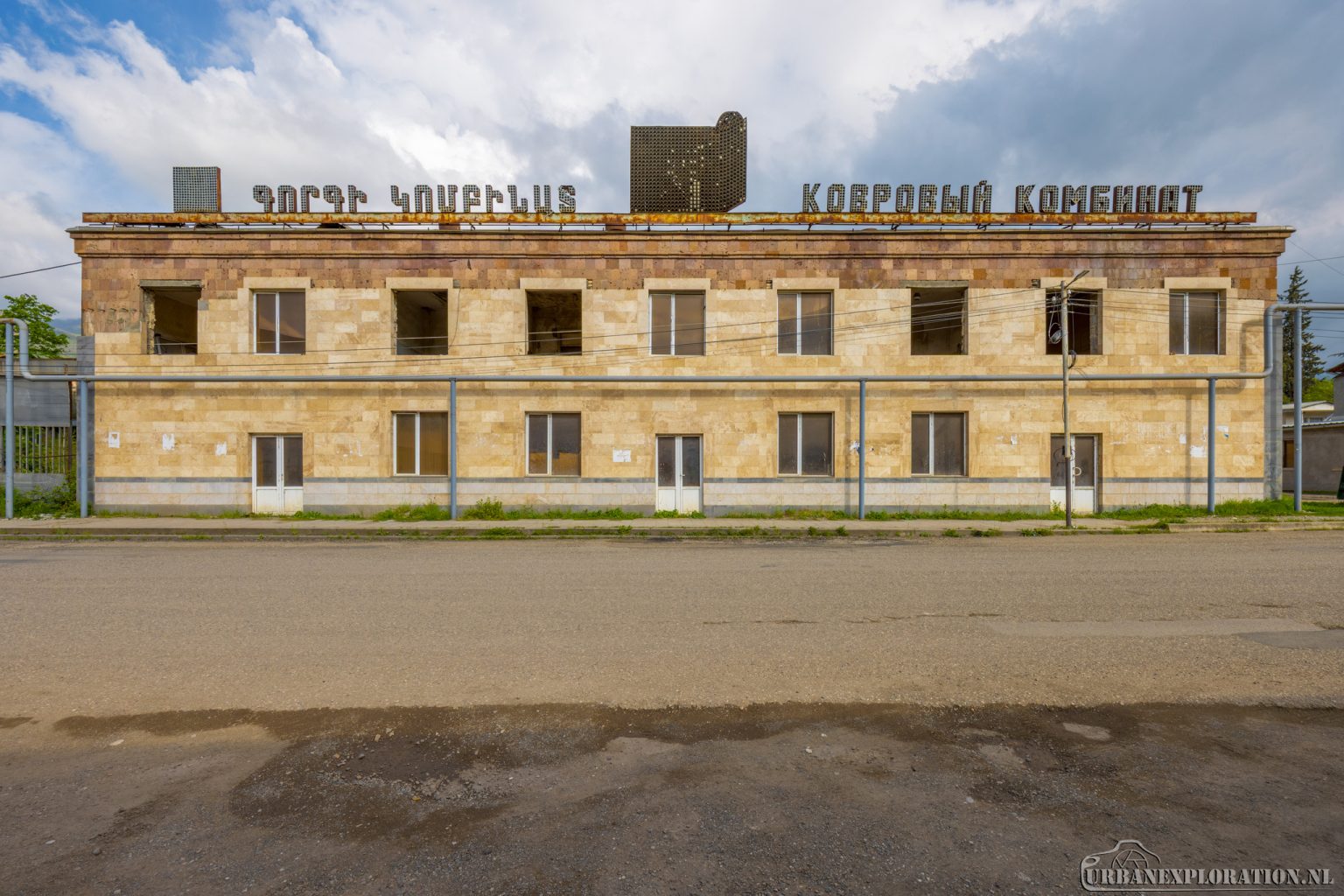
The factory was likely built during the 1960s or 1970s, when the USSR invested heavily in large industrial projects throughout the Caucasus. Armenia already had a long tradition of carpet weaving, known for its wool quality and traditional patterns. Under Soviet control, this craftsmanship was transformed into mass industrial production.
Factories like this were not small workshops. A kombinat was a complete industrial system where raw wool, dyeing, weaving, finishing and distribution were all combined into one state-run complex. Thousands of square meters of production halls, warehouses and administration buildings formed the backbone of the Soviet economy.
The architecture of the building still reflects that era. The symmetrical stone façade, large industrial windows and metal rooftop lettering were designed to show strength and progress. Even today, despite decay and abandonment, the structure still carries the atmosphere of Soviet industry.
What made this visit even more remarkable was meeting one of the former workers of the factory. Despite the years of decline, he still watches over the abandoned complex and kindly offered a tour through the empty halls and forgotten rooms. Walking through the silent building with somebody who once worked there gave the place an entirely different feeling. Behind the broken windows and fading walls was a man who remembered the factory when it was still alive with workers, machines and daily production.
After the collapse of the Soviet Union in 1991, Armenia entered a severe economic crisis. Trade routes disappeared, state funding ended and many factories could no longer survive. Energy shortages, unemployment and outdated machinery accelerated the decline of the country’s industrial sector.
Visited - May 2026
Defunct - 1991
Status - In decline
Country - Armenia
Here are some other albums that might be of interest.